HC Rejects TN Govt’s Plea Against Lighting Holy ‘Deep’ Near Dargah
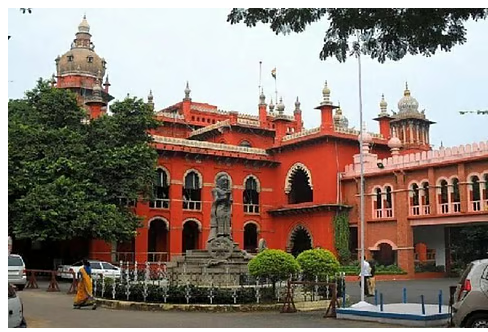
In a significant development, the Madras High Court on Thursday dismissed the Tamil Nadu government’s appeal against the court’s order directing to light a holy ‘deep’ near a dargah. The court’s decision comes after the state government had challenged the earlier order, citing concerns about potential law and order issues. However, the court was not convinced by the government’s arguments and rejected the appeal, stating that it was filed with an “ulterior motive.”
The controversy surrounding the lighting of the holy ‘deep’ near the dargah at Thiruparankundram hill has been ongoing for some time. The hill is a sacred site for both Hindus and Muslims, with a temple and a dargah located in close proximity. The issue began when a group of devotees sought to light a holy ‘deep’ near the dargah, which was opposed by the state government. The government’s opposition was based on concerns that the lighting of the ‘deep’ could lead to communal tensions and law and order problems.
However, the court had earlier directed the government to allow the devotees to light the ‘deep’ near the dargah, citing the fundamental right to freedom of religion. The court’s order was based on the principle that the state should not interfere with the religious practices of its citizens, as long as they do not harm others.
Despite the court’s direction, the ‘deep’ was not lit at the designated spot near the dargah. Instead, it was lit at another location, which was seen as a compromise by the devotees. However, this compromise was not acceptable to the court, which viewed it as a deliberate attempt to flout its order.
The Madras High Court’s decision to reject the state government’s appeal is significant, as it upholds the principles of religious freedom and the rule of law. The court’s order makes it clear that the state should not attempt to restrict the religious practices of its citizens, as long as they are carried out in a peaceful and lawful manner.
The court’s observation that the appeal was filed with an “ulterior motive” is also noteworthy. This suggests that the court believes that the state government’s opposition to the lighting of the ‘deep’ near the dargah was not based on genuine concerns about law and order, but rather on other motivations. This could include political considerations or a desire to appease certain sections of the community.
The implications of the court’s decision are far-reaching. It sends a clear message that the state should not attempt to interfere with the religious practices of its citizens, as long as they are carried out in a peaceful and lawful manner. It also underscores the importance of upholding the rule of law and respecting the decisions of the court.
In conclusion, the Madras High Court’s decision to reject the Tamil Nadu government’s appeal against the lighting of the holy ‘deep’ near the dargah is a significant development. It upholds the principles of religious freedom and the rule of law, and sends a clear message that the state should not attempt to restrict the religious practices of its citizens. The decision is a victory for the devotees who had sought to light the ‘deep’ near the dargah, and is a reminder of the importance of respecting the decisions of the court.
The controversy surrounding the lighting of the holy ‘deep’ near the dargah at Thiruparankundram hill is a complex issue, with multiple factors at play. However, the court’s decision provides a clear direction and upholds the principles of religious freedom and the rule of law. It is now up to the state government to respect the court’s decision and allow the devotees to light the ‘deep’ near the dargah, as directed by the court.
The court’s decision is also a reminder of the importance of respecting the religious practices of all communities. In a diverse and plural society like India, it is essential to respect the religious practices of all communities and to ensure that the state does not interfere with these practices. The court’s decision is a significant step in this direction and provides a clear direction for the state government to follow.
In the end, the Madras High Court’s decision to reject the Tamil Nadu government’s appeal against the lighting of the holy ‘deep’ near the dargah is a significant development that upholds the principles of religious freedom and the rule of law. It is a victory for the devotees who had sought to light the ‘deep’ near the dargah, and is a reminder of the importance of respecting the decisions of the court.
About the Author