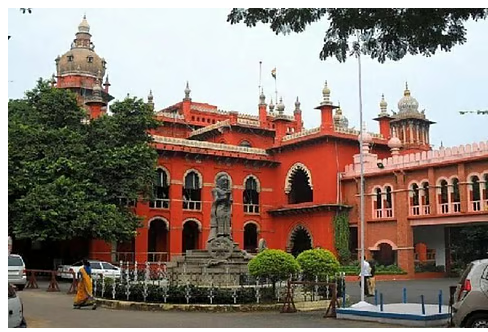
HC Rejects TN Govt’s Plea Against Lighting Holy ‘Deep’ Near Dargah
In a significant development, the Madras High Court on Thursday rejected the Tamil Nadu government’s appeal against the court’s earlier order directing the lighting of a holy ‘deep’ near a dargah. The court’s decision is a testament to the principles of secularism and religious freedom enshrined in the Indian Constitution. The appeal, which was filed by the state government, was dismissed by the court with a stern observation that it was done with an “ulterior motive”.
The controversy began when a court order directed the lighting of a holy ‘deep’ near a dargah located near the Thiruparankundram hill in Tamil Nadu. However, instead of complying with the order, the authorities lit the diya at a different spot, sparking a fresh round of controversy. The move was seen as an attempt to circumvent the court’s order and avoid any potential communal tensions.
The Madras High Court’s decision to reject the state government’s appeal is a significant one, as it upholds the principles of religious freedom and equality. The court’s observation that the appeal was filed with an “ulterior motive” suggests that the state government’s actions were driven by a desire to appease certain sections of society, rather than a genuine commitment to upholding the law.
The issue of lighting a holy ‘deep’ near a dargah is a sensitive one, and has the potential to spark communal tensions. However, the court’s decision makes it clear that the law must be applied equally to all citizens, regardless of their religious affiliations. By rejecting the state government’s appeal, the court has sent a strong message that it will not tolerate any attempts to undermine the principles of secularism and religious freedom.
The controversy surrounding the lighting of the holy ‘deep’ near the dargah is not an isolated incident. It is part of a larger pattern of attempts to polarize society along communal lines. In recent years, there have been numerous instances of communal tensions and violence, often sparked by trivial issues. The court’s decision is a timely reminder that the law must be applied equally to all citizens, and that any attempts to undermine the principles of secularism and religious freedom will not be tolerated.
The Madras High Court’s decision is also significant because it highlights the importance of the judiciary in upholding the principles of secularism and religious freedom. The court’s observation that the appeal was filed with an “ulterior motive” suggests that the state government’s actions were driven by a desire to appease certain sections of society, rather than a genuine commitment to upholding the law. This is a stark reminder of the need for an independent and impartial judiciary, which can act as a check on the executive and ensure that the law is applied equally to all citizens.
In conclusion, the Madras High Court’s decision to reject the Tamil Nadu government’s appeal against the lighting of a holy ‘deep’ near a dargah is a significant one. It upholds the principles of secularism and religious freedom, and sends a strong message that the law must be applied equally to all citizens. The decision is a timely reminder of the importance of the judiciary in upholding the principles of secularism and religious freedom, and highlights the need for an independent and impartial judiciary.
The controversy surrounding the lighting of the holy ‘deep’ near the dargah is a complex one, and has sparked a wider debate about the role of religion in public life. While some argue that the lighting of the diya is a matter of religious freedom, others argue that it is an attempt to impose one’s religious beliefs on others. The court’s decision makes it clear that the law must be applied equally to all citizens, and that any attempts to undermine the principles of secularism and religious freedom will not be tolerated.
The issue of communal tensions and violence is a pressing one, and requires a nuanced and sensitive approach. The court’s decision is a significant step in the right direction, as it upholds the principles of secularism and religious freedom. However, more needs to be done to address the root causes of communal tensions and violence. This requires a concerted effort from all sections of society, including the government, civil society, and the media.
In the end, the Madras High Court’s decision to reject the Tamil Nadu government’s appeal against the lighting of a holy ‘deep’ near a dargah is a victory for the principles of secularism and religious freedom. It is a reminder that the law must be applied equally to all citizens, and that any attempts to undermine these principles will not be tolerated. As we move forward, it is essential that we continue to uphold these principles, and work towards creating a more just and equitable society for all.
About the Author