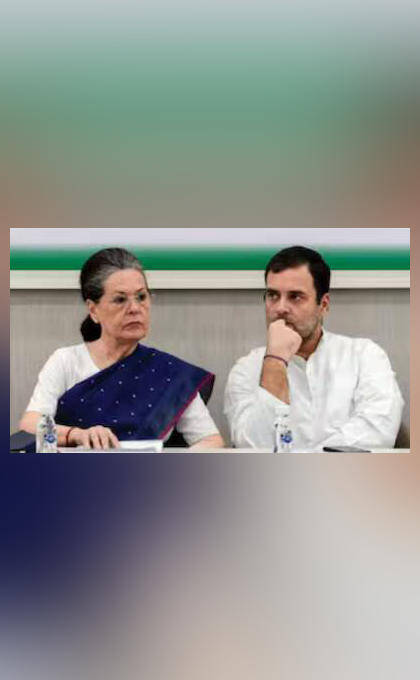
ED moves Delhi HC against trial court’s ruling in National Herald case
The Enforcement Directorate (ED) has taken a significant step in the National Herald case, approaching the Delhi High Court to challenge the trial court’s order that declined to take cognisance of the money laundering complaint against top Congress leaders, including Sonia Gandhi, Rahul Gandhi, and others. This development comes after the trial court’s ruling, which has been deemed unsatisfactory by the ED, prompting them to seek intervention from the higher court.
At the heart of the National Herald case is the allegation that assets worth over ₹2,000 crore belonging to Associated Journals Limited (AJL) were wrongfully taken over. AJL is the company that publishes the National Herald newspaper, which was founded by Jawaharlal Nehru in 1938. The newspaper has a rich history and was a key publication during India’s struggle for independence. However, in recent years, the company has been at the center of a high-profile controversy involving the Gandhi family and other Congress leaders.
The ED’s case against the Congress leaders is built around the accusation that they illegally acquired assets belonging to AJL through a complex series of financial transactions. According to the ED, Young Indian Private Limited (YI), a company in which Sonia Gandhi and Rahul Gandhi have a majority stake, took over AJL’s assets in a dubious manner. The ED alleges that this takeover was a clear case of money laundering, with the assets being undervalued and the transaction being designed to benefit the Gandhi family and their associates.
The trial court’s decision not to take cognisance of the ED’s complaint has been seen as a setback for the agency. The court’s ruling implied that there was not enough evidence to proceed with the case against the Congress leaders. However, the ED is convinced that they have a strong case and that the trial court erred in its judgment. By approaching the Delhi High Court, the ED is seeking to overturn the trial court’s order and pave the way for the prosecution of the accused.
The National Herald case has significant political implications, with the Congress party and its leaders being at the center of the controversy. The case has been seen as a test of the government’s willingness to take on high-profile figures and to investigate allegations of corruption and impropriety. The ED’s decision to challenge the trial court’s ruling in the Delhi High Court is a clear indication that they are determined to pursue the case and to ensure that justice is served.
The Congress party has maintained that the National Herald case is a politically motivated attack on the Gandhi family and the party. They have argued that the allegations against them are baseless and that the ED’s case is an attempt to harass and intimidate them. However, the ED is adamant that their investigation is based on solid evidence and that they will continue to pursue the case until its logical conclusion.
As the case moves to the Delhi High Court, all eyes will be on the proceedings. The court’s decision will have significant implications, not just for the accused but also for the broader political landscape. If the court rules in favor of the ED, it could lead to a major embarrassment for the Congress party and its leaders. On the other hand, if the court upholds the trial court’s order, it could be seen as a victory for the Congress party and a setback for the government’s efforts to investigate corruption and impropriety.
In conclusion, the National Herald case has taken a significant turn with the ED approaching the Delhi High Court to challenge the trial court’s ruling. The case has far-reaching implications, both politically and legally. As the case unfolds, it will be important to watch the developments closely and to see how the court’s decision will impact the accused and the broader political landscape.
About the Author