ED moves Delhi HC against trial court’s ruling in National Herald case
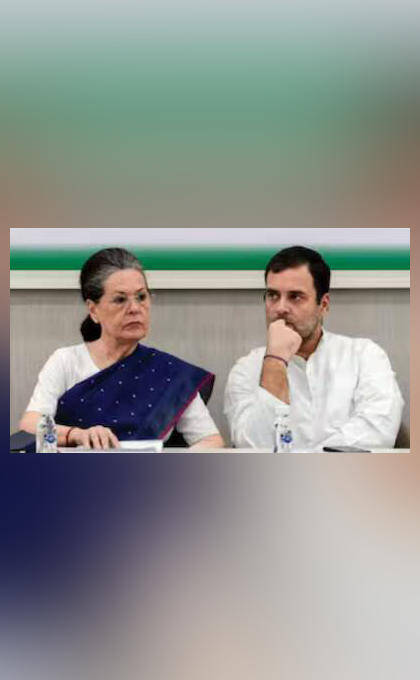
The Enforcement Directorate (ED) has taken a significant step in the National Herald case by approaching the Delhi High Court to challenge the trial court’s order that declined to take cognisance of the money laundering complaint against top Congress leaders, including Sonia Gandhi, Rahul Gandhi, and others. This move is seen as a major development in the long-standing case, which has been plagued by controversy and political intrigue.
At the heart of the case is the allegation that assets worth over ₹2,000 crore belonging to Associated Journals Limited (AJL) were wrongfully taken over. AJL is the company that published the National Herald newspaper, which was founded by Jawaharlal Nehru in 1938. The newspaper was initially published in English and later in Hindi as well, with the objective of promoting the ideals of the Indian National Congress.
The ED’s complaint alleges that the Gandhi family, along with other accused, used the newspaper’s assets for personal gain, thereby committing a serious offence under the Prevention of Money Laundering Act (PMLA). The accused include Sonia Gandhi, Rahul Gandhi, Motilal Vora, Oscar Fernandes, Suman Dubey, and Sam Pitroda, among others.
The trial court’s order, which was passed in February this year, had declined to take cognisance of the ED’s complaint, citing lack of evidence. However, the ED has now challenged this order in the Delhi High Court, arguing that the trial court had erred in its decision.
The ED’s appeal is likely to be heard by a single-judge bench of the Delhi High Court, which will examine the evidence presented by the agency and the arguments made by the accused. If the High Court overturns the trial court’s order, it could lead to the framing of charges against the accused, paving the way for a full-fledged trial.
The National Herald case has been a subject of intense controversy and political debate, with the Opposition parties accusing the BJP-led government of using the ED to target its political opponents. The Congress party has consistently denied any wrongdoing, claiming that the case is a result of a political vendetta.
The case began in 2012, when BJP leader Subramanian Swamy filed a complaint against the Gandhi family, alleging that they had misappropriated funds meant for the National Herald newspaper. The complaint was later taken up by the ED, which launched an investigation into the matter.
Over the years, the case has seen several twists and turns, with the ED conducting raids on the offices of the National Herald and the Congress party. The agency has also questioned several accused, including Sonia Gandhi and Rahul Gandhi, in connection with the case.
The ED’s investigation has revealed that the Gandhi family had set up a company called Young Indian Private Limited, which had taken over the assets of AJL. The agency alleges that this was done with the intention of misappropriating the assets, which included prime real estate in several cities, including Delhi and Mumbai.
The case has also seen several high-profile interventions, including a petition filed by the Congress party in the Supreme Court, challenging the ED’s investigation. The Supreme Court had, however, refused to intervene, allowing the ED to continue its investigation.
As the case now moves to the Delhi High Court, it is likely to be closely watched by politicians, lawyers, and the media. The outcome of the appeal could have significant implications for the accused, as well as the BJP-led government, which has been accused of using the ED to target its opponents.
In conclusion, the ED’s decision to challenge the trial court’s order in the National Herald case is a significant development that could have far-reaching implications. The case has been a subject of intense controversy and political debate, with the Congress party accusing the BJP-led government of using the ED to target its leaders. As the case now moves to the Delhi High Court, it is likely to be closely watched by all stakeholders.
About the Author