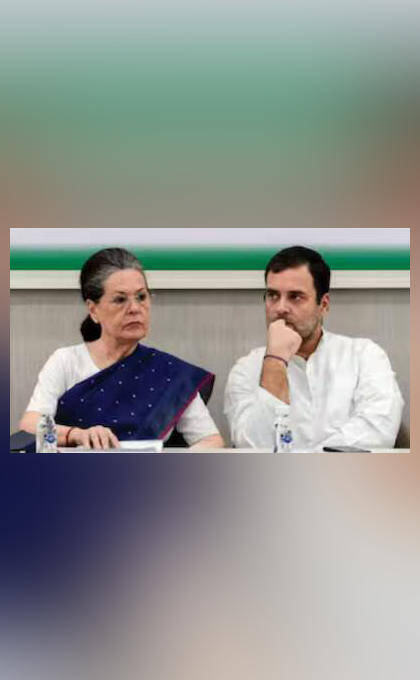
ED moves Delhi HC against trial court’s ruling in National Herald case
The Enforcement Directorate (ED) has approached the Delhi High Court, challenging the trial court order that declined to take cognisance of the money laundering complaint against Congress leaders Sonia Gandhi, Rahul Gandhi, and others in the National Herald case. The case, which has been making headlines for years, revolves around the alleged wrongful takeover of assets worth over ₹2,000 crore belonging to Associated Journals Limited (AJL). In this blog post, we will delve into the details of the case, the recent developments, and the implications of the ED’s move.
To understand the context of the case, it is essential to go back to the beginning. The National Herald was a newspaper founded by Jawaharlal Nehru in 1938, and it was published by AJL. Over the years, the newspaper faced financial difficulties, and in 2008, the Congress party, led by Sonia Gandhi, decided to revive it. The party formed a new company, Young Indian Private Limited (YI), with Sonia Gandhi and Rahul Gandhi as its major shareholders. YI then acquired a 99% stake in AJL, effectively taking over the company.
The ED alleges that this takeover was a sham transaction, designed to illegally acquire the valuable assets of AJL, including prime real estate in Delhi and other parts of the country. The agency claims that the assets, worth over ₹2,000 crore, were wrongfully taken over by YI, and that the transaction was a clear case of money laundering. The ED has been investigating the case since 2014, and in 2015, it filed a complaint against Sonia Gandhi, Rahul Gandhi, and other Congress leaders, accusing them of money laundering.
However, in a significant setback to the ED, a trial court in Delhi declined to take cognisance of the complaint, effectively dismissing the case. The court ruled that the ED had failed to provide sufficient evidence to support its allegations, and that the transaction between YI and AJL was a legitimate business deal. The court’s order was seen as a major victory for the Gandhi family and the Congress party, which had been facing intense scrutiny over the allegations.
But the ED has now decided to challenge the trial court’s order in the Delhi High Court. The agency has filed an appeal, arguing that the trial court erred in its judgment and that the evidence presented by the ED was sufficient to establish a prima facie case against the accused. The ED has also alleged that the trial court failed to consider the larger conspiracy involved in the case, and that the transaction between YI and AJL was indeed a sham deal designed to launder money.
The implications of the ED’s move are significant. If the Delhi High Court rules in favour of the ED, it could lead to a fresh trial in the case, and the Gandhi family and other Congress leaders could face renewed scrutiny. The case could also have significant political implications, as it could embroil the Congress party in a major controversy just ahead of the upcoming general elections.
It is worth noting that the National Herald case has been a subject of intense political controversy over the years. The BJP has been accusing the Congress party of corruption and crony capitalism, and the case has been seen as a major example of the party’s alleged wrongdoing. The ED’s move to challenge the trial court’s order is likely to be seen as a major escalation of the political battle between the two parties.
In conclusion, the National Herald case has taken a significant turn with the ED’s decision to challenge the trial court’s order in the Delhi High Court. The case has far-reaching implications, both legally and politically, and its outcome could have a major impact on the country’s political landscape. As the case progresses, it will be interesting to see how the Delhi High Court rules on the ED’s appeal, and what implications it will have for the Gandhi family and the Congress party.
About the Author