Crocodile tears: Shivraj on Congress’ ‘MGNREGA Bachao’ protest
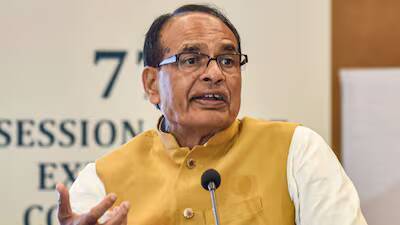
The Indian government’s recent decision to replace the Mahatma Gandhi National Rural Employment Guarantee Act (MGNREGA) with the Vishwakarma Bharat-Rozgar Garib Action Mission (VB-G RAM G Act) has sparked a heated debate across the country. The opposition party, Congress, has been vocal in its criticism of the move, with some of its leaders even announcing plans to launch a nationwide protest, dubbed ‘MGNREGA Bachao’, starting from January 5. However, Union Minister Shivraj Singh Chouhan has dismissed the Congress’s concerns, accusing the party of shedding “crocodile tears” over the issue.
According to Chouhan, the Congress’s clamour is purely political and lacks substance. He pointed out that the same party had, on multiple occasions, reduced the budget for MGNREGA during its tenure in power. “The Congress’s criticism of the MGNREGA revamp is nothing but a political stunt,” he said. “They are trying to mislead the people and gain political mileage out of the issue.” Chouhan’s remarks are significant, as they reflect the Bharatiya Janata Party’s (BJP) stance on the matter and highlight the deepening political divide between the two parties.
The MGNREGA, which was enacted in 2005, guarantees 100 days of wage employment per year to rural households. The scheme has been instrumental in providing a safety net to millions of rural Indians, particularly during times of economic distress. However, the government has argued that the scheme has several limitations and needs to be revamped to make it more effective and efficient. The VB-G RAM G Act, which replaces MGNREGA, aims to provide more comprehensive support to rural households, including skill training, entrepreneurship development, and social security benefits.
The Congress, however, has expressed strong reservations about the government’s decision to replace MGNREGA. The party has argued that the new scheme will undermine the guarantees provided by the original Act and leave millions of rural Indians without a reliable source of income. The ‘MGNREGA Bachao’ protest, which is scheduled to begin on January 5, aims to mobilize public support against the government’s decision and push for a reversal of the policy.
Chouhan’s comments on the issue have sparked a heated debate, with many Congress leaders hitting back at the Union Minister. The party has accused the BJP of trying to undermine the rights of rural Indians and push through a policy that will benefit only a select few. The controversy surrounding MGNREGA has also drawn in other opposition parties, with many of them expressing solidarity with the Congress’s stance on the issue.
As the debate rages on, it is clear that the fate of MGNREGA and the VB-G RAM G Act will have significant implications for rural India. The government’s decision to replace the scheme has been seen as a major policy shift, and its impact will be closely watched by millions of Indians who depend on the scheme for their livelihood. While the Congress has vowed to fight against the decision, the BJP remains confident that its new scheme will provide better support to rural households and promote economic growth.
In the midst of this controversy, it is essential to examine the facts and understand the implications of the government’s decision. The MGNREGA has been a vital scheme for rural India, providing a safety net to millions of households. However, the scheme has also been criticized for its limitations, including corruption, inefficiency, and lack of scalability. The VB-G RAM G Act, on the other hand, promises to provide more comprehensive support to rural households, including skill training and entrepreneurship development.
As the ‘MGNREGA Bachao’ protest gains momentum, it is crucial to evaluate the government’s decision and its potential impact on rural India. The controversy surrounding MGNREGA has highlighted the deepening political divide between the BJP and the Congress, with both parties trying to outmaneuver each other on the issue. However, amidst the political posturing, it is essential to remember that the fate of MGNREGA and the VB-G RAM G Act will have far-reaching consequences for millions of rural Indians who depend on these schemes for their livelihood.
In conclusion, the controversy surrounding MGNREGA and the VB-G RAM G Act has sparked a heated debate across the country. While the Congress has accused the government of undermining the rights of rural Indians, the BJP has argued that its new scheme will provide better support to rural households. As the ‘MGNREGA Bachao’ protest gains momentum, it is crucial to evaluate the facts and understand the implications of the government’s decision. The fate of MGNREGA and the VB-G RAM G Act will have significant implications for rural India, and it is essential to ensure that the interests of rural Indians are protected.
About the Author