Crocodile tears: Shivraj on Congress’ ‘MGNREGA Bachao’ protest
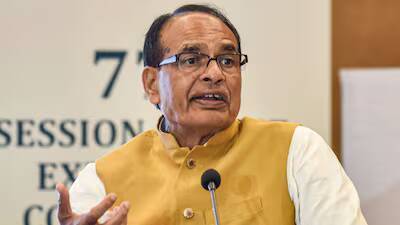
The Indian political landscape is no stranger to protests and demonstrations, with various parties and organizations frequently taking to the streets to voice their concerns and grievances. Recently, the Congress party announced its plans to launch the ‘MGNREGA Bachao’ protest from January 5, in response to the replacement of the Mahatma Gandhi National Rural Employment Guarantee Act (MGNREGA) with the Vishwakarma Bahuuddeshiya Gramin Rajmashaya Act (VB-G RAM G Act). However, Union Minister Shivraj Singh Chouhan has accused the Congress of shedding “crocodile tears” over the issue, calling their clamor “purely political”.
According to Minister Chouhan, the Congress party’s opposition to the replacement of MGNREGA is nothing more than a politically motivated move, aimed at garnering attention and sympathy from the public. He pointed out that the Congress party, during its time in power, had consistently reduced the budget allocated to MGNREGA, thereby undermining the very program they now claim to be fighting for. This, Chouhan argued, is a clear indication that the Congress party’s concerns about MGNREGA are not genuine, but rather a convenient excuse to criticize the current government.
The MGNREGA, enacted in 2006, was a flagship program of the Congress-led United Progressive Alliance (UPA) government, aimed at providing guaranteed employment to rural laborers. The program was designed to address the issue of poverty and unemployment in rural areas, by providing a safety net for those in need. However, over the years, the program has faced numerous challenges, including funding constraints, corruption, and inefficiencies.
The replacement of MGNREGA with the VB-G RAM G Act has been met with criticism from various quarters, with many arguing that the new program will undermine the guarantees provided by the original Act. The Congress party, in particular, has been vocal in its opposition to the move, with many of its leaders accusing the government of attempting to dismantle the social security net provided by MGNREGA.
However, Minister Chouhan’s comments suggest that the Congress party’s opposition to the replacement of MGNREGA is not entirely altruistic. By pointing out the Congress party’s own record on MGNREGA, Chouhan has raised questions about the party’s motives and credibility on the issue. If the Congress party was truly committed to the principles of MGNREGA, why did it consistently reduce the program’s budget during its time in power?
The ‘MGNREGA Bachao’ protest, scheduled to begin on January 5, is likely to be a major event, with the Congress party mobilizing its supporters and allies to participate in the demonstration. However, in light of Minister Chouhan’s comments, it remains to be seen whether the protest will be able to muster the kind of public support and sympathy that the Congress party is hoping for.
Ultimately, the debate over MGNREGA and its replacement is a complex one, with valid arguments on both sides. While the Congress party has raised legitimate concerns about the impact of the VB-G RAM G Act on rural employment and poverty, the government has argued that the new program is necessary to address the inefficiencies and corruption that had plagued MGNREGA.
As the ‘MGNREGA Bachao’ protest gets underway, it will be important to separate the rhetoric from the reality, and to examine the facts and figures behind the claims and counter-claims. The Indian public deserves a nuanced and informed discussion on this critical issue, rather than a simplistic and politicized debate.
In conclusion, the controversy over MGNREGA and its replacement is a stark reminder of the complexities and challenges of Indian politics. While the Congress party’s ‘MGNREGA Bachao’ protest may garner attention and headlines, it is essential to look beyond the rhetoric and examine the facts and motivations behind the protest. As Minister Chouhan’s comments suggest, the Congress party’s concerns about MGNREGA may be nothing more than “crocodile tears”, aimed at scoring political points rather than genuinely addressing the needs and concerns of rural India.
About the Author