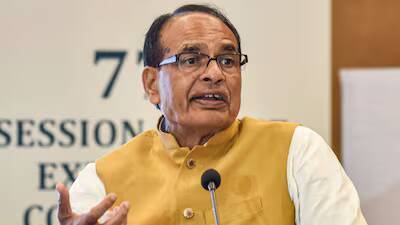
Crocodile tears: Shivraj on Congress’ ‘MGNREGA Bachao’ protest
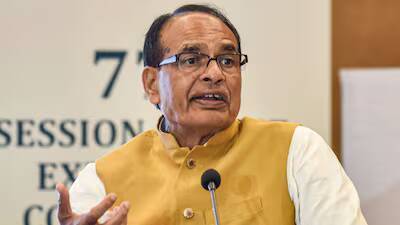
The Indian political landscape has been abuzz with the recent announcement of the replacement of the Mahatma Gandhi National Rural Employment Guarantee Act (MGNREGA) with the Vishwa Bharatiya Gramin Rozgar Abhiyan (VB-G RAM G Act). The Congress party, in response, has vowed to launch a nationwide protest, dubbed ‘MGNREGA Bachao’, starting from January 5. However, Union Minister Shivraj Singh Chouhan has come out swinging, accusing the Congress of shedding “crocodile tears” over the issue.
According to Chouhan, the Congress’s clamour is purely political and lacks any genuine concern for the welfare of the rural population. He pointed out that the Congress, during its tenure, had consistently reduced the budget for MGNREGA, thereby undermining the very essence of the program. “This is the same Congress that, from time to time, reduced the budget for MGNREGA,” he said, highlighting the party’s apparent hypocrisy.
The MGNREGA, enacted in 2006, was a flagship program of the UPA government, aimed at providing a safety net for rural households by guaranteeing 100 days of wage employment per year. The program was designed to address the issue of rural poverty and unemployment, and its implementation was seen as a significant step towards achieving the Millennium Development Goals (MDGs).
However, over the years, the program has faced numerous challenges, including funding constraints, corruption, and inefficient implementation. The current government’s decision to replace MGNREGA with the VB-G RAM G Act has been met with resistance from the Congress, which claims that the new program will undermine the rights of rural workers and compromise the social security net.
Chouhan’s remarks, however, suggest that the Congress’s opposition to the new program is driven more by political considerations than a genuine concern for the welfare of the rural population. He argued that the Congress’s track record on MGNREGA has been dismal, with the party consistently reducing the budget for the program during its tenure.
The ‘MGNREGA Bachao’ protest, announced by the Congress, is seen as an attempt to mobilize public opinion against the government’s decision to replace the program. The protest, scheduled to begin on January 5, is expected to be a major show of strength for the Congress, which has been struggling to regain its footing in Indian politics.
However, Chouhan’s comments have put the Congress on the back foot, with the party facing allegations of hypocrisy and political opportunism. The Congress will need to convincingly articulate its position on the issue and demonstrate its commitment to the welfare of the rural population if it hopes to gain traction with its protest.
The debate over MGNREGA and its replacement has significant implications for Indian politics and the welfare of the rural population. As the country prepares for the ‘MGNREGA Bachao’ protest, it remains to be seen whether the Congress can successfully mobilize public opinion and pressure the government to reconsider its decision.
In conclusion, the controversy surrounding MGNREGA and its replacement has brought to the fore the complexities of Indian politics and the challenges of implementing social welfare programs. While the Congress has vowed to launch a nationwide protest against the government’s decision, Chouhan’s remarks have raised questions about the party’s motives and track record on the issue.
As the debate unfolds, it is essential to examine the facts and consider the implications of the government’s decision on the rural population. The ‘MGNREGA Bachao’ protest, scheduled to begin on January 5, will be a significant test of the Congress’s ability to mobilize public opinion and influence government policy.
The fate of MGNREGA and the welfare of the rural population hang in the balance, and it remains to be seen how the situation will unfold in the coming days. One thing is certain, however – the controversy surrounding MGNREGA has brought to the fore the complexities of Indian politics and the challenges of implementing social welfare programs.
About the Author