Crocodile tears: Shivraj on Congress’ ‘MGNREGA Bachao’ protest
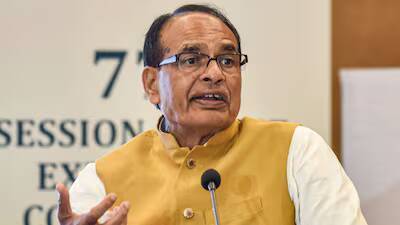
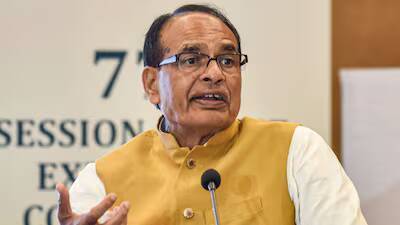
The recent announcement by the Congress party to launch a nationwide protest, dubbed ‘MGNREGA Bachao’, has sparked a heated debate in the country. The protest, set to begin on January 5, aims to oppose the replacement of the Mahatma Gandhi National Rural Employment Guarantee Act (MGNREGA) with the new Vishwakarma Baba-Gramodyog Rozgar Arthik (VB-G RAM G) Act. However, Union Minister Shivraj Singh Chouhan has accused the Congress of shedding “crocodile tears” over the issue, stating that their concerns are purely political.
According to Chouhan, the Congress party has a history of reducing the budget for MGNREGA, which raises questions about their sincerity in opposing the new legislation. “The Congress’s clamour is purely political…This is the same Congress that, from time to time, reduced the budget for MGNREGA,” he said. This statement highlights the perceived hypocrisy of the Congress party, which has been criticized for its inconsistent stance on the issue.
The MGNREGA, introduced in 2006, aimed to provide a guarantee of 100 days of employment to rural laborers, ensuring a minimum wage and social security. The scheme has been instrumental in providing livelihood support to millions of rural households, particularly during times of economic distress. However, the new VB-G RAM G Act has been met with skepticism by many, who fear that it may undermine the core principles of the MGNREGA.
The Congress party has been vocal in its opposition to the new legislation, citing concerns about the potential impact on rural employment and the welfare of marginalized communities. The ‘MGNREGA Bachao’ protest is seen as an attempt to mobilize public support against the government’s decision to replace the existing Act. However, Chouhan’s remarks suggest that the Congress party’s motives may not be entirely altruistic.
The politics surrounding MGNREGA is complex, with both the ruling party and the opposition trying to outmaneuver each other. The Congress party has been trying to regain its lost ground in rural India, where the MGNREGA has been a significant factor in shaping the political narrative. By opposing the new legislation, the Congress hopes to reap political dividends and project itself as a champion of rural welfare.
On the other hand, the government has been trying to rebrand the MGNREGA as part of its broader effort to reform the rural economy. The new VB-G RAM G Act is seen as an attempt to streamline the existing scheme, making it more efficient and effective. However, the opposition has been quick to point out that the new legislation may compromise the core principles of the MGNREGA, including the guarantee of employment and the minimum wage.
The debate surrounding MGNREGA highlights the deeper ideological divide between the ruling party and the opposition. While the government sees the new legislation as a necessary step towards reforming the rural economy, the opposition views it as an attempt to undermine the welfare state. The ‘MGNREGA Bachao’ protest is likely to be a significant test of the opposition’s ability to mobilize public support and challenge the government’s narrative.
As the protest gains momentum, it will be interesting to see how the government responds to the opposition’s criticism. The Union Minister’s remarks have already set the tone for a heated debate, with both sides engaging in a war of words. The outcome of the protest will depend on the ability of the opposition to sustain public pressure and force the government to reconsider its decision.
In conclusion, the controversy surrounding MGNREGA has once again brought to the fore the complex politics of rural welfare in India. The Congress party’s decision to launch the ‘MGNREGA Bachao’ protest has been met with skepticism by the government, which sees it as a purely political move. As the debate rages on, it is essential to examine the underlying motives and ideologies that drive the politics of rural welfare in India.
About the Author