Crocodile tears: Shivraj on Congress’ ‘MGNREGA Bachao’ protest
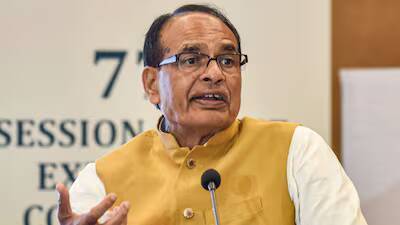
The recent announcement of the replacement of the Mahatma Gandhi National Rural Employment Guarantee Act (MGNREGA) with the VB-G RAM G Act has sparked a heated debate in the country. The Congress party has been vocal in its criticism of the move, with some of its leaders even announcing a nationwide protest, dubbed ‘MGNREGA Bachao’, starting from January 5. However, Union Minister Shivraj Singh Chouhan has accused the Congress of shedding “crocodile tears” over the issue, stating that their clamour is purely political.
According to Chouhan, the Congress party has a history of reducing the budget for MGNREGA, which raises questions about their true intentions behind the protest. “The Congress’s clamour is purely political…This is the same Congress that, from time to time, reduced the budget for MGNREGA,” he said. This statement has sparked a fresh controversy, with many questioning the Congress party’s commitment to the welfare of the rural population.
The MGNREGA, which was enacted in 2006, guarantees 100 days of wage-employment in a year to rural adults. The scheme has been instrumental in providing a safety net to millions of rural households, especially during times of economic distress. However, the new VB-G RAM G Act has been touted as a more comprehensive and effective replacement, with a focus on asset creation and skill development.
The Congress party, however, has expressed strong reservations about the replacement, citing concerns about the potential impact on the rural population. The party has argued that the new act will lead to a reduction in the number of days of employment guaranteed under the scheme, which will adversely affect the livelihoods of millions of rural workers. The ‘MGNREGA Bachao’ protest, which is scheduled to start on January 5, aims to mobilize public opinion against the replacement and push the government to reconsider its decision.
However, Chouhan’s remarks have raised questions about the Congress party’s motivations behind the protest. If the party has a history of reducing the budget for MGNREGA, does it really have the best interests of the rural population at heart? Or is the protest simply a political ploy to garner support and discredit the ruling party?
The issue has also sparked a debate about the role of politics in welfare schemes. While the MGNREGA has been widely acclaimed as a successful initiative, its implementation has often been marred by political considerations. The scheme has been used as a tool for political mobilization, with parties often trying to take credit for its successes and blame each other for its failures.
In this context, Chouhan’s accusation of “crocodile tears” takes on a different connotation. Is the Congress party really shedding tears for the rural population, or is it simply trying to exploit the issue for political gain? The answer to this question will depend on one’s political perspective, but it is clear that the debate surrounding the replacement of MGNREGA has become increasingly politicized.
As the ‘MGNREGA Bachao’ protest approaches, it will be interesting to see how the issue plays out. Will the Congress party be able to mobilize public opinion against the replacement, or will the government be able to convince the people that the new act is a better alternative? One thing is certain, however – the debate surrounding MGNREGA has brought to the forefront the complex and often contentious relationship between politics and welfare schemes in India.
In conclusion, the controversy surrounding the replacement of MGNREGA with the VB-G RAM G Act has sparked a heated debate about the role of politics in welfare schemes. While the Congress party has vowed to launch a nationwide protest against the move, Union Minister Shivraj Singh Chouhan has accused the party of shedding “crocodile tears” over the issue. As the debate continues to unfold, it will be important to separate the political rhetoric from the facts and to consider the potential impact of the replacement on the rural population.
About the Author