Crocodile Tears: Shivraj on Congress’ ‘MGNREGA Bachao’ Protest
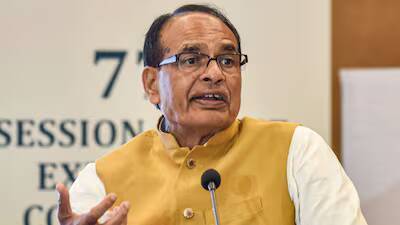
The recent announcement of the replacement of the Mahatma Gandhi National Rural Employment Guarantee Act (MGNREGA) with the Vidya, Bal, Rozgar, Aur Mahila (VB-G RAM G) Act has sparked a heated debate in the country. The Congress party has been vocal in its criticism of the move, vowing to launch a nationwide ‘MGNREGA Bachao’ protest from January 5. However, Union Minister Shivraj Singh Chouhan has accused the Congress of shedding “crocodile tears” over the issue, stating that their clamour is purely political.
According to Chouhan, the Congress party has a history of reducing the budget for MGNREGA, which raises questions about their commitment to the scheme. “The Congress’s clamour is purely political…This is the same Congress that, from time to time, reduced the budget for MGNREGA,” he said. This statement highlights the hypocrisy of the Congress party, which is now trying to project itself as the champion of the poor and the marginalized.
MGNREGA was introduced in 2006 by the UPA government, with the aim of providing a legal guarantee of employment to rural laborers. The scheme has been successful in providing employment to millions of people, especially during times of drought and economic distress. However, over the years, the scheme has faced several challenges, including funding constraints and corruption.
The replacement of MGNREGA with the VB-G RAM G Act has been seen as an attempt to revamp the scheme and make it more effective. The new act aims to provide employment to rural laborers, while also focusing on education, childcare, and women’s empowerment. However, the Congress party has criticized the move, stating that it will lead to the dismantling of the MGNREGA scheme and leave millions of people without employment.
The ‘MGNREGA Bachao’ protest, which is scheduled to start from January 5, is seen as an attempt by the Congress party to mobilize public opinion against the government’s decision. However, Chouhan’s statement has raised questions about the Congress party’s motives, and whether their criticism of the government’s decision is genuine or just a political ploy.
It is worth noting that the Congress party has a history of criticizing the government’s decisions, only to adopt similar policies when they are in power. This has led to a sense of distrust among the public, who are skeptical about the Congress party’s intentions.
In conclusion, the debate over the replacement of MGNREGA with the VB-G RAM G Act is a complex issue, with both sides presenting valid arguments. While the Congress party has criticized the government’s decision, stating that it will harm the interests of rural laborers, the government has argued that the new act will provide more effective employment opportunities and focus on education, childcare, and women’s empowerment.
However, Chouhan’s statement has raised questions about the Congress party’s motives, and whether their criticism of the government’s decision is genuine or just a political ploy. As the ‘MGNREGA Bachao’ protest is scheduled to start from January 5, it remains to be seen how the public will respond to the Congress party’s call to action.
Ultimately, the decision to replace MGNREGA with the VB-G RAM G Act is a complex issue that requires careful consideration and debate. While the government has argued that the new act will provide more effective employment opportunities, the Congress party has criticized the move, stating that it will harm the interests of rural laborers. As the debate continues, it is essential to examine the facts and motives behind the decision, rather than relying on political rhetoric and propaganda.
The ‘MGNREGA Bachao’ protest is an opportunity for the public to engage with the issue and express their opinions. However, it is essential to approach the issue with a critical and nuanced perspective, rather than relying on emotional appeals and political slogans. By examining the facts and motives behind the decision, we can have a more informed and meaningful debate about the future of MGNREGA and the employment opportunities for rural laborers.
In the end, the replacement of MGNREGA with the VB-G RAM G Act is a complex issue that requires careful consideration and debate. While the government has argued that the new act will provide more effective employment opportunities, the Congress party has criticized the move, stating that it will harm the interests of rural laborers. As the debate continues, it is essential to approach the issue with a critical and nuanced perspective, rather than relying on political rhetoric and propaganda.
About the Author