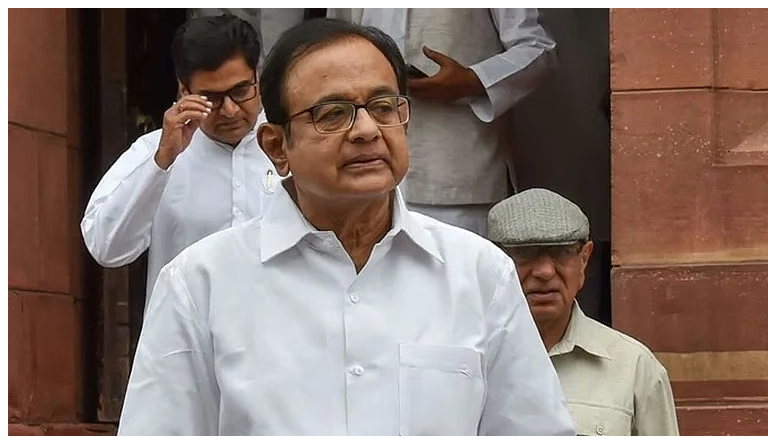
Chidambaram blames duopoly model amid IndiGo flight crisis
The recent IndiGo flight crisis has sent shockwaves across the country, leaving thousands of passengers stranded and frustrated. The airline, which is one of the largest in India, has been facing a plethora of issues, including flight cancellations, delays, and poor customer service. Amidst this chaos, Congress leader P Chidambaram has come out in support of his party colleague Rahul Gandhi’s comment that the “monopoly/duopoly model is ill-suited for a developing country” like India.
Chidambaram, a seasoned politician and former Finance Minister, has blamed the duopoly model in the airline industry for the current crisis. He pointed out that the duopoly exists in many sectors, including the airline industry, where a few large players dominate the market, stifling competition and innovation. According to him, this lack of competition has led to the current crisis, where passengers are facing the brunt of poor service and high fares.
“Liberalisation and Open Economy are based on competition. Absent competition, there will be baneful consequences as we’re witnessing now in the airline industry,” Chidambaram said, echoing Rahul Gandhi’s sentiments. He argued that the duopoly model has led to a lack of accountability and transparency in the industry, allowing airlines like IndiGo to prioritize profits over passenger convenience.
The IndiGo flight crisis has sparked a nationwide debate on the need for greater competition and regulation in the airline industry. Many experts have pointed out that the industry is dominated by a few large players, including IndiGo, Air India, and SpiceJet, which has led to a lack of choice for passengers. The absence of competition has also led to high fares, poor service, and a general lack of accountability.
Chidambaram’s comments have sparked a heated debate on social media, with many users agreeing with his assessment of the duopoly model. Many have pointed out that the lack of competition has led to a lack of innovation and investment in the industry, which has ultimately harmed passengers. Others have argued that the government needs to take a more proactive role in regulating the industry and promoting competition.
The government has already taken steps to address the crisis, with the Ministry of Civil Aviation ordering a probe into the matter and announcing relief steps for affected passengers. However, many experts believe that more needs to be done to address the underlying issues in the industry.
The duopoly model has been a subject of debate in many sectors, including the airline industry, telecommunications, and e-commerce. While some argue that it leads to efficiency and economies of scale, others point out that it stifles competition and innovation. In the case of the airline industry, the duopoly model has led to a lack of choice for passengers, high fares, and poor service.
In recent years, the Indian government has taken steps to promote competition and innovation in the airline industry. The government has announced plans to privatize Air India, which is expected to attract new players to the industry. Additionally, the government has announced plans to develop new airports and improve infrastructure, which is expected to increase capacity and reduce congestion.
However, more needs to be done to address the underlying issues in the industry. The government needs to take a more proactive role in regulating the industry and promoting competition. This can be done by encouraging new players to enter the market, reducing regulatory barriers, and promoting transparency and accountability.
In conclusion, the IndiGo flight crisis has highlighted the need for greater competition and regulation in the airline industry. Chidambaram’s comments on the duopoly model have sparked a heated debate on the need for more competition and innovation in the industry. While the government has taken steps to address the crisis, more needs to be done to address the underlying issues in the industry. As the industry continues to evolve, it is essential that policymakers and regulators take a more proactive role in promoting competition and innovation, ultimately benefiting passengers and the economy as a whole.
About the Author