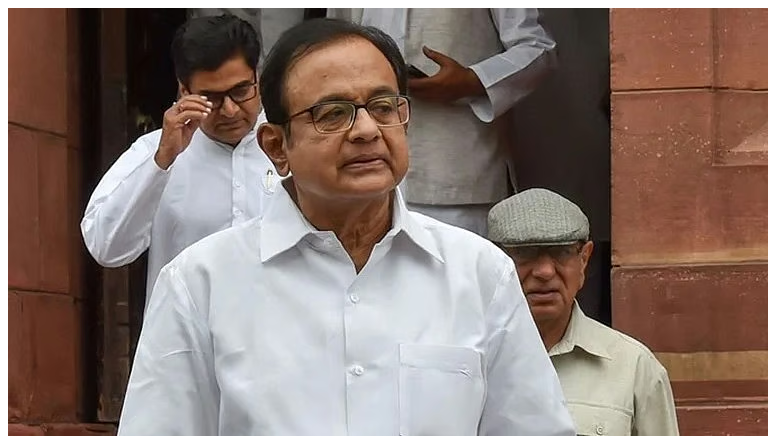
Chidambaram blames duopoly model amid IndiGo flight crisis
The recent chaos surrounding IndiGo flights has sparked a heated debate about the state of the airline industry in India. With thousands of passengers affected by the sudden cancellation of flights, the crisis has brought to the forefront the issue of monopolies and duopolies in the sector. Congress leader P Chidambaram has weighed in on the matter, backing Rahul Gandhi’s comment that the “monopoly/duopoly model is ill-suited for a developing country” like India.
According to Chidambaram, the duopoly model exists in many sectors, including the airline industry, where a few large players dominate the market, stifling competition and innovation. He argued that the principles of liberalization and open economy are based on competition, which is essential for driving growth, innovation, and consumer choice. However, in the absence of competition, the consequences can be severe, as evident in the current airline industry crisis.
The IndiGo flight crisis has exposed the vulnerabilities of the duopoly model, where a few large airlines, including IndiGo, have come to dominate the market, leaving little room for smaller players to operate. This has resulted in a lack of competition, leading to higher prices, reduced services, and a general disregard for consumer interests. The crisis has also highlighted the need for greater regulatory oversight and stricter enforcement of competition laws to prevent the abuse of market power.
Chidambaram’s comments come at a time when the government has ordered a probe into the IndiGo flight crisis, with the Ministry of Civil Aviation announcing relief steps to mitigate the suffering of affected passengers. The government’s response is a welcome move, but it only addresses the symptoms of the problem, rather than the root cause. The duopoly model, which has been allowed to flourish in the airline industry, is the underlying factor that has contributed to the current crisis.
The airline industry is not the only sector where the duopoly model is prevalent. Many other industries, including telecommunications, pharmaceuticals, and e-commerce, are also characterized by a few large players dominating the market. This has led to a lack of competition, innovation, and consumer choice, with smaller players struggling to survive.
The consequences of the duopoly model are far-reaching and can have a significant impact on the economy and society as a whole. In the absence of competition, large players can abuse their market power, engaging in anti-competitive practices, such as price-fixing, predatory pricing, and exclusionary conduct. This can lead to higher prices, reduced innovation, and a general disregard for consumer interests.
Furthermore, the duopoly model can also have a negative impact on employment and economic growth. In the absence of competition, large players may not have the incentive to invest in new technologies, processes, and products, leading to stagnation and a lack of innovation. This can result in reduced employment opportunities, lower wages, and slower economic growth.
In contrast, a competitive market with multiple players can drive innovation, reduce prices, and increase consumer choice. It can also lead to the creation of new jobs, higher wages, and faster economic growth. Therefore, it is essential to promote competition in all sectors, including the airline industry, to ensure that consumers have access to a wide range of choices and that the economy grows at a rapid pace.
In conclusion, the IndiGo flight crisis has highlighted the need for greater competition in the airline industry and the importance of promoting competition in all sectors. The duopoly model, which has been allowed to flourish in many industries, is ill-suited for a developing country like India, where competition is essential for driving growth, innovation, and consumer choice. As Chidambaram and Rahul Gandhi have argued, it is time to rethink the duopoly model and promote competition in all sectors to ensure that consumers have access to a wide range of choices and that the economy grows at a rapid pace.
The government’s response to the IndiGo flight crisis is a step in the right direction, but it is only a temporary solution. To address the root cause of the problem, the government needs to take a more comprehensive approach, promoting competition in all sectors and ensuring that the principles of liberalization and open economy are upheld. This can be achieved through a combination of policies, including stricter enforcement of competition laws, reduced regulatory barriers, and increased investment in infrastructure and innovation.
As the debate surrounding the IndiGo flight crisis continues, it is essential to remember that the duopoly model is not unique to the airline industry. It is a pervasive problem that affects many sectors, including telecommunications, pharmaceuticals, and e-commerce. Therefore, it is essential to take a holistic approach to promoting competition, addressing the root cause of the problem, and ensuring that consumers have access to a wide range of choices.
About the Author