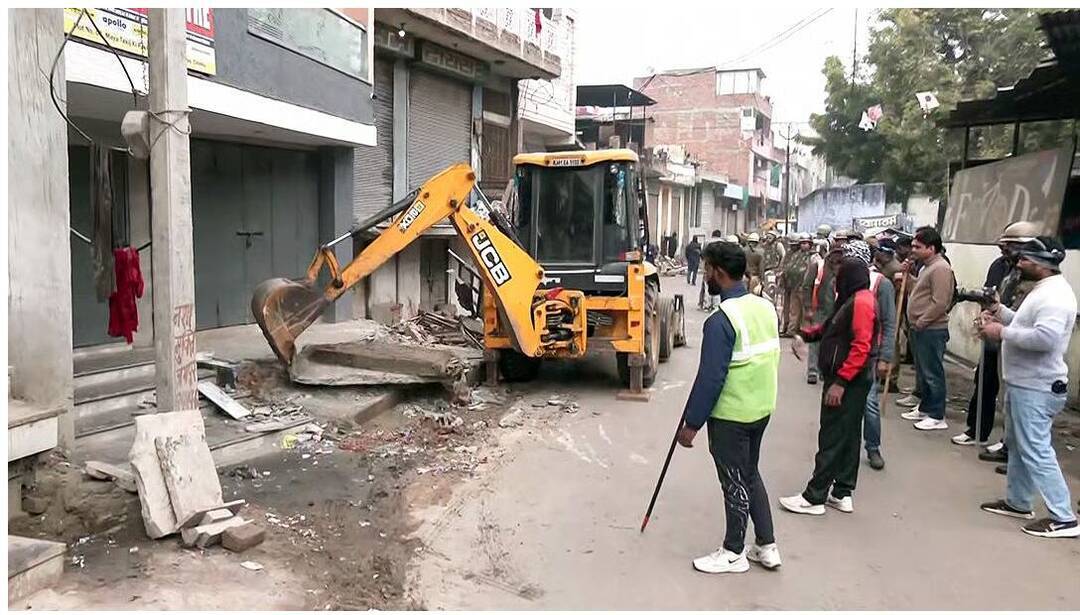
Authorities in Raj’s Chomu bulldozed 20 slaughterhouses after violence
The town of Chomu, located in the Indian state of Rajasthan, has been in the news recently due to a violent incident that took place in the area. Following a stone-pelting incident, the authorities have taken swift action, launching a crackdown on those allegedly involved. As part of this crackdown, the authorities have bulldozed 20 slaughterhouses in the town, in addition to four other constructions that were deemed to be illegal.
The action was taken on Friday, after notices had been served to the owners of these establishments on December 29. The notices had given them an opportunity to submit valid documents to prove that their businesses were operating within the law. However, no such documents were submitted, leading the authorities to take drastic action.
The demolition drive was carried out with a heavy police deployment, ensuring that order was maintained during the operation. The authorities were keen to avoid any further violence or disruption in the area, and their efforts seem to have been successful in this regard.
The stone-pelting incident that sparked this chain of events had taken place in the town, and it is believed that the violence was linked to the presence of these illegal slaughterhouses. The authorities have been under pressure to take action against such establishments, which have been operating without proper licenses or permits.
The action taken by the authorities in Chomu is a significant one, and it sends a strong message to those who are involved in illegal activities. The fact that the authorities were able to carry out the demolition drive without any major incidents is a testament to their planning and execution.
It is worth noting that the authorities had acted legally, and had followed the proper procedures before taking action. The notices that were served on the owners of the slaughterhouses had given them ample opportunity to comply with the law, and it was only when they failed to do so that the authorities took further action.
The demolition of the slaughterhouses and other constructions is likely to have a significant impact on the town of Chomu. It is expected that the action will help to reduce the incidence of violence and other illegal activities in the area, and will also help to improve the overall quality of life for residents.
The incident highlights the importance of ensuring that businesses and other establishments operate within the law. The presence of illegal slaughterhouses and other constructions can have serious consequences, including the risk of violence and disruption to the community.
In this case, the authorities have taken a strong stance against those who are involved in illegal activities, and have sent a clear message that such behavior will not be tolerated. The action taken by the authorities in Chomu is a positive step towards maintaining law and order in the town, and it is to be hoped that it will have a lasting impact.
The incident also raises questions about the role of the authorities in regulating businesses and other establishments. It is clear that the authorities have a responsibility to ensure that such establishments operate within the law, and that they take action against those who fail to comply.
In conclusion, the authorities in Chomu have taken a significant step towards maintaining law and order in the town, by bulldozing 20 slaughterhouses and four other constructions that were deemed to be illegal. The action was taken after notices had been served on the owners of these establishments, and it is a testament to the authorities’ commitment to upholding the law.
The incident highlights the importance of ensuring that businesses and other establishments operate within the law, and it is to be hoped that the action taken by the authorities in Chomu will have a lasting impact. The authorities have sent a strong message to those who are involved in illegal activities, and it is clear that they will take swift and decisive action against those who fail to comply with the law.
About the Author