30-35 people threw stones, snatched police loud hailer: FIR on Delhi violence
A recent incident of violence has been reported in Central Delhi’s Turkman Gate area, where a group of around 30-35 people allegedly pelted stones during an anti-encroachment drive by the Municipal Corporation of Delhi (MCD) near the Faiz-e-Ilahi Mosque. The incident occurred on Wednesday and has led to the registration of a First Information Report (FIR) against the accused.
According to the FIR, which was lodged on the complaint of a constable, the group of people not only threw stones but also snatched a government loud-hailer from the constable’s hand and damaged it. The constable’s complaint stated that “one person…snatched the government loud-hailer from my hand and damaged it.” This incident highlights the increasing trend of violence and aggression against law enforcement officials who are merely performing their duties.
The anti-encroachment drive was being carried out by the MCD in the area, which has been a contentious issue in the past. The drive aimed to remove illegal encroachments and structures that were allegedly built on government land. However, the situation took a turn for the worse when the group of people, reportedly residents of the area, began to protest against the drive.
The protest quickly turned violent, with the group throwing stones and damaging property. The police, who were present at the scene, tried to intervene and disperse the crowd, but they were met with resistance. The constable who lodged the FIR reported that the group was aggressive and refused to listen to reason, leading to the snatching of the loud-hailer and other incidents of violence.
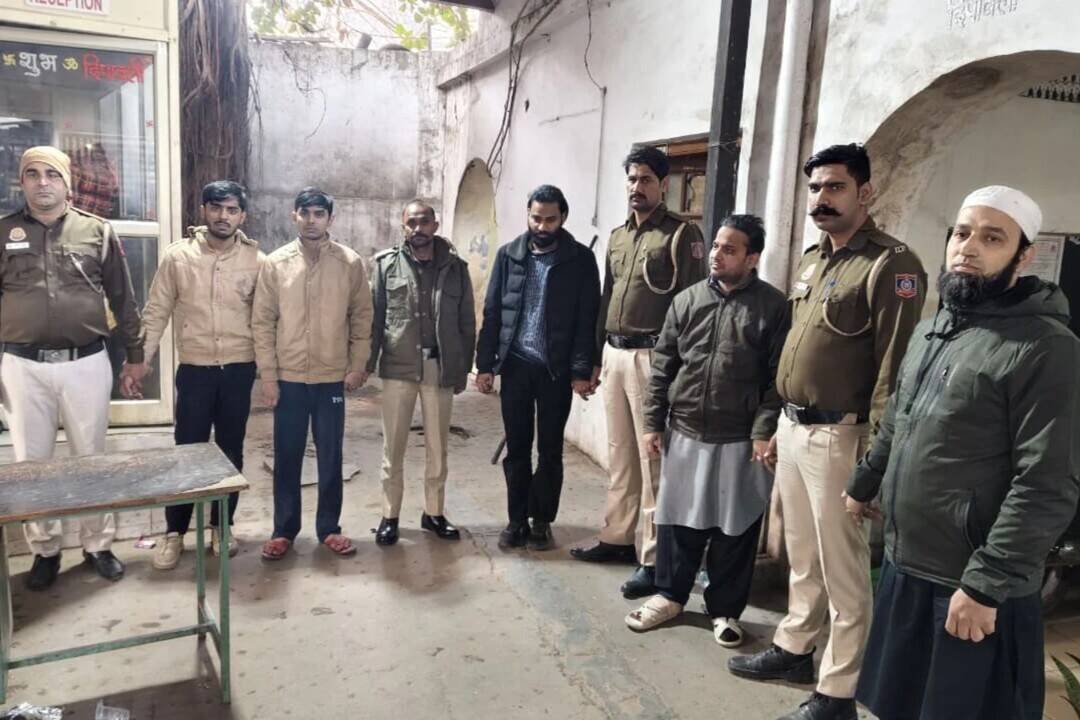
The police have arrested five people in connection with the incident, and efforts are underway to identify and apprehend the others involved in the violence. The police are also reviewing footage from the area to identify the perpetrators and gather evidence.
This incident raises several questions about the increasing violence and aggression against law enforcement officials in the country. It also highlights the need for more effective communication and community engagement to prevent such incidents from occurring in the future.
The MCD’s anti-encroachment drive is a necessary step to ensure that government land is not encroached upon and that the rule of law is upheld. However, it is equally important to ensure that such drives are carried out in a manner that is sensitive to the concerns of the local community. This can involve engaging with residents and stakeholders, providing adequate notice and compensation, and ensuring that the rights of all parties are respected.
In this case, it appears that the situation was not handled effectively, leading to the outbreak of violence. The police and the MCD must take steps to prevent such incidents from occurring in the future, including providing training to officials on how to handle sensitive situations and engaging with the community to build trust and understanding.
The incident also highlights the need for more effective mechanisms for addressing grievances and resolving disputes in a peaceful and constructive manner. This can involve setting up community mediation centers, providing access to legal aid, and promoting alternative dispute resolution mechanisms.
In conclusion, the incident of violence in Central Delhi’s Turkman Gate area is a disturbing reminder of the need for more effective communication, community engagement, and conflict resolution mechanisms. The police and the MCD must take steps to prevent such incidents from occurring in the future, while also ensuring that the rights of all parties are respected and upheld.
The incident is a complex one, involving issues of encroachment, community resistance, and police-community relations. It requires a nuanced and multi-faceted approach to resolve, involving not just law enforcement but also community engagement, social welfare, and economic development.
As the police continue to investigate the incident and apprehend those involved, it is essential to remember that violence is never an acceptable solution to any problem. It is only through peaceful and constructive dialogue that we can resolve our differences and build a more just and equitable society.
About the Author