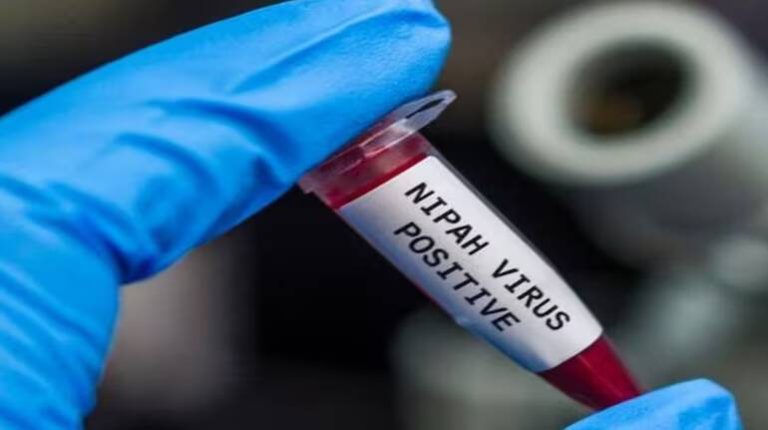
2 Suspected Nipah Virus Cases Detected in Bengal, Both Critical
In a concerning turn of events, two suspected cases of Nipah virus have been detected in West Bengal’s Barasat, according to officials on Monday. The infection was detected in two nurses, one male and one female, who are currently admitted to Barasat Hospital in critical condition. This development has sent alarm bells ringing, and the Union Health Minister, JP Nadda, has promptly responded by sending a National Joint Outbreak Response Team to the affected area to check the outbreak and provide assistance.
The Nipah virus is a highly contagious and deadly disease that can spread through human-to-human contact, as well as through contact with infected animals. The virus is known to cause severe respiratory and brain symptoms, and its mortality rate is estimated to be around 70%. The fact that two healthcare workers have been infected with the virus is particularly worrying, as it highlights the risk of transmission in healthcare settings.
According to reports, the two nurses who have been infected with the virus were working at a hospital in Barasat, where they came into contact with a patient who was suspected to have been infected with the virus. The patient, whose identity has not been disclosed, had been admitted to the hospital with symptoms of fever, headache, and respiratory distress. The nurses, who were treating the patient, began to show similar symptoms, and their condition rapidly deteriorated.
The West Bengal health department has swung into action, and a team of experts has been dispatched to the hospital to investigate the outbreak. The team, which includes epidemiologists, microbiologists, and other healthcare experts, will work to identify the source of the outbreak, track down anyone who may have come into contact with the infected individuals, and provide guidance on infection control and prevention.
The Union Health Minister, JP Nadda, has also taken prompt action, sending a National Joint Outbreak Response Team to West Bengal to assist the state government in responding to the outbreak. The team, which includes experts from the National Centre for Disease Control (NCDC), the Indian Council of Medical Research (ICMR), and other organizations, will work closely with the state government to contain the outbreak and prevent further spread of the virus.
The detection of two suspected Nipah virus cases in West Bengal is a stark reminder of the need for vigilance and preparedness in the face of emerging and re-emerging infectious diseases. The Nipah virus is a highly infectious and deadly disease that can spread quickly, and its detection in two healthcare workers highlights the risk of transmission in healthcare settings.
The Indian government has taken several steps in recent years to strengthen its response to infectious disease outbreaks, including the establishment of the NCDC, which serves as the country’s apex body for disease surveillance and outbreak response. The government has also launched several initiatives to improve healthcare infrastructure, including the establishment of new hospitals and healthcare facilities, and the strengthening of existing ones.
However, despite these efforts, the detection of two suspected Nipah virus cases in West Bengal highlights the need for continued vigilance and preparedness. The Nipah virus is a highly unpredictable and deadly disease, and its detection in two healthcare workers serves as a reminder of the risks faced by healthcare workers and the need for robust infection control and prevention measures.
In conclusion, the detection of two suspected Nipah virus cases in West Bengal is a concerning development that highlights the need for vigilance and preparedness in the face of emerging and re-emerging infectious diseases. The Indian government has taken prompt action, sending a National Joint Outbreak Response Team to the affected area to assist the state government in responding to the outbreak. The situation is being closely monitored, and all necessary measures are being taken to contain the outbreak and prevent further spread of the virus.
About the Author