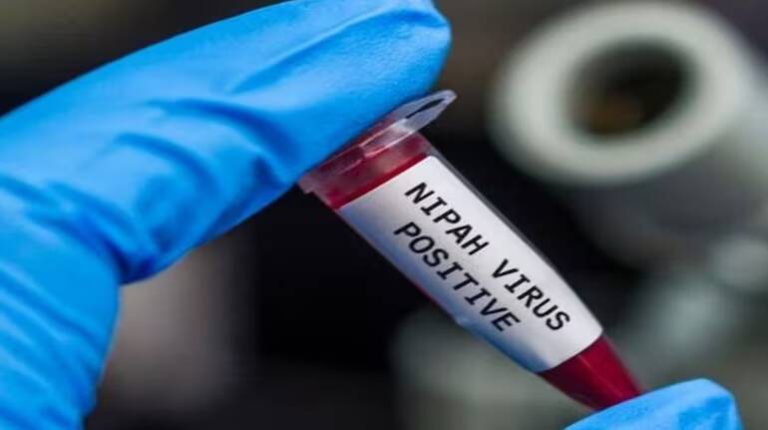
2 Suspected Nipah Virus Cases Detected in Bengal, Both Critical
The Nipah virus, a highly contagious and deadly disease, has once again raised its head in India. Two suspected cases of the virus were detected in West Bengal’s Barasat, officials said on Monday. The infection was detected in two nurses, one male and one female, who are currently admitted to Barasat Hospital in critical condition. The news has sent shockwaves across the country, and the Union Health Minister has swung into action to contain the outbreak.
According to reports, the two nurses were admitted to the hospital with symptoms of fever, headache, and respiratory problems. The hospital authorities immediately suspected that they might be suffering from the Nipah virus and sent their blood samples to the National Institute of Virology (NIV) in Pune for testing. The test results are still awaited, but the symptoms and initial reports suggest that the nurses might be infected with the virus.
The Nipah virus is a zoonotic disease, meaning it can be transmitted from animals to humans. It is usually spread through direct contact with infected bats, pigs, or other animals. The virus can also be spread through contaminated food and water. The symptoms of the disease include fever, headache, muscle pain, and respiratory problems. In severe cases, the virus can cause encephalitis, or inflammation of the brain, which can be fatal.
The Union Health Minister, JP Nadda, has taken cognizance of the situation and has sent a National Joint Outbreak Response Team to West Bengal to check the outbreak and provide assistance. The team consists of experts from the NIV, the Indian Council of Medical Research (ICMR), and other health organizations. The team will work with the state health authorities to identify the source of the infection, contain the outbreak, and provide treatment to the affected patients.
The detection of the suspected Nipah virus cases in West Bengal has raised concerns about the spread of the disease in the state. The state health authorities have been put on high alert, and measures are being taken to prevent the spread of the disease. The authorities are also conducting contact tracing to identify people who may have come into contact with the infected nurses.
The Nipah virus outbreak in West Bengal is not the first instance of the disease in India. In 2018, a major outbreak of the virus occurred in Kerala, which resulted in the death of 17 people. The outbreak was contained after a massive effort by the health authorities, but it highlighted the need for increased awareness and preparedness to deal with such outbreaks.
The suspected Nipah virus cases in West Bengal are a reminder that the disease is still a threat to public health in India. The government and health authorities must take all necessary measures to contain the outbreak and prevent the spread of the disease. This includes increasing awareness about the disease, providing training to health workers, and ensuring that hospitals and health facilities are equipped to deal with such outbreaks.
In addition, the government must also take steps to prevent the spread of the disease in the long term. This includes implementing measures to prevent the transmission of the disease from animals to humans, such as culling infected animals and preventing the sale of contaminated food and water.
In conclusion, the detection of the suspected Nipah virus cases in West Bengal is a serious concern, and the government and health authorities must take all necessary measures to contain the outbreak and prevent the spread of the disease. The public must also be aware of the risks of the disease and take precautions to prevent its spread. By working together, we can prevent the spread of the Nipah virus and protect public health.
About the Author