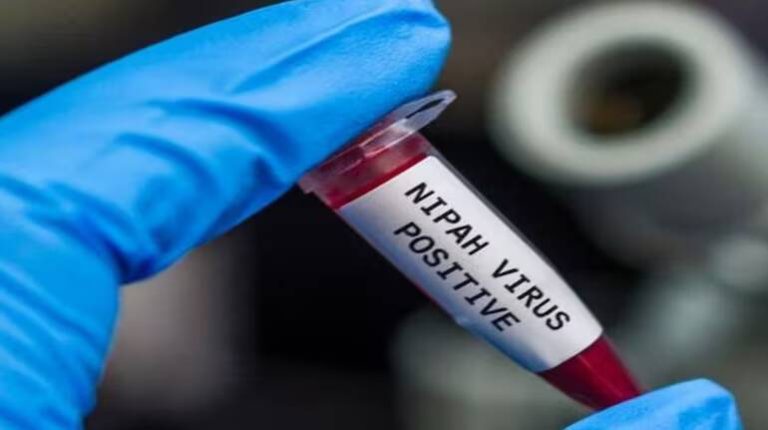
2 Suspected Nipah Virus Cases Detected in Bengal, Both Critical
In a concerning development, two suspected cases of Nipah virus have been detected in West Bengal’s Barasat, according to officials. The infection was detected in two nurses, one male and one female, who are currently admitted to Barasat Hospital in critical condition. The news has sent shockwaves across the region, with health authorities scrambling to contain the outbreak and provide assistance to the affected individuals.
The two nurses, whose identities have not been revealed, were admitted to the hospital after exhibiting symptoms of the deadly virus. Nipah virus is a zoonotic disease, meaning it can be transmitted between animals and humans, and is typically spread through direct contact with infected bats, pigs, or other animals. The virus can cause a range of symptoms, including fever, headache, and respiratory problems, and can be fatal if left untreated.
The detection of the suspected Nipah virus cases in Bengal has prompted the Union Health Minister, JP Nadda, to take immediate action. A National Joint Outbreak Response Team has been sent to the region to check the outbreak and provide assistance to the state health authorities. The team, comprising experts from the National Centre for Disease Control (NCDC) and the World Health Organization (WHO), will work closely with local health officials to investigate the outbreak, identify the source of the infection, and implement measures to prevent further spread of the disease.
The situation is being closely monitored by health authorities, who are taking all necessary precautions to prevent the spread of the disease. The hospital where the two nurses are being treated has been put on high alert, and all necessary measures are being taken to ensure that the infection does not spread to other patients or healthcare workers.
The detection of Nipah virus cases in Bengal is not an isolated incident. In recent years, there have been several outbreaks of the disease in various parts of the country, including Kerala and Karnataka. The virus was first identified in 1998 in Malaysia and Singapore, and since then, there have been several outbreaks in Southeast Asia and India.
The Nipah virus outbreak in Kerala in 2018 was particularly severe, resulting in the deaths of 17 people. The outbreak was attributed to the consumption of date palm sap contaminated with the virus, which was spread by infected bats. The Kerala government had to take drastic measures to contain the outbreak, including imposing restrictions on the movement of people and animals, and conducting widespread testing to identify infected individuals.
In this context, the detection of suspected Nipah virus cases in Bengal is a cause for concern. The state health authorities must take all necessary measures to prevent the spread of the disease, including identifying the source of the infection, tracing contacts, and implementing measures to prevent further transmission.
The Union Health Minister’s decision to send a National Joint Outbreak Response Team to the region is a welcome move. The team will provide critical support to the state health authorities, including technical expertise, laboratory testing, and logistical support. The team will also work closely with local health officials to develop a comprehensive response plan to contain the outbreak and prevent further spread of the disease.
As the situation continues to unfold, it is essential that the public remains vigilant and takes all necessary precautions to prevent the spread of the disease. This includes avoiding contact with infected animals, wearing protective gear when handling animals or their products, and practicing good hygiene.
In conclusion, the detection of suspected Nipah virus cases in Bengal is a concerning development that requires immediate attention and action. The Union Health Minister’s decision to send a National Joint Outbreak Response Team to the region is a welcome move, and the state health authorities must take all necessary measures to prevent the spread of the disease. As the situation continues to unfold, it is essential that the public remains informed and takes all necessary precautions to prevent the spread of the disease.
About the Author