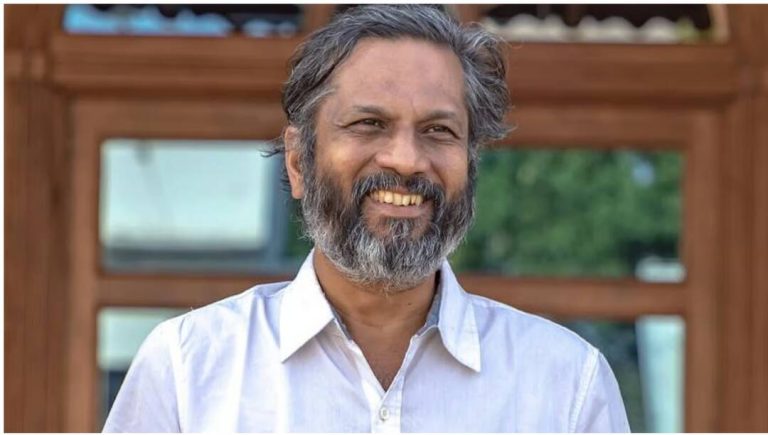
Foolish to think censor board is still relevant: RGV on Jana Nayagan row
The recent controversy surrounding Vijay’s film ‘Jana Nayagan’ not getting a censor certificate from the Central Board of Film Certification (CBFC) has sparked a heated debate in the film industry. The film, which is a highly anticipated release, has been stuck in a limbo due to the CBFC’s refusal to grant it a certificate, citing various reasons. Amidst this row, renowned filmmaker Ram Gopal Varma has come out strongly against the censor board, calling it an outdated institution that has no relevance in today’s digital age.
Varma, known for his bold and unapologetic views, stated that “it’s foolish to think that the censor board is still relevant today.” He blamed the film industry for allowing the CBFC to exist for so long, despite its apparent irrelevance. According to Varma, the censor board was born in an era when the state controlled the media, and it was necessary to have some form of regulation to ensure that the content being produced was suitable for public consumption. However, with the advent of the internet and social media, the dynamics of content creation and consumption have changed dramatically.
“Censor board was born in an era when the state controlled the media, but today, any form of control is impossible,” Varma said. He argued that in today’s digital age, where anyone can create and share content with ease, the concept of censorship has become redundant. The internet has democratized content creation, and it is no longer possible for any authority to control what people watch or consume. Varma believes that the film industry has been slow to adapt to this new reality and has allowed the censor board to continue its outdated practices.
The controversy surrounding ‘Jana Nayagan’ is just the latest example of the censor board’s attempts to exert control over the content being produced. The film, which is a political drama, has been accused of being too critical of the government, and the CBFC has refused to grant it a certificate. This has led to a standoff between the film’s producers and the censor board, with the former accusing the latter of censorship and the latter claiming that it is simply doing its job.
Varma’s comments have sparked a heated debate in the film industry, with some agreeing with his views and others defending the censor board’s role. While some have argued that the censor board is necessary to ensure that films do not promote violence, obscenity, or hate speech, others have pointed out that the board’s guidelines are often arbitrary and subjective. The fact that the censor board has been known to be inconsistent in its decisions, with some films being granted certificates despite containing questionable content, has further fueled the debate.
The issue of censorship is not limited to India, and it is a topic of discussion globally. In many countries, film censorship is seen as a necessary evil, with the aim of protecting children and vulnerable adults from harmful or disturbing content. However, the rise of streaming platforms and online content has made it increasingly difficult for authorities to control what people watch. Many argue that censorship is no longer an effective way to regulate content and that it is up to individual viewers to make their own choices about what they want to watch.
In India, the film industry has been slow to adapt to the changing landscape of content creation and consumption. Despite the growth of streaming platforms and online content, the censor board continues to wield significant power over the films that are released in theaters. This has led to a situation where many films are forced to undergo significant changes before they can be certified, often resulting in a watered-down version of the original content.
Varma’s comments have highlighted the need for the film industry to rethink its approach to censorship. With the rise of digital platforms, it is no longer possible for any authority to control what people watch or consume. The film industry needs to recognize this reality and adapt to the changing times. Rather than relying on the censor board to dictate what is acceptable, filmmakers should be free to create content that is authentic and meaningful, without fear of censorship or reprisal.
In conclusion, the controversy surrounding ‘Jana Nayagan’ has once again highlighted the issue of censorship in the film industry. Ram Gopal Varma’s comments have sparked a heated debate, with some agreeing with his views and others defending the censor board’s role. While the issue of censorship is complex and multifaceted, it is clear that the current system is no longer effective in today’s digital age. The film industry needs to adapt to the changing times and recognize that censorship is no longer a viable way to regulate content. Instead, filmmakers should be free to create content that is authentic and meaningful, without fear of censorship or reprisal.
About the Author