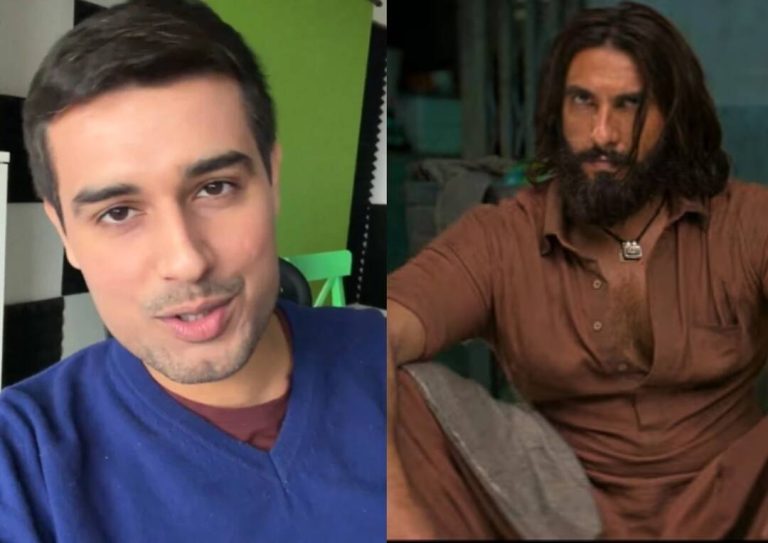
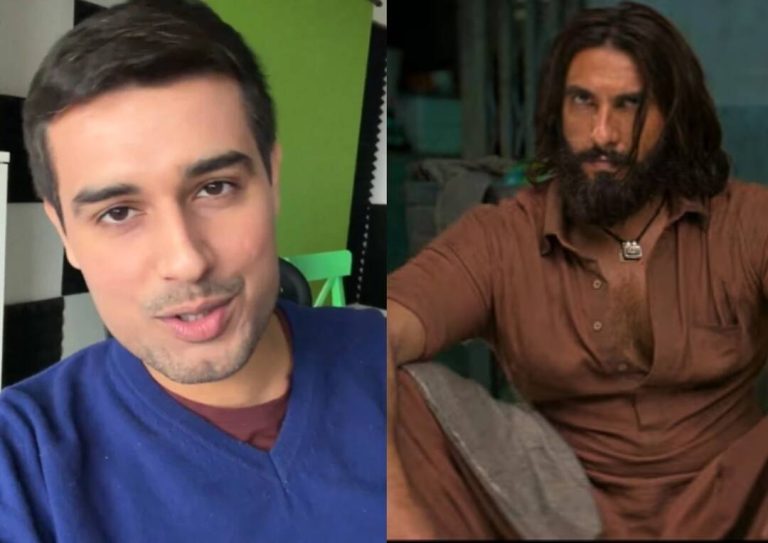
Congrats on views: Dhurandhar actor Naveen on Dhruv Rathee review
The world of Bollywood is no stranger to controversy, and the latest film to stir up a storm is Dhurandhar. The movie has been making headlines for its storyline, direction, and now, for the criticism it has received from popular YouTuber Dhruv Rathee. In a recent interview, Dhurandhar actor Naveen Kaushik, who played the role of ‘Donga’, responded to Rathee’s criticism, and his comments have added fuel to the fire.
For those who may not be aware, Dhruv Rathee is a well-known YouTuber and social commentator who is not afraid to speak his mind. He recently reviewed Dhurandhar on his channel and slammed the film for spreading “false propaganda”. Rathee also called the film’s director, Aditya Dhar, a “propagandist”, which has sparked a heated debate in the film industry.
Naveen Kaushik, who is associated with the film, has now responded to Rathee’s criticism. In an interview, Kaushik said, “He’s an opinionated person. I’m associated with the film, I don’t agree with him. He got some views because of us, congratulations.” These comments suggest that Kaushik is not taking Rathee’s criticism lying down and is instead, hitting back at the YouTuber.
It’s not uncommon for films to receive criticism, but what’s interesting in this case is the way Rathee has been attacked by the film’s team. By saying that Rathee got views because of them, Kaushik is implying that the YouTuber is trying to piggyback on the film’s popularity to gain traction for his channel. This response has sparked a debate about the role of critics and reviewers in the film industry.
On one hand, critics like Rathee have the right to express their opinions and review films based on their artistic and technical merits. On the other hand, filmmakers and actors have the right to respond to criticism and defend their work. However, when responses become personal and dismissive, it can be seen as an attempt to silence critics and stifle debate.
The controversy surrounding Dhurandhar is not limited to Rathee’s review. The film has been accused of spreading “false propaganda” and promoting a particular ideology. These accusations are serious and deserve to be addressed by the film’s team. Instead of responding to criticism with personal attacks, the team could have engaged with Rathee and other critics in a constructive dialogue.
The debate surrounding Dhurandhar is also a reflection of the larger issues plaguing the film industry. The rise of propaganda films and the blurring of lines between entertainment and ideology are concerns that need to be addressed. As filmmakers and actors, it’s essential to be mindful of the impact of their work on society and to engage with critics and audiences in a respectful and constructive manner.
In conclusion, the controversy surrounding Dhurandhar is a complex issue that involves questions of artistic freedom, criticism, and ideology. While Naveen Kaushik’s response to Dhruv Rathee’s criticism may have been seen as dismissive, it’s essential to remember that critics and reviewers play a vital role in shaping our understanding of films and their impact on society. As the debate surrounding Dhurandhar continues, it’s crucial to engage in constructive dialogue and to respect differing opinions.
The film industry is a powerful medium that has the ability to shape our perceptions and influence our thoughts. As such, it’s essential to approach filmmaking with sensitivity, respect, and a commitment to artistic integrity. By engaging with critics and audiences in a respectful and constructive manner, filmmakers and actors can create a more nuanced and informed debate about the role of cinema in society.
About the Author