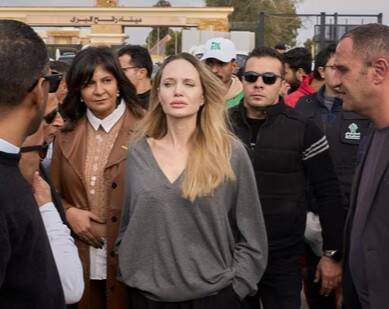
Angelina Jolie Visits Gaza’s Rafah Crossing Amid Israeli Suspension
The Gaza Strip has been a focal point of international concern and humanitarian efforts for many years, with the region facing numerous challenges, including poverty, lack of access to basic necessities, and ongoing conflict. In a recent development, Hollywood actress and ex-UN special envoy Angelina Jolie visited the Rafah Crossing in Gaza, highlighting the plight of the people living in the region. Her visit came at a time when Israel announced the suspension of aid organizations working in the Gaza Strip without renewed registrations, according to a CNN report.
Angelina Jolie, known for her philanthropic work and dedication to humanitarian causes, walked through a large warehouse at the Rafah Crossing, which was filled with items that were denied entry into the Gaza Strip. “I walked through a large warehouse that was full of items that were denied entry, most of them medical,” she said, highlighting the dire need for humanitarian aid in the region. The suspension of aid organizations by Israel has exacerbated the already dire situation, leaving many without access to essential supplies, including medical equipment and food.
The Rafah Crossing, which connects the Gaza Strip to Egypt, is a critical entry point for humanitarian aid, including food, medicine, and other essential supplies. However, the crossing has been subject to frequent closures and restrictions, making it difficult for aid to reach those in need. The suspension of aid organizations by Israel has further compounded the problem, with many organizations facing uncertainty about their ability to continue their work in the region.
Angelina Jolie’s visit to the Rafah Crossing is a testament to her commitment to humanitarian causes and her desire to bring attention to the plight of the people living in the Gaza Strip. As a former UN special envoy, she has worked tirelessly to promote humanitarian causes and advocate for the rights of refugees and displaced persons. Her visit to the Rafah Crossing is a powerful reminder of the need for continued humanitarian efforts in the region and the importance of ensuring that aid reaches those who need it most.
The suspension of aid organizations by Israel has been widely criticized by the international community, with many expressing concern about the impact it will have on the people living in the Gaza Strip. The move has been seen as a further escalation of the conflict in the region, with many fearing that it will lead to a humanitarian crisis. The international community has called on Israel to reconsider its decision and to allow aid organizations to continue their work in the region.
In addition to the suspension of aid organizations, the Gaza Strip is also facing a severe economic crisis, with high levels of unemployment and poverty. The region’s economy has been severely impacted by the ongoing conflict, with many businesses forced to close due to lack of access to markets and resources. The situation has been further exacerbated by the COVID-19 pandemic, which has had a devastating impact on the region’s economy.
The visit by Angelina Jolie to the Rafah Crossing is a timely reminder of the need for continued humanitarian efforts in the Gaza Strip. The region is in desperate need of aid, including food, medicine, and other essential supplies. The international community must come together to ensure that aid reaches those who need it most, and that the people living in the Gaza Strip are able to access the basic necessities they need to survive.
In conclusion, Angelina Jolie’s visit to the Rafah Crossing in Gaza is a powerful reminder of the need for continued humanitarian efforts in the region. The suspension of aid organizations by Israel has exacerbated the already dire situation, leaving many without access to essential supplies. The international community must come together to ensure that aid reaches those who need it most, and that the people living in the Gaza Strip are able to access the basic necessities they need to survive. As the situation in the region continues to deteriorate, it is essential that we remain committed to providing humanitarian aid and support to those in need.
About the Author