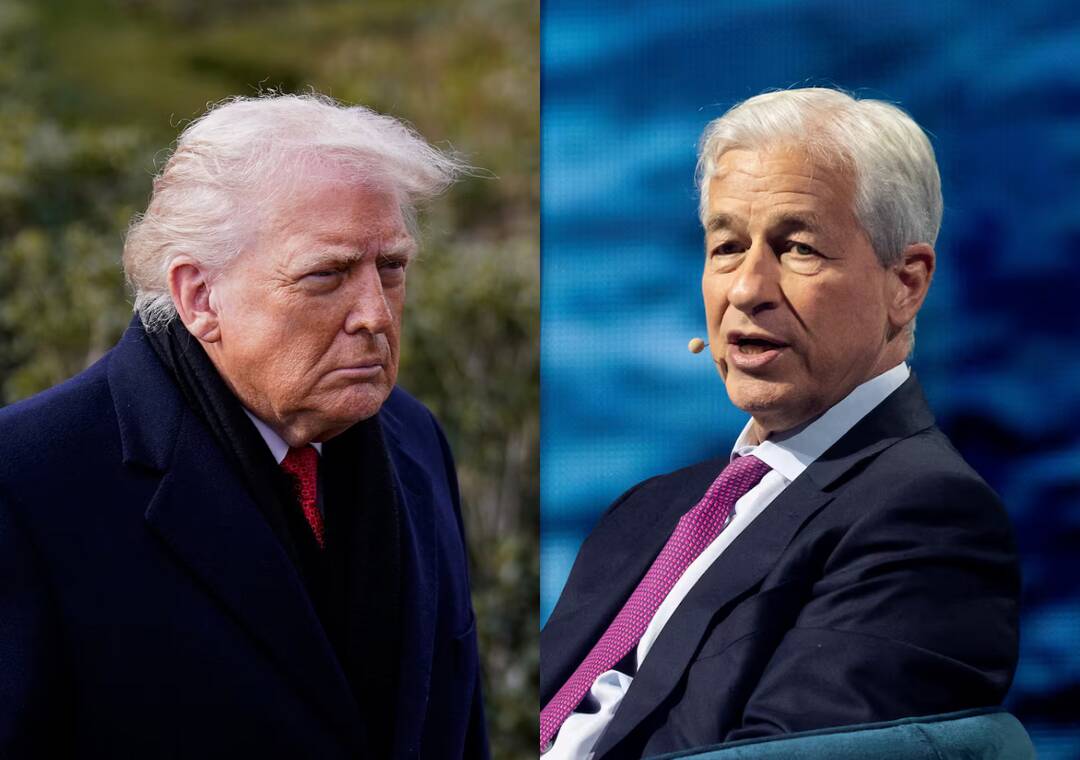
Trump sues US’ largest bank JPMorgan, its CEO for ₹45,800 crore for ‘debanking’
In a shocking move, former US President Donald Trump has sued JPMorgan Chase, the largest bank in the United States, and its CEO Jamie Dimon for a staggering $5 billion (approximately ₹45,800 crore) for alleged “debanking”. According to Trump, the bank “unilaterally- and without warning or remedy- terminated several of [his] bank accounts” due to its “woke” beliefs that it needs to distance itself from him.
The lawsuit, which has sent shockwaves through the financial world, claims that JPMorgan’s actions were motivated by a desire to appease liberal activists and politicians who have been critical of Trump. Trump’s lawyers argue that the bank’s decision to terminate his accounts was a clear example of “debanking”, a practice where banks and financial institutions refuse to provide services to individuals or businesses based on their political beliefs or affiliations.
Trump’s lawsuit alleges that JPMorgan’s actions were a result of the bank’s attempts to curry favor with liberal politicians and activists who have been vocal in their opposition to the former President. The lawsuit claims that JPMorgan’s CEO, Jamie Dimon, has been a vocal critic of Trump and has made public statements that suggest the bank’s decision to terminate Trump’s accounts was motivated by a desire to distance itself from the former President.
The practice of debanking has become increasingly common in recent years, with many banks and financial institutions facing pressure from liberal activists and politicians to refuse services to individuals and businesses that are deemed to be “undesirable”. This has led to a growing concern that debanking is being used as a form of political censorship, where individuals and businesses are being denied access to essential financial services based on their political beliefs or affiliations.
Trump’s lawsuit against JPMorgan is seen as a significant escalation of the debate over debanking and its implications for free speech and political expression. The lawsuit alleges that JPMorgan’s actions were a clear example of debanking, and that the bank’s decision to terminate Trump’s accounts was motivated by a desire to silence him and limit his ability to engage in political activity.
The lawsuit has sparked a heated debate over the role of banks and financial institutions in policing political speech and activity. While some have argued that banks have a responsibility to refuse services to individuals and businesses that engage in hate speech or other forms of extremism, others have argued that debanking is a form of censorship that undermines the principles of free speech and political expression.
JPMorgan has yet to comment on the lawsuit, but the bank has faced criticism in the past for its handling of politically sensitive accounts. In 2020, the bank faced backlash for its decision to close the accounts of several conservative activists and organizations, citing concerns over “reputational risk”.
The lawsuit is likely to have significant implications for the banking industry and the wider debate over debanking and free speech. If successful, the lawsuit could set a precedent for individuals and businesses to challenge banks and financial institutions over their decisions to terminate accounts based on political beliefs or affiliations.
In conclusion, the lawsuit filed by Donald Trump against JPMorgan Chase and its CEO Jamie Dimon is a significant development in the debate over debanking and its implications for free speech and political expression. The lawsuit alleges that JPMorgan’s decision to terminate Trump’s accounts was motivated by a desire to distance itself from the former President, and that the bank’s actions were a clear example of debanking. As the lawsuit makes its way through the courts, it is likely to have significant implications for the banking industry and the wider debate over debanking and free speech.
About the Author