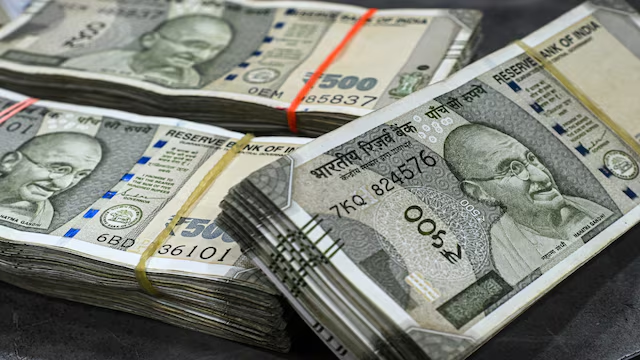
RBI spent ₹2.7 lakh cr to prevent rupee from falling, it still fell to record lows: Report
The Indian rupee has been experiencing a tumultuous period, with its value plummeting to record lows against the US dollar. In an effort to mitigate the decline, the Reserve Bank of India (RBI) has been actively intervening in the foreign exchange market. According to a report by SBI Research, the RBI spent a staggering ₹2.7 lakh crore ($30 billion) to help soften the fall of the Indian rupee over the past few months. Despite this significant intervention, the rupee continued to tumble, reaching new record lows.
The RBI’s intervention in the forex market is aimed at stabilizing the currency and preventing a sharp decline in its value. The central bank achieves this by buying or selling US dollars in the market, which helps to influence the exchange rate. When the RBI buys US dollars, it injects rupees into the market, which increases the supply of rupees and puts downward pressure on the exchange rate. Conversely, when the RBI sells US dollars, it absorbs rupees from the market, reducing the supply of rupees and helping to appreciate the currency.
According to SBI Research, the RBI has intervened to the tune of around $18 billion in the forex market during the period of June-September. Furthermore, the research firm estimates that the RBI has spent an additional $10 billion in October 2025, bringing the total intervention to $30 billion. This significant expenditure is a testament to the RBI’s efforts to shield the Indian economy from the adverse effects of a rapidly depreciating currency.
The rupee’s decline can be attributed to a combination of factors, including a strong US dollar, rising crude oil prices, and a widening trade deficit. The US Federal Reserve’s decision to raise interest rates has strengthened the US dollar, making it more attractive to investors and leading to a flight of capital from emerging markets like India. Additionally, the recent surge in crude oil prices has increased India’s import bill, putting pressure on the country’s trade balance and contributing to the rupee’s decline.
The RBI’s intervention in the forex market is a short-term measure aimed at stabilizing the currency. However, the central bank’s actions are not a substitute for more fundamental reforms that are needed to address the underlying issues affecting the Indian economy. The government and the RBI must work together to implement policies that promote economic growth, reduce the trade deficit, and attract foreign investment.
The decline of the rupee has significant implications for the Indian economy. A weak currency makes imports more expensive, which can lead to higher inflation and increased costs for businesses. This, in turn, can erode the competitiveness of Indian exports and make them less attractive to foreign buyers. Furthermore, a rapidly depreciating currency can also lead to a decline in investor confidence, making it more challenging for Indian companies to access foreign capital.
In conclusion, the RBI’s intervention in the forex market is a necessary measure to prevent a sharp decline in the value of the rupee. However, the central bank’s actions are not a panacea for the underlying issues affecting the Indian economy. The government and the RBI must work together to implement policies that promote economic growth, reduce the trade deficit, and attract foreign investment. Only through a combination of short-term measures and long-term reforms can the Indian economy achieve sustainable growth and stability.
The RBI’s expenditure of ₹2.7 lakh crore to prevent the rupee from falling is a significant amount, and it highlights the challenges faced by the Indian economy. As the rupee continues to decline, it is essential for policymakers to take a comprehensive approach to address the underlying issues affecting the economy. This includes implementing policies to promote exports, reduce the trade deficit, and attract foreign investment.
The decline of the rupee is a complex issue, and there is no easy solution. However, by working together, the government and the RBI can implement policies that promote economic growth, stability, and prosperity. The Indian economy has the potential to achieve great things, and with the right policies and interventions, it can overcome the current challenges and achieve sustainable growth and development.
News Source: https://www.cnbctv18.com/market/currency/india-rupee-how-many-us-dollars-did-rbi-buy-ws-l-19794895.htm/amp
About the Author