RBI spent ₹2.7 lakh cr to prevent rupee from falling, it still fell to record lows: Report
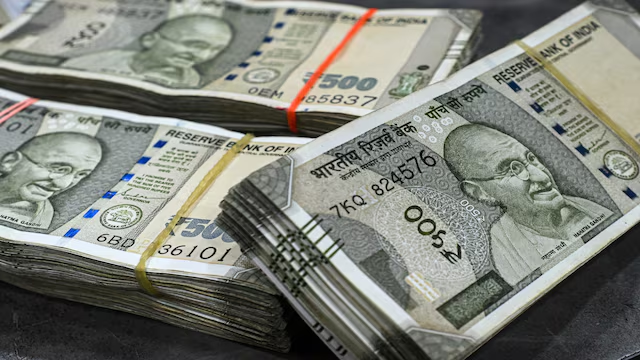
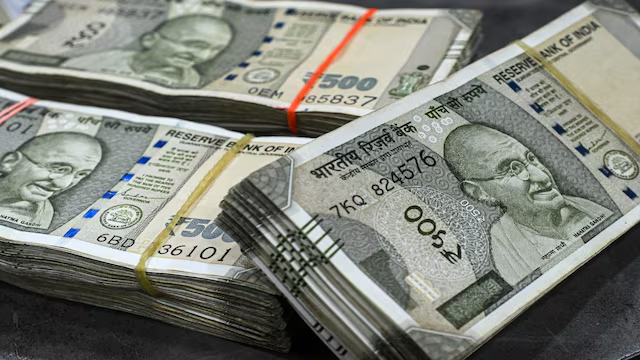
The Indian rupee has been on a downward spiral in recent months, reaching record lows against the US dollar. In an effort to mitigate the fall, the Reserve Bank of India (RBI) has spent a significant amount of money to intervene in the foreign exchange market. According to a report by SBI Research, the RBI has spent around ₹2.7 lakh crore ($30 billion) to help soften the fall of the Indian rupee over the past few months.
The report states that the RBI has intervened around $18 billion in the forex market during the period of June-September, and an estimated additional $10 billion in October 2025. This massive intervention by the central bank is aimed at preventing a sharp decline in the value of the rupee, which could have far-reaching consequences for the Indian economy.
Despite the RBI’s best efforts, the rupee continued to tumble to new record lows. This raises questions about the effectiveness of the central bank’s intervention strategy and the underlying factors that are driving the decline of the rupee.
To understand the situation better, let’s take a closer look at the factors that are influencing the value of the rupee. The Indian rupee is heavily influenced by global economic trends, particularly the strength of the US dollar. When the US dollar strengthens, it tends to pull up the value of other currencies, including the rupee. However, in recent months, the US dollar has been strengthening, which has put downward pressure on the rupee.
Another factor that is contributing to the decline of the rupee is the widening trade deficit. India’s trade deficit has been increasing due to a surge in imports, particularly of oil and other commodities. This has put pressure on the rupee, as more dollars are required to pay for imports, which in turn increases the demand for the US currency.
The RBI’s intervention in the forex market is aimed at reducing the demand for the US dollar by selling dollars from its foreign exchange reserves. By doing so, the central bank hopes to reduce the downward pressure on the rupee and prevent a sharp decline in its value. However, as the report by SBI Research suggests, the RBI’s intervention may not be enough to stem the decline of the rupee.
The report also highlights the challenges faced by the RBI in managing the value of the rupee. The central bank has to balance the need to prevent a sharp decline in the value of the rupee with the need to conserve its foreign exchange reserves. The RBI’s foreign exchange reserves have been declining in recent months, which reduces its ability to intervene in the forex market.
The decline of the rupee has significant implications for the Indian economy. A weak rupee makes imports more expensive, which can lead to higher inflation. This, in turn, can reduce the purchasing power of consumers and increase the cost of production for businesses. A weak rupee can also make Indian exports more competitive, which can boost exports and economic growth. However, the benefits of a weak rupee can be offset by the negative impact of higher import prices and inflation.
In conclusion, the RBI’s efforts to prevent the rupee from falling have been significant, with the central bank spending around ₹2.7 lakh crore to intervene in the forex market. However, despite these efforts, the rupee has continued to decline to record lows. The decline of the rupee is driven by a combination of global and domestic factors, including the strength of the US dollar and the widening trade deficit.
As the Indian economy continues to navigate these challenges, it is essential to monitor the situation closely and take proactive measures to mitigate the negative impact of a weak rupee. The RBI’s intervention strategy will be crucial in managing the value of the rupee, and the central bank will need to balance its efforts to prevent a sharp decline in the value of the rupee with the need to conserve its foreign exchange reserves.
About the Author