RBI spent ₹2.7 lakh cr to prevent rupee from falling, it still fell to record lows: Report
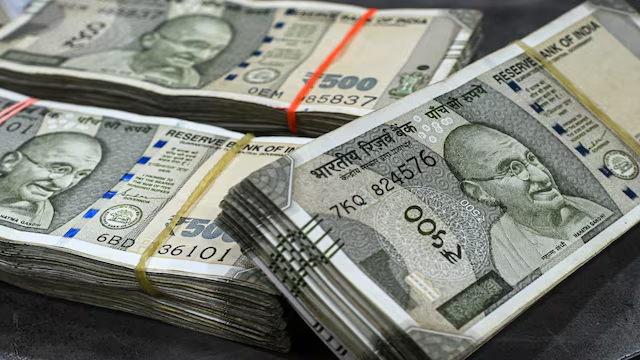
The Indian rupee has been on a downward spiral for several months, reaching record lows against the US dollar. Despite the Reserve Bank of India’s (RBI) efforts to intervene and stabilize the currency, the rupee continues to tumble. According to a report by SBI Research, the RBI spent around ₹2.7 lakh crore ($30 billion) to help soften the fall of the Indian rupee over the past few months. However, the central bank’s intervention has not been enough to prevent the rupee from falling to new record lows.
The RBI’s intervention in the foreign exchange market is aimed at preventing a sharp depreciation of the rupee, which can have a negative impact on the economy. A weak rupee can make imports more expensive, leading to higher inflation and a wider trade deficit. To prevent this, the RBI sells dollars from its foreign exchange reserves to buy rupees, which helps to stabilize the currency. However, this intervention comes at a cost, as the RBI has to use its precious foreign exchange reserves to support the rupee.
According to SBI Research, the RBI has intervened around $18 billion in the forex market during June-September, and the research firm has estimated another $10 billion in October 2025. This brings the total intervention to around $30 billion, or ₹2.7 lakh crore. Despite this massive intervention, the rupee continued to fall, reaching new record lows against the US dollar.
The reason for the rupee’s weakness is largely due to the strong US dollar, which has been gaining strength against most major currencies. The US Federal Reserve’s decision to raise interest rates has made the US dollar more attractive to investors, leading to a surge in demand for the currency. Additionally, the ongoing trade tensions between the US and China have also contributed to the weakness of the rupee, as investors become risk-averse and seek safe-haven assets such as the US dollar.
The RBI’s intervention in the forex market is not without risks. Selling dollars from its foreign exchange reserves can reduce the RBI’s ability to respond to future economic shocks. Additionally, the RBI’s intervention can also lead to a decline in the country’s foreign exchange reserves, which can have a negative impact on the economy.
The impact of the rupee’s weakness can be seen in various sectors of the economy. Importers are facing higher costs, which can lead to higher prices for consumers. The weaker rupee has also made it more expensive for Indian companies to borrow from abroad, which can affect their ability to invest and expand their businesses. On the other hand, exporters are benefiting from the weaker rupee, as their products become more competitive in the global market.
The government has also taken steps to support the rupee, including imposing duties on certain imports and relaxing rules for foreign investors. However, these measures have had a limited impact on the currency, and the rupee continues to fall.
In conclusion, the RBI’s intervention in the forex market has not been enough to prevent the rupee from falling to new record lows. Despite spending around ₹2.7 lakh crore to support the currency, the rupee continues to tumble due to the strong US dollar and ongoing trade tensions. The RBI’s intervention comes with risks, and the government needs to take more comprehensive measures to support the economy and stabilize the currency.
The future of the rupee remains uncertain, and it will be important to watch how the RBI and the government respond to the ongoing challenges facing the currency. Will the RBI continue to intervene in the forex market, or will it allow the rupee to find its natural level? Only time will tell, but one thing is certain – the rupee’s weakness will have a significant impact on the Indian economy, and policymakers need to take decisive action to support the currency and stabilize the economy.
News Source: https://www.cnbctv18.com/market/currency/india-rupee-how-many-us-dollars-did-rbi-buy-ws-l-19794895.htm/amp
About the Author