RBI spent ₹2.7 lakh cr to prevent rupee from falling, it still fell to record lows: Report
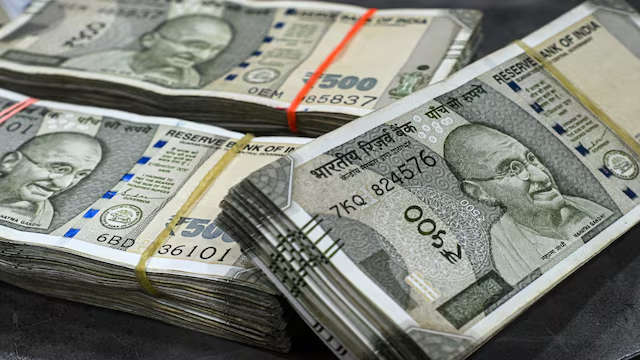
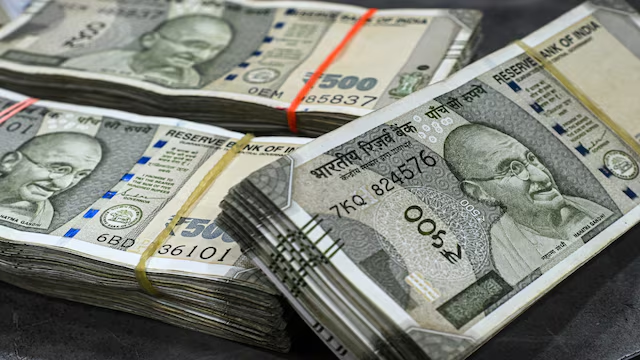
The Indian rupee has been experiencing a tumultuous ride over the past few months, with its value plummeting to record lows against the US dollar. In an effort to soften the fall, the Reserve Bank of India (RBI) has been actively intervening in the foreign exchange market, spending a substantial amount of money to prop up the currency. According to a report by SBI Research, the RBI has spent around ₹2.7 lakh crore ($30 billion) to help stabilize the rupee, but despite these efforts, the currency has continued to fall to new record lows.
The report highlights the RBI’s intervention in the forex market, stating that the central bank has intervened around $18 billion in the market during the period of June-September. Additionally, SBI Research has estimated that the RBI has spent another $10 billion in October 2025, bringing the total expenditure to $30 billion. This massive intervention is a clear indication of the RBI’s efforts to prevent the rupee from falling further, but unfortunately, it has not been enough to stem the tide.
The rupee’s decline can be attributed to a variety of factors, including a strong US dollar, rising crude oil prices, and a widening trade deficit. The US Federal Reserve’s decision to raise interest rates has also contributed to the rupee’s decline, as it has made investments in the US more attractive, leading to a flight of capital out of emerging markets like India. The RBI’s intervention in the forex market is aimed at reducing the supply of rupees in the market, thereby increasing its value. However, the central bank’s efforts have been hindered by the sheer scale of the outflows, making it difficult to stem the decline.
The RBI’s intervention in the forex market is not without its costs. The central bank’s foreign exchange reserves have been depleted significantly, falling from a peak of $642 billion in September 2021 to around $530 billion currently. This decline in reserves has raised concerns about the RBI’s ability to continue intervening in the market, as well as the potential impact on the country’s economy. The decline in foreign exchange reserves can also limit the RBI’s ability to respond to future economic shocks, making it essential for the central bank to carefully manage its reserves.
The impact of the rupee’s decline on the Indian economy cannot be overstated. A weak rupee makes imports more expensive, which can lead to higher inflation and reduced demand for goods and services. This, in turn, can have a negative impact on economic growth, making it challenging for businesses to operate and for consumers to afford essential goods and services. The decline in the rupee’s value also makes it more expensive for Indian companies to access foreign capital, which can limit their ability to invest and expand their operations.
In addition to the RBI’s intervention, the government has also taken steps to address the decline in the rupee’s value. The government has announced a series of measures aimed at reducing the country’s trade deficit, including increasing exports and reducing imports. The government has also taken steps to attract foreign investment, including relaxing rules for foreign investors and providing incentives for companies to set up operations in India. However, these measures will take time to have an impact, and in the short term, the rupee’s decline is likely to continue.
The SBI Research report highlights the challenges faced by the RBI in stabilizing the rupee. The report notes that the RBI’s intervention in the forex market is a short-term solution and that a more sustainable solution is needed to address the underlying factors contributing to the rupee’s decline. The report suggests that the government needs to take steps to reduce the country’s trade deficit and attract foreign investment, which will help to reduce the pressure on the rupee.
In conclusion, the RBI’s efforts to prevent the rupee from falling have been significant, with the central bank spending around ₹2.7 lakh crore ($30 billion) to intervene in the forex market. However, despite these efforts, the rupee has continued to fall to new record lows. The decline in the rupee’s value has significant implications for the Indian economy, and it is essential for the government and the RBI to work together to address the underlying factors contributing to the decline. The SBI Research report highlights the need for a more sustainable solution to stabilize the rupee, and it is crucial for policymakers to take steps to reduce the country’s trade deficit and attract foreign investment.
The RBI’s intervention in the forex market is a complex issue, and it requires a nuanced approach. While the central bank’s efforts to stabilize the rupee are understandable, it is essential to consider the long-term implications of these actions. The decline in foreign exchange reserves and the potential impact on the economy are significant concerns that need to be addressed. As the rupee continues to decline, it is essential for policymakers to take a comprehensive approach to address the underlying factors contributing to the decline and to develop a sustainable solution to stabilize the currency.
About the Author