RBI spent ₹2.7 lakh cr to prevent rupee from falling, it still fell to record lows: Report
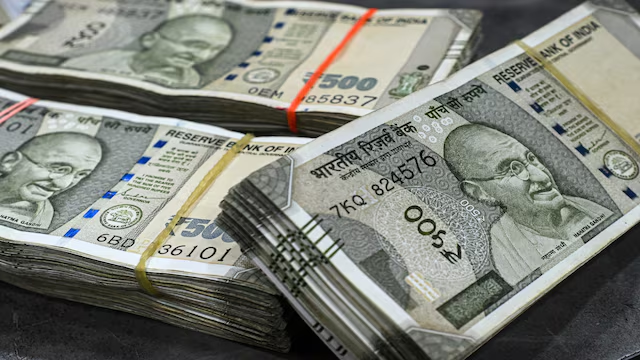
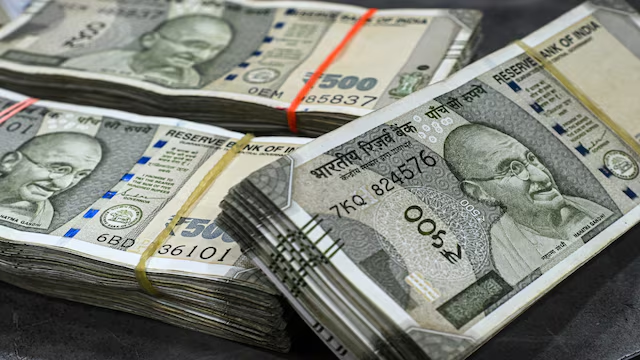
The Indian rupee has been on a downward spiral in recent months, reaching record lows against the US dollar. Despite the Reserve Bank of India’s (RBI) efforts to intervene and stabilize the currency, the rupee continues to tumble. According to a report by SBI Research, the RBI spent around ₹2.7 lakh crore ($30 billion) to help soften the fall of the Indian rupee over the past few months. However, the intervention has not been enough to prevent the rupee from reaching new record lows.
The RBI’s intervention in the foreign exchange market is a common practice to manage the value of the rupee. The central bank buys or sells US dollars to influence the exchange rate and prevent excessive volatility. In the case of the Indian rupee, the RBI has been intervening heavily to prevent a sharp depreciation of the currency. However, despite the significant expenditure, the rupee has continued to fall, raising questions about the effectiveness of the RBI’s intervention.
According to SBI Research, the RBI has intervened around $18 billion in the forex market during June-September, and an estimated additional $10 billion in October 2025. This brings the total intervention to around $30 billion, or approximately ₹2.7 lakh crore. The report highlights the significant resources being deployed by the RBI to manage the value of the rupee.
The rupee’s decline can be attributed to a combination of factors, including a strong US dollar, rising crude oil prices, and a widening trade deficit. The US Federal Reserve’s decision to raise interest rates has also contributed to the rupee’s decline, as it has made investments in the US more attractive, leading to a flow of funds out of emerging markets like India.
The RBI’s intervention has been aimed at preventing a sharp depreciation of the rupee, which could have a negative impact on the economy. A weaker rupee makes imports more expensive, which can lead to higher inflation and impact economic growth. The RBI’s intervention is intended to mitigate these effects and maintain stability in the foreign exchange market.
However, the RBI’s intervention is not without its limitations. The central bank’s ability to intervene in the foreign exchange market is constrained by its foreign exchange reserves. If the RBI continues to intervene heavily, it could lead to a depletion of its reserves, which could undermine the credibility of the central bank and the stability of the financial system.
Furthermore, the RBI’s intervention may not be enough to counter the underlying factors driving the rupee’s decline. The US dollar’s strength, rising crude oil prices, and a widening trade deficit are all factors that are beyond the RBI’s control. The central bank’s intervention may only provide temporary relief, and a more sustainable solution may require a combination of monetary and fiscal policy measures.
In conclusion, the RBI’s expenditure of ₹2.7 lakh crore to prevent the rupee from falling is a significant intervention. However, despite this effort, the rupee has continued to tumble to new record lows. The RBI’s intervention highlights the challenges faced by the central bank in managing the value of the rupee, particularly in the face of a strong US dollar and rising crude oil prices. The government and the RBI may need to consider a more comprehensive approach to address the underlying factors driving the rupee’s decline and maintain stability in the foreign exchange market.
About the Author