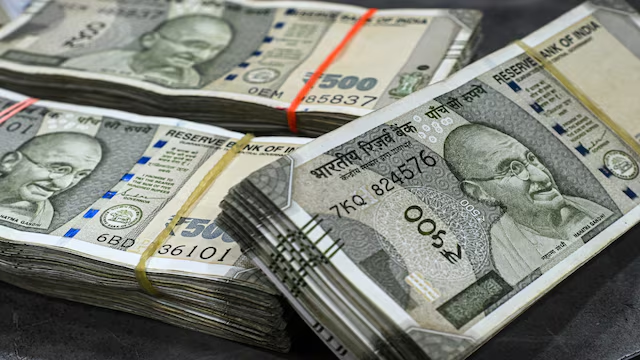
RBI spent ₹2.7 lakh cr to prevent rupee from falling, it still fell to record lows: Report
The Indian rupee has been experiencing a tumultuous few months, with its value against the US dollar plummeting to record lows. In an effort to stabilize the currency and prevent further depreciation, the Reserve Bank of India (RBI) has been actively intervening in the foreign exchange market. According to a report by SBI Research, the RBI has spent a staggering ₹2.7 lakh crore ($30 billion) to help soften the fall of the Indian rupee over the past few months.
The report highlights the RBI’s efforts to prop up the rupee, which has been under pressure due to a combination of factors, including a strong US dollar, rising crude oil prices, and a widening trade deficit. Despite the central bank’s intervention, the rupee continued to tumble, reaching new record lows against the US dollar. This has raised concerns about the efficacy of the RBI’s intervention strategy and the sustainability of the rupee’s current valuation.
According to SBI Research, the RBI has intervened around $18 billion in the forex market during the period from June to September. Additionally, the research firm estimates that the RBI has spent another $10 billion in October 2025, bringing the total intervention to around $30 billion. This massive intervention is aimed at preventing a sharp depreciation of the rupee, which could have far-reaching consequences for the Indian economy, including higher import bills, increased inflation, and reduced competitiveness for Indian exporters.
The RBI’s intervention in the forex market involves selling dollars from its foreign exchange reserves to buy rupees, thereby reducing the supply of rupees in the market and propping up its value. However, this strategy has its limitations, as it can lead to a depletion of the country’s foreign exchange reserves, which are essential for maintaining economic stability and meeting external obligations.
The rupee’s depreciation has been a major concern for the Indian economy, as it makes imports more expensive, leading to higher prices for essential goods such as crude oil, fertilizers, and electronics. A weaker rupee also makes it more difficult for Indian companies to compete in the global market, as their exports become less competitive. Furthermore, a sharp depreciation of the rupee can lead to a loss of investor confidence, resulting in a decline in foreign investment and a rise in borrowing costs.
The RBI’s intervention in the forex market is not without risks. The central bank’s foreign exchange reserves have been declining in recent months, which could limit its ability to intervene in the market in the future. Additionally, the RBI’s intervention can also lead to a decline in the country’s liquidity, as the central bank sells dollars to buy rupees, thereby reducing the amount of money available in the system.
The SBI Research report highlights the challenges faced by the RBI in managing the rupee’s valuation. The report notes that the RBI has been trying to balance the need to prevent a sharp depreciation of the rupee with the need to maintain adequate foreign exchange reserves. The report also suggests that the RBI may need to consider other strategies, such as imposing capital controls or modifying its monetary policy framework, to manage the rupee’s valuation and maintain economic stability.
In conclusion, the RBI’s intervention in the forex market has been unable to prevent the rupee’s decline, despite the massive expenditure of ₹2.7 lakh crore. The rupee’s depreciation has significant implications for the Indian economy, and the RBI will need to continue to monitor the situation closely and consider alternative strategies to manage the currency’s valuation. As the Indian economy continues to evolve, it is essential to maintain a stable and competitive exchange rate, which will require careful management of the rupee’s valuation and a coordinated approach to economic policy.
News Source: https://www.cnbctv18.com/market/currency/india-rupee-how-many-us-dollars-did-rbi-buy-ws-l-19794895.htm/amp
About the Author