RBI spent ₹2.7 lakh cr to prevent rupee from falling, it still fell to record lows: Report
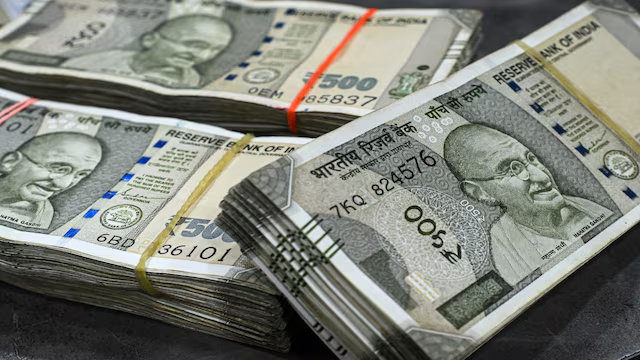
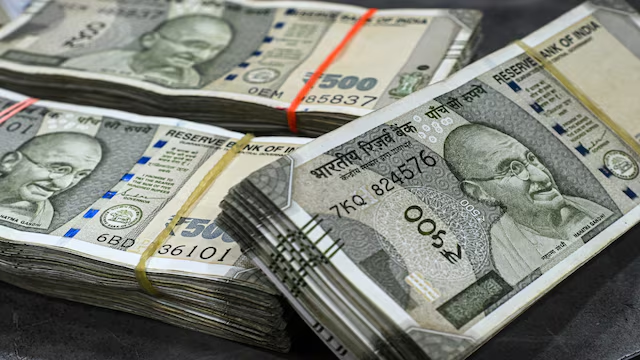
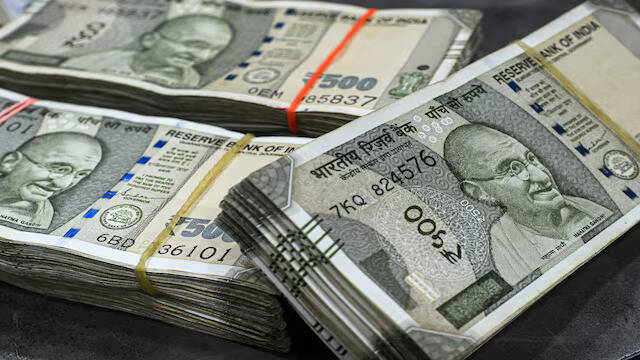
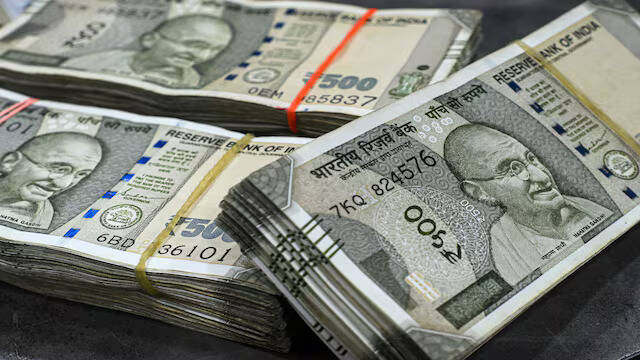
The Indian rupee has been on a downward spiral in recent months, reaching record lows against the US dollar. In an effort to soften the fall, the Reserve Bank of India (RBI) has spent a significant amount of money to intervene in the foreign exchange market. According to a report by SBI Research, the RBI has spent around ₹2.7 lakh crore ($30 billion) to help stabilize the rupee. However, despite this massive intervention, the rupee has continued to tumble to new record lows.
The SBI Research report states that the RBI has intervened around $18 billion in the forex market during the period of June to September. Additionally, the report estimates that the RBI has spent another $10 billion in October 2025, bringing the total intervention to $30 billion. This is a significant amount of money, and it highlights the challenges faced by the RBI in trying to stabilize the rupee.
The rupee has been under pressure due to a combination of factors, including a strong US dollar, rising crude oil prices, and a widening trade deficit. The US dollar has been strengthening against most major currencies, including the rupee, as investors seek safe-haven assets amidst global economic uncertainty. The rise in crude oil prices has also put pressure on the rupee, as India is a major importer of oil and a strong dollar makes imports more expensive.
The RBI’s intervention in the forex market is aimed at reducing the volatility of the rupee and preventing a sharp depreciation. The central bank sells dollars in the market to reduce the supply of rupees and prevent a sharp fall in the currency’s value. However, despite the RBI’s efforts, the rupee has continued to fall, reaching record lows against the US dollar.
The SBI Research report notes that the RBI’s intervention has helped to reduce the pace of the rupee’s fall, but it has not been able to prevent the currency from reaching new lows. The report states that the RBI’s intervention has been successful in reducing the volatility of the rupee, but it has not been able to reverse the trend of the currency’s decline.
The fall of the rupee has significant implications for the Indian economy. A weak rupee makes imports more expensive, which can lead to higher inflation. It also makes it more difficult for Indian companies to compete in the global market, as their exports become more expensive. The fall of the rupee can also lead to a decrease in foreign investment, as investors become wary of investing in a country with a weak currency.
The RBI’s intervention in the forex market is a short-term solution to stabilize the rupee. However, it is not a long-term solution to the country’s economic problems. The government needs to take steps to address the underlying issues that are affecting the rupee, such as the trade deficit and the current account deficit. The government also needs to take steps to boost economic growth and increase foreign investment.
In conclusion, the RBI’s intervention in the forex market has not been able to prevent the rupee from falling to record lows. The central bank has spent a significant amount of money to stabilize the rupee, but it has not been able to reverse the trend of the currency’s decline. The fall of the rupee has significant implications for the Indian economy, and the government needs to take steps to address the underlying issues that are affecting the currency.
The RBI’s intervention in the forex market is a complex issue, and it requires a nuanced understanding of the factors that affect the rupee. The SBI Research report provides valuable insights into the RBI’s intervention and its impact on the rupee. However, it is clear that the RBI’s intervention is not a long-term solution to the country’s economic problems. The government needs to take a comprehensive approach to address the issues that are affecting the rupee and the economy as a whole.
As the rupee continues to fall, it is essential to monitor the situation closely and take steps to mitigate the impact of the currency’s decline. The RBI’s intervention is just one part of the solution, and it needs to be accompanied by other measures to address the underlying issues that are affecting the economy. The government needs to work closely with the RBI and other stakeholders to develop a comprehensive strategy to stabilize the rupee and promote economic growth.
The situation with the rupee is complex and multifaceted, and it requires a thoughtful and nuanced approach. The RBI’s intervention is just one part of the solution, and it needs to be accompanied by other measures to address the underlying issues that are affecting the economy. As the situation continues to evolve, it is essential to stay informed and up-to-date on the latest developments.
For more information on this topic, please visit: https://www.cnbctv18.com/market/currency/india-rupee-how-many-us-dollars-did-rbi-buy-ws-l-19794895.htm/amp
News Source: https://www.cnbctv18.com/market/currency/india-rupee-how-many-us-dollars-did-rbi-buy-ws-l-19794895.htm/amp
About the Author