President Xi highlights AI and chip progress in New Year speech
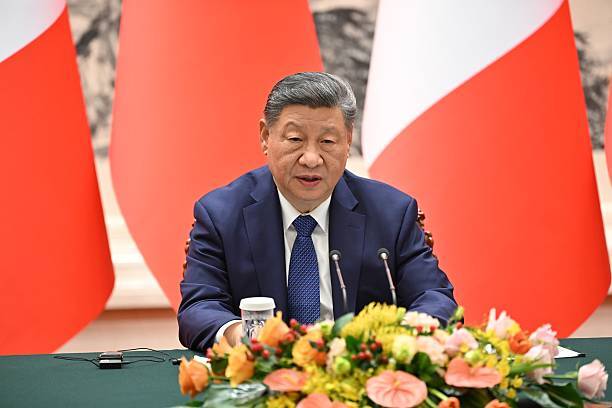
As the world welcomed a new year, Chinese President Xi Jinping used his annual New Year speech to highlight the country’s significant advancements in artificial intelligence (AI), semiconductors, robotics, and defense. Despite facing global tech curbs, President Xi emphasized that China is strengthening its position in the tech industry, with a focus on manufacturing recovery and self-reliance. This comes as China nears the end of its 14th Five-Year Plan and prepares for the next cycle beginning in 2026.
In his speech, President Xi emphasized the importance of technological innovation in driving China’s economic growth and global competitiveness. He noted that the country has made significant progress in areas such as AI, semiconductors, and robotics, which are critical components of China’s industrial upgrade and modernization efforts. The President also highlighted the country’s achievements in defense technology, including the development of advanced military equipment and systems.
One of the key areas of focus for China is the development of its semiconductor industry. The country has been actively promoting the growth of its domestic chip sector, with a goal of reducing its reliance on foreign suppliers. This effort has been driven in part by the US-China trade tensions, which have led to restrictions on the export of advanced semiconductor technology to China. Despite these challenges, China has made significant progress in developing its own semiconductor capabilities, with several domestic companies emerging as major players in the industry.
Artificial intelligence is another area where China is making significant strides. The country has been investing heavily in AI research and development, with a focus on applications such as machine learning, natural language processing, and computer vision. Chinese companies such as Baidu, Alibaba, and Tencent have been at the forefront of AI innovation, with applications in areas such as autonomous vehicles, smart homes, and healthcare.
President Xi also emphasized the importance of manufacturing recovery and self-reliance in his New Year speech. The country’s manufacturing sector has been facing significant challenges in recent years, including rising labor costs, environmental concerns, and trade tensions. However, the President noted that China is taking steps to revitalize its manufacturing sector, with a focus on high-tech and high-value-added industries such as electronics, aerospace, and biotechnology.
As China prepares for the next cycle of its Five-Year Plan, which begins in 2026, the country is expected to continue its focus on technological innovation and self-reliance. The 14th Five-Year Plan, which runs from 2021 to 2025, has been focused on promoting high-quality development, with a emphasis on technological innovation, environmental sustainability, and social welfare. The next plan is expected to build on these efforts, with a continued focus on driving economic growth and global competitiveness through technological innovation.
The global tech curbs faced by China have not deterred the country’s determination to become a leader in the tech industry. Despite restrictions on the export of advanced technology, China has been able to develop its own capabilities in areas such as semiconductors, AI, and robotics. The country’s tech sector has also been driven by a surge in demand for digital technologies, including cloud computing, big data, and the Internet of Things (IoT).
In conclusion, President Xi’s New Year speech highlighted China’s significant progress in areas such as AI, semiconductors, robotics, and defense. Despite global tech curbs, the country is strengthening its position in the tech industry, with a focus on manufacturing recovery and self-reliance. As China prepares for the next cycle of its Five-Year Plan, the country is expected to continue its focus on technological innovation and self-reliance, driving economic growth and global competitiveness.
The emphasis on technological innovation and self-reliance is expected to have significant implications for China’s economy and global competitiveness. The country’s tech sector is expected to continue to drive growth and innovation, with applications in areas such as healthcare, finance, and education. The development of advanced technologies such as AI, semiconductors, and robotics is also expected to have significant implications for China’s industrial upgrade and modernization efforts.
As the world becomes increasingly digital, China’s focus on technological innovation and self-reliance is expected to position the country as a leader in the global tech industry. The country’s determination to develop its own capabilities in areas such as semiconductors and AI is expected to reduce its reliance on foreign suppliers, while also driving economic growth and global competitiveness.
Overall, President Xi’s New Year speech highlighted China’s significant progress in the tech industry, despite global tech curbs. The country’s focus on technological innovation and self-reliance is expected to drive economic growth and global competitiveness, positioning China as a leader in the global tech industry.
About the Author