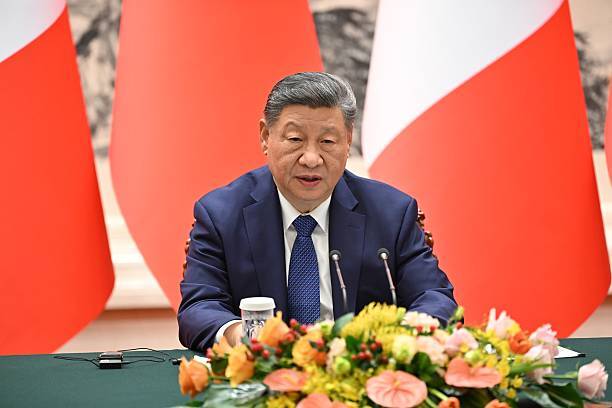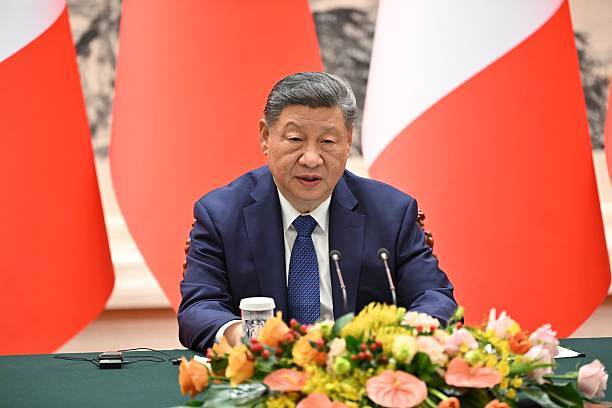
President Xi highlights AI and chip progress in New Year speech
As the world welcomed a new year, Chinese President Xi Jinping took the opportunity to reflect on the country’s progress and highlight its advancements in key technological areas, including artificial intelligence (AI), semiconductors, robotics, and defense. In his New Year speech, President Xi emphasized China’s commitment to self-reliance and manufacturing recovery, despite facing global tech curbs. This comes as China nears the end of its 14th Five-Year Plan and prepares for the next cycle, set to begin in 2026.
The speech underscored the importance of technological innovation in driving China’s economic growth and national security. President Xi noted that the country has made significant strides in AI, with applications in various sectors, including healthcare, finance, and transportation. He also highlighted China’s progress in semiconductor manufacturing, a critical component in the production of electronics and other high-tech products.
The emphasis on AI and chip development is not surprising, given the current global landscape. The US and other countries have imposed strict export controls on advanced technologies, including semiconductors, in an effort to limit China’s access to sensitive technologies. However, China has been actively working to develop its domestic capabilities, investing heavily in research and development, and encouraging domestic companies to innovate and produce their own technologies.
President Xi’s speech also touched on the topic of robotics, an area where China has been making rapid progress in recent years. The country has been investing heavily in robotics research and development, with a focus on applications in manufacturing, logistics, and healthcare. This investment is expected to pay off, with China predicted to become one of the largest robotics markets in the world in the coming years.
In addition to these technological advancements, President Xi also highlighted China’s progress in defense technology. The country has been investing heavily in military modernization, with a focus on developing advanced technologies, including hypersonic missiles, stealth fighters, and cyber warfare capabilities. This investment is seen as critical to China’s national security, as the country seeks to protect its interests and project its power globally.
The speech comes at a critical time for China, as the country navigates a complex and rapidly changing global landscape. The COVID-19 pandemic has had a significant impact on China’s economy, with lockdowns and supply chain disruptions affecting manufacturing and trade. However, despite these challenges, China has continued to push forward with its technological ambitions, driven by a desire to become self-reliant and reduce its dependence on foreign technologies.
As China prepares to embark on its next Five-Year Plan, the country is expected to continue its focus on technological innovation and self-reliance. The plan is expected to outline key priorities and targets for the country’s development, including in areas such as AI, semiconductors, and renewable energy. With the global tech landscape evolving rapidly, China’s commitment to technological innovation and self-reliance is likely to play a critical role in shaping its future economic and national security prospects.
In conclusion, President Xi’s New Year speech highlighted China’s significant progress in AI, semiconductors, robotics, and defense, despite facing global tech curbs. The country’s commitment to self-reliance and manufacturing recovery is expected to continue, driven by a desire to become a global technological leader. As China navigates the complexities of the global tech landscape, its focus on innovation and self-reliance is likely to remain a key priority, shaping the country’s future economic and national security prospects.
About the Author