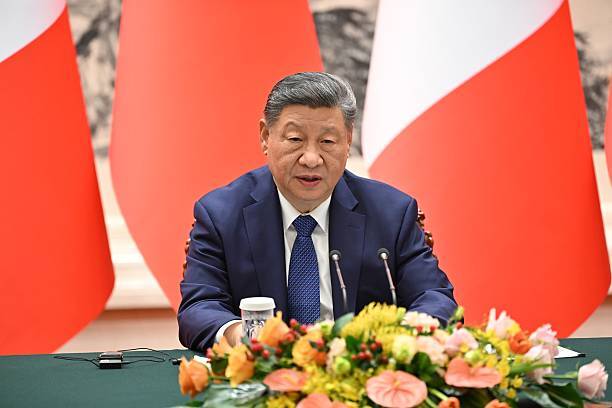
President Xi highlights AI and chip progress in New Year speech
As the world welcomed a new year, Chinese President Xi Jinping used his annual New Year speech to highlight the country’s significant advancements in artificial intelligence (AI), semiconductors, robotics, and defense. Despite facing global tech curbs, Xi emphasized that China is strengthening its position in the tech industry, with a focus on manufacturing recovery and self-reliance. This speech comes as China nears the end of its 14th Five-Year Plan and prepares for the next cycle beginning in 2026.
In his speech, Xi underscored the importance of innovation and technological progress in driving China’s economic growth and global competitiveness. He noted that the country has made significant strides in AI, with applications in various sectors, including healthcare, finance, and transportation. Xi also highlighted China’s progress in semiconductor manufacturing, citing the importance of self-reliance in this critical area.
The emphasis on AI and chip progress is not surprising, given the current global landscape. The United States and other countries have imposed significant restrictions on China’s access to advanced technologies, including semiconductors and AI-related equipment. However, Xi’s speech suggests that China is determined to push forward with its own technological development, regardless of these external challenges.
One of the key areas where China has made significant progress is in the development of indigenous semiconductors. The country has invested heavily in building its own semiconductor industry, with companies like SMIC and HSMC leading the charge. While China still lags behind global leaders like Taiwan’s TSMC and South Korea’s Samsung, its progress in this area is notable.
In addition to semiconductors, Xi also highlighted China’s advancements in robotics and defense. The country has made significant investments in these areas, with applications in industries like manufacturing, logistics, and healthcare. China’s defense sector has also seen significant growth, with the development of advanced technologies like hypersonic missiles and stealth aircraft.
Xi’s speech also emphasized the importance of manufacturing recovery and self-reliance. As China navigates the challenges of a global economic slowdown, the country is seeking to reduce its dependence on foreign technologies and supply chains. This approach is reflected in the government’s “Made in China 2025” initiative, which aims to promote indigenous innovation and self-reliance in key sectors like AI, robotics, and semiconductors.
The focus on self-reliance is also driven by the need to mitigate the risks associated with global tech curbs. The US-China trade war has highlighted the vulnerabilities of China’s tech sector, which relies heavily on foreign technologies and supply chains. By promoting indigenous innovation and self-reliance, China aims to reduce its exposure to these risks and create a more sustainable and resilient tech sector.
As China prepares for the next cycle of its Five-Year Plan, the country is likely to continue its focus on AI, semiconductors, robotics, and defense. The government has set ambitious targets for these sectors, including the development of indigenous semiconductors, the promotion of AI applications, and the growth of the robotics and defense industries.
In conclusion, President Xi’s New Year speech highlights the significant progress China has made in AI, semiconductors, robotics, and defense. Despite facing global tech curbs, the country is determined to push forward with its own technological development, with a focus on manufacturing recovery and self-reliance. As China navigates the challenges of a rapidly changing global landscape, its commitment to innovation and technological progress is likely to remain a key driver of its economic growth and global competitiveness.
For more information on this topic, please visit: https://stocktwits.com/news-articles/markets/equity/xi-talks-up-china-s-ai-and-chip-path-in-new-year-speech-as-demand-surges-despite-global-curbs/cL7BBpcREzz
About the Author