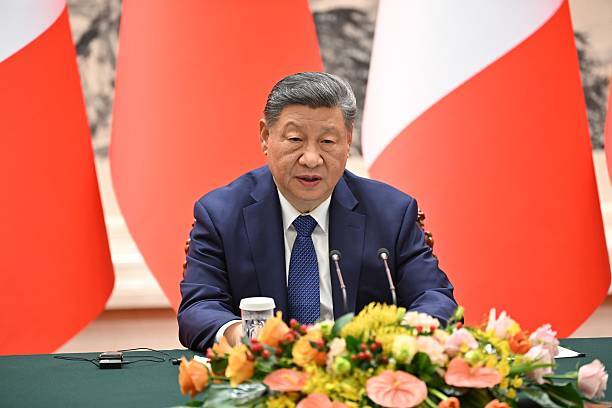
President Xi highlights AI and chip progress in New Year speech
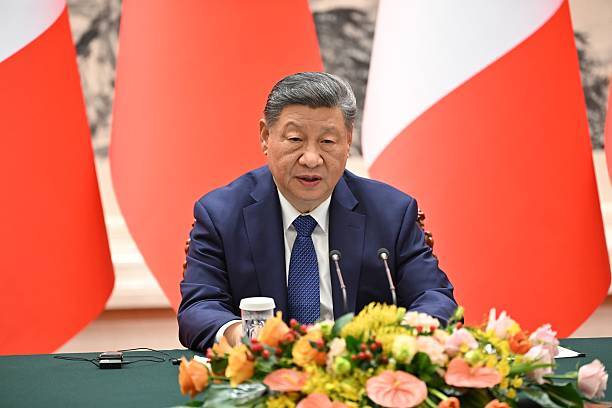
As the world welcomed a new year, Chinese President Xi Jinping delivered a speech that underscored the country’s significant advancements in artificial intelligence (AI), semiconductors, robotics, and defense. Despite facing global tech curbs, China is strengthening its position as a leader in these critical fields. The speech comes as China nears the end of its 14th Five-Year Plan and prepares for the next cycle beginning in 2026, with a strong emphasis on manufacturing recovery and self-reliance.
In his New Year address, President Xi highlighted the remarkable progress China has made in AI, semiconductors, and other cutting-edge technologies. He noted that the country’s commitment to innovation and self-reliance has enabled it to overcome numerous challenges and achieve remarkable breakthroughs. The President’s remarks were seen as a testament to China’s determination to become a global leader in technology, despite facing intense competition and restrictions from other nations.
One of the key areas of focus in President Xi’s speech was the development of AI, which has become a crucial component of China’s technological strategy. The country has made significant investments in AI research and development, with a focus on applications such as natural language processing, computer vision, and machine learning. Chinese tech giants like Baidu, Alibaba, and Tencent have been at the forefront of AI innovation, with significant advancements in areas like autonomous vehicles, smart homes, and healthcare.
In addition to AI, President Xi also emphasized the importance of semiconductors, which are a critical component of modern electronics. China has been working to develop its domestic semiconductor industry, with a focus on reducing its reliance on foreign suppliers. The country has made significant progress in this area, with companies like SMIC and HSMC leading the charge. The development of a robust semiconductor industry is seen as essential for China’s technological self-reliance, as it will enable the country to design and manufacture its own chips, rather than relying on foreign suppliers.
The speech also highlighted China’s progress in robotics, which has become a key area of focus for the country’s manufacturing sector. Chinese companies like DJI and UBTECH have become global leaders in robotics, with a focus on applications such as industrial automation, service robots, and autonomous vehicles. The development of robotics has enabled China to improve its manufacturing efficiency and competitiveness, while also creating new opportunities for innovation and entrepreneurship.
Furthermore, President Xi’s speech emphasized the importance of defense technology, which has become a critical component of China’s national security strategy. The country has made significant investments in defense research and development, with a focus on areas like hypersonic missiles, stealth aircraft, and cyber warfare. Chinese defense companies like China Aerospace Science and Industry Corporation (CASIC) and China Aerospace Science and Technology Corporation (CASC) have been at the forefront of innovation, with significant advancements in areas like missile defense and space exploration.
The emphasis on manufacturing recovery and self-reliance in President Xi’s speech is seen as a key component of China’s economic strategy. The country has faced significant challenges in recent years, including a slowdown in economic growth and a trade war with the United States. However, through its commitment to innovation and self-reliance, China has been able to overcome these challenges and achieve remarkable progress in areas like technology and manufacturing.
As China prepares for the next cycle of its Five-Year Plan, beginning in 2026, the country is expected to continue its focus on technological innovation and self-reliance. The plan is likely to include significant investments in areas like AI, semiconductors, and robotics, as well as a continued emphasis on defense technology and manufacturing recovery. Through its commitment to innovation and self-reliance, China is likely to remain a global leader in technology, despite facing intense competition and restrictions from other nations.
In conclusion, President Xi’s New Year speech highlighted the significant progress China has made in AI, semiconductors, robotics, and defense, despite facing global tech curbs. The country’s commitment to innovation and self-reliance has enabled it to overcome numerous challenges and achieve remarkable breakthroughs. As China prepares for the next cycle of its Five-Year Plan, the country is likely to continue its focus on technological innovation and self-reliance, with a strong emphasis on manufacturing recovery and defense technology.
About the Author