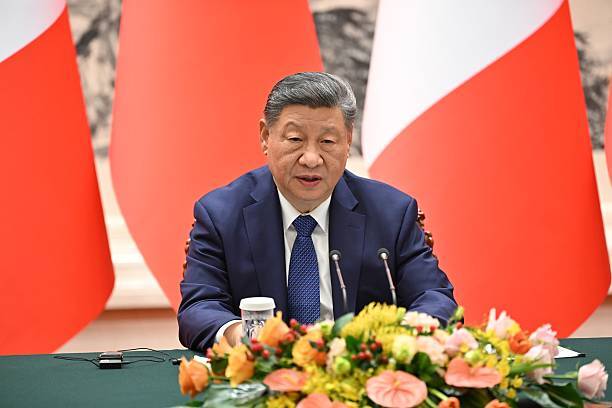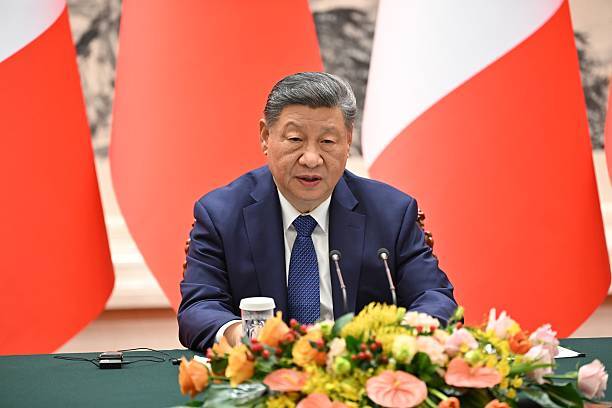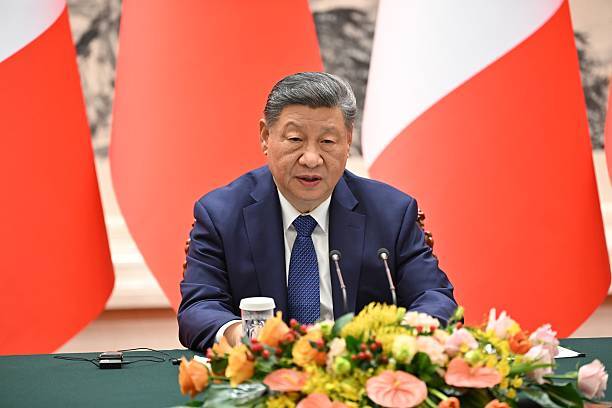
President Xi highlights AI and chip progress in New Year speech
As the world welcomed the new year, Chinese President Xi Jinping took the opportunity to reflect on the country’s progress and outline its future aspirations in his annual New Year speech. This year’s address was particularly notable for its emphasis on China’s advancements in artificial intelligence (AI), semiconductors, robotics, and defense. Despite facing global tech curbs, President Xi expressed confidence in China’s ability to strengthen its position as a leader in these critical fields.
The speech comes at a pivotal moment for China, as the country nears the end of its 14th Five-Year Plan and prepares to embark on the next cycle beginning in 2026. The current plan has seen significant investments in emerging technologies, and the results are beginning to bear fruit. President Xi highlighted the progress made in AI, citing breakthroughs in areas such as natural language processing, computer vision, and machine learning. These advancements have far-reaching implications for various sectors, including healthcare, finance, and transportation.
In addition to AI, President Xi also emphasized China’s progress in semiconductor manufacturing. The country has been actively promoting the development of its domestic chip industry, driven by a desire to reduce dependence on foreign suppliers. This effort has been accelerated by the global tech curbs imposed on China, which have created a sense of urgency around the need for self-reliance. As a result, Chinese companies such as SMIC and Hua Hong Semiconductor have made significant strides in recent years, with some even achieving breakthroughs in advanced node technologies.
The speech also touched on China’s achievements in robotics, an area where the country has been actively investing in recent years. From industrial robots to service robots, Chinese companies have been at the forefront of innovation, driven by government support and a growing demand for automation solutions. President Xi noted that these advancements have not only improved efficiency and productivity but also enhanced the overall quality of life for Chinese citizens.
Defense was another area highlighted by President Xi, with the country having made significant strides in the development of advanced military technologies. China’s defense industry has been a major beneficiary of the government’s investments in emerging technologies, with applications in areas such as hypersonic systems, stealth aircraft, and cyber warfare. These advancements have contributed to China’s growing military prowess, which has significant implications for regional and global security.
Throughout the speech, President Xi emphasized the importance of manufacturing recovery and self-reliance. As the country navigates the challenges posed by global tech curbs, it is clear that the government is committed to reducing dependence on foreign suppliers and promoting domestic innovation. This approach is reflected in the “Made in China 2025” initiative, which aims to upgrade the country’s manufacturing capabilities and promote the development of high-tech industries.
The emphasis on self-reliance is also driven by the need to mitigate the risks associated with global supply chain disruptions. The COVID-19 pandemic has highlighted the vulnerabilities of global supply chains, and China is taking steps to ensure that it is better equipped to respond to future crises. By promoting domestic manufacturing and innovation, the government aims to reduce its reliance on foreign suppliers and create a more resilient economy.
As China prepares to embark on its next Five-Year Plan, it is clear that the country will continue to prioritize investments in emerging technologies. The progress made in AI, semiconductors, robotics, and defense will likely be built upon, with a focus on driving innovation and self-reliance. Despite the challenges posed by global tech curbs, President Xi’s speech suggests that China is confident in its ability to navigate these obstacles and emerge as a leader in the global tech landscape.
In conclusion, President Xi’s New Year speech highlights the significant progress China has made in emerging technologies, despite facing global tech curbs. The country’s emphasis on manufacturing recovery and self-reliance reflects a desire to reduce dependence on foreign suppliers and promote domestic innovation. As China looks to the future, it is clear that the government will continue to prioritize investments in AI, semiconductors, robotics, and defense, driving the country’s growth and development in the years to come.
About the Author