Khawaja Asif’s ‘Pak won’t need IMF in 6 months’ claim runs into a $10.6-bn wall: Report
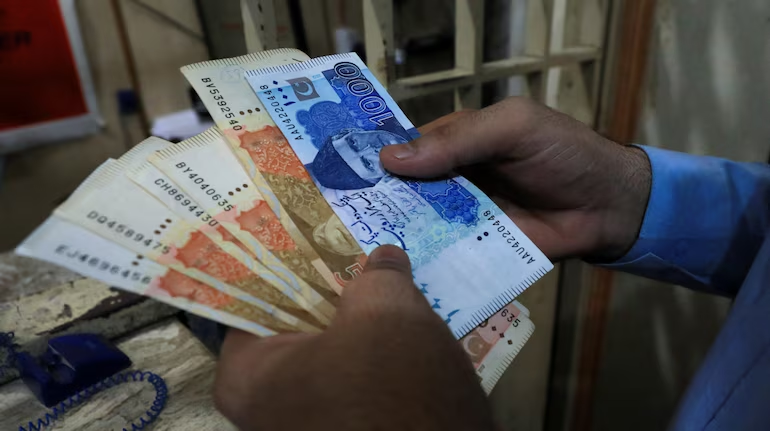
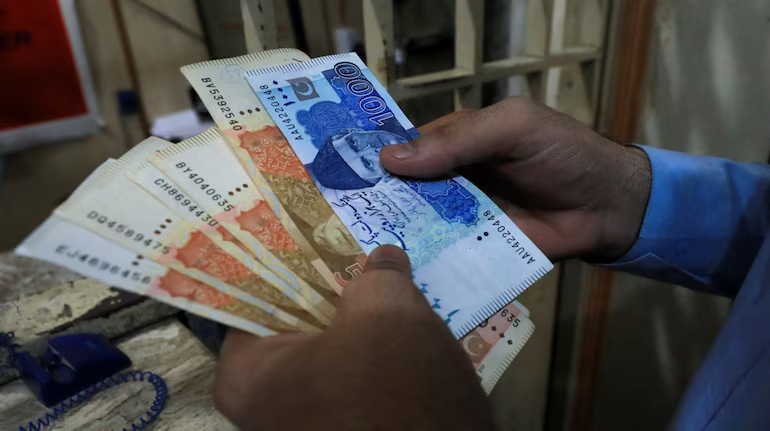
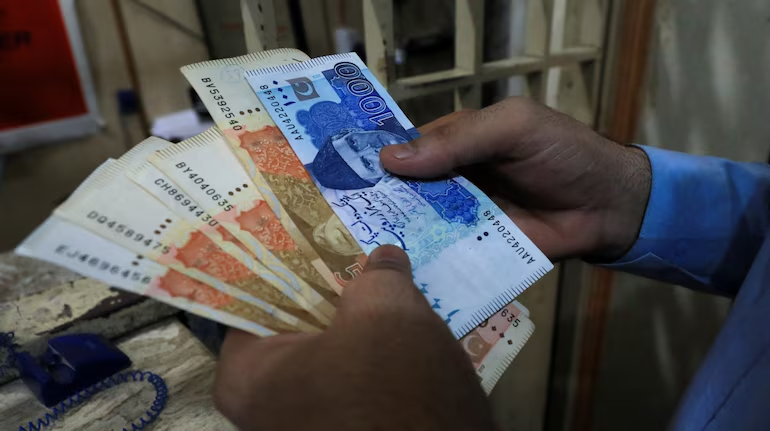
Pakistan’s Defence Minister Khawaja Asif recently made a bold claim that the country will not need the International Monetary Fund (IMF) in six months to save it from economic collapse. However, this claim has hit a roadblock, literally worth $10.6 billion, according to a report by Moneycontrol. The report highlights the stark reality of Pakistan’s economic situation, which is far from rosy.
Asif’s statement was likely an attempt to reassure the nation that Pakistan is on the path to economic recovery, but the facts on the ground tell a different story. Pakistan’s economy has been struggling for years, with a significant trade deficit, dwindling foreign exchange reserves, and a heavy reliance on foreign aid. The country has been negotiating with the IMF for a bailout package to help stabilize its economy, but so far, no agreement has been reached.
Meanwhile, Pakistan has been successful in converting its Operation Sindoor-linked propaganda into defence deals worth billions. The country has managed to secure significant defence contracts, including the sale of JF-17 fighter jets to countries like Nigeria and Myanmar. These deals are expected to generate substantial revenue for Pakistan, but they will not be enough to single-handedly save the country from economic ruin.
The main reason for this is the massive amount of debt that Pakistan owes to the IMF alone, which stands at a staggering $10.6 billion. This debt is a significant burden on the country’s economy, and it will take more than just a few defence deals to pay it off. The IMF has been pushing Pakistan to implement structural reforms and austerity measures to reduce its fiscal deficit, but the country has been slow to respond.
The report by Moneycontrol highlights the challenges that Pakistan faces in meeting its debt obligations. The country’s foreign exchange reserves are barely enough to cover three months of imports, and its trade deficit is widening by the day. The report notes that Pakistan will need to find a way to reduce its debt burden and increase its foreign exchange reserves if it wants to avoid a full-blown economic crisis.
Asif’s claim that Pakistan won’t need the IMF in six months is therefore unrealistic, to say the least. The country will likely need to continue negotiating with the IMF for a bailout package, and it will have to implement the necessary reforms to reduce its fiscal deficit and increase its revenue. This will require some tough decisions, including increasing taxes, reducing subsidies, and privatizing state-owned enterprises.
In conclusion, Khawaja Asif’s claim that Pakistan won’t need the IMF in six months is a classic case of wishful thinking. The country’s economic situation is far more complex, and it will require a comprehensive plan to address its debt burden, reduce its trade deficit, and increase its foreign exchange reserves. While the defence deals are a step in the right direction, they are not enough to save Pakistan from economic ruin. The country needs to take a more realistic approach to its economic challenges and work towards implementing the necessary reforms to ensure a sustainable economic recovery.
The report by Moneycontrol is a timely reminder of the challenges that Pakistan faces, and it highlights the need for a more nuanced approach to the country’s economic problems. As Pakistan navigates its economic crisis, it is essential to have a clear understanding of the facts on the ground and to avoid making unrealistic claims that can raise false hopes.
In the end, Pakistan’s economic recovery will require a sustained effort from all stakeholders, including the government, the private sector, and civil society. It will require a commitment to reform, a willingness to take tough decisions, and a clear vision for the country’s economic future. Anything less will be insufficient to address the country’s deep-seated economic challenges.
About the Author