Khawaja Asif’s ‘Pak won’t need IMF in 6 months’ claim runs into a $10.6-bn wall: Report
In a recent statement, Pakistan’s Defence Minister Khawaja Asif sparked a wave of debate when he claimed that the country would no longer require the International Monetary Fund’s (IMF) assistance in just six months. This assertion was seen as a bold move, given the country’s long history of reliance on IMF bailouts to stabilize its fragile economy. However, as it often does, reality has a way of intervening, and Asif’s claim has now run into a significant obstacle – a whopping $10.6 billion wall, to be precise.
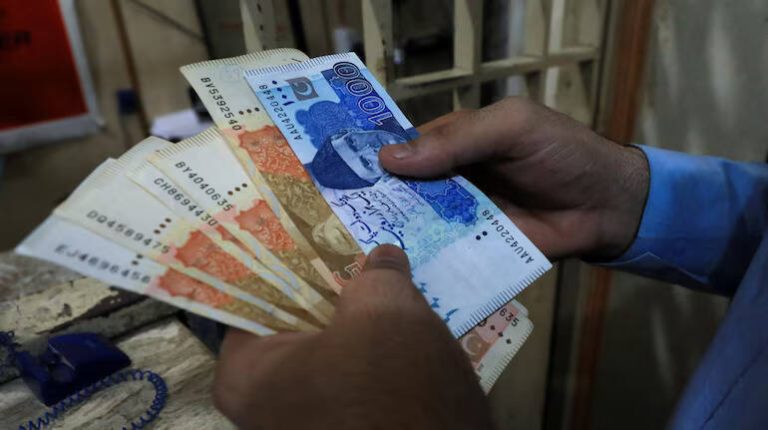
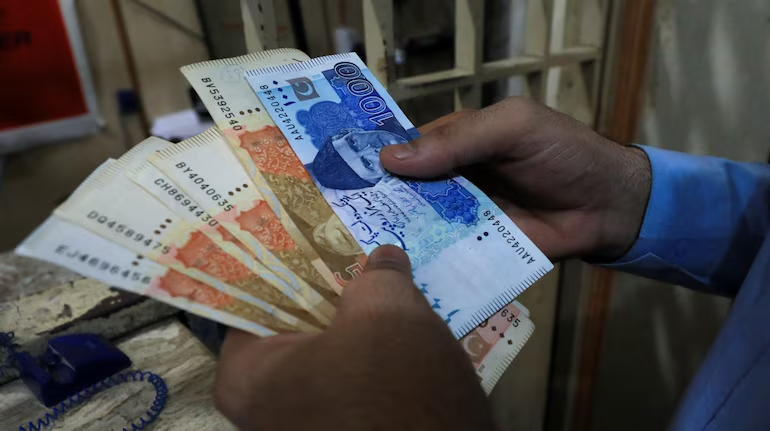
According to a report by Moneycontrol, Pakistan’s ability to wean itself off IMF support in such a short timeframe is highly unlikely, given the sheer magnitude of its debt obligations. The country owes a staggering $10.6 billion to the IMF alone, a amount that will not be easy to pay off in just six months. This massive debt burden raises serious questions about the feasibility of Asif’s claim and highlights the significant challenges that Pakistan’s economy continues to face.
It is worth noting that Pakistan has had some success in recent times, particularly in terms of converting its Operation Sindoor-linked propaganda into defence deals worth billions. These deals, while significant, are unlikely to single-handedly save the country from economic ruin. The reality is that Pakistan’s economy is facing a multitude of challenges, from a large trade deficit to a dwindling foreign exchange reserve, and it will take more than just a few defence deals to turn things around.
The IMF has been a crucial lifeline for Pakistan’s economy in recent years, providing the country with much-needed financial support to help stabilize its finances. However, the relationship between Pakistan and the IMF has not always been smooth, with the country’s repeated failure to implement necessary economic reforms and its tendency to rely on short-term fixes rather than long-term solutions.
In this context, Asif’s claim that Pakistan will no longer need IMF support in six months seems overly optimistic, if not downright unrealistic. The country’s debt obligations to the IMF are just one part of a much larger problem, and it will take a sustained effort to address the underlying issues that have led to Pakistan’s economic woes.
So, what does the future hold for Pakistan’s economy? Will the country be able to wean itself off IMF support and achieve economic stability, or will it continue to struggle with the same challenges that have plagued it for so long? Only time will tell, but one thing is certain – the road ahead will be long and difficult, and it will require a concerted effort from all stakeholders to get Pakistan’s economy back on track.
In conclusion, while Khawaja Asif’s claim that Pakistan won’t need IMF support in six months may have been well-intentioned, it is unlikely to become a reality anytime soon. The country’s massive debt obligations to the IMF, combined with its deeper economic challenges, make it unlikely that Pakistan will be able to achieve economic stability in such a short timeframe. As the country continues to navigate its economic challenges, it is essential that policymakers and stakeholders take a realistic and nuanced view of the situation, rather than relying on overly optimistic claims or quick fixes.
About the Author