Khawaja Asif’s ‘Pak won’t need IMF in 6 months’ claim runs into a $10.6-bn wall: Report
In a recent statement, Khawaja Asif, a prominent Pakistani politician, claimed that Pakistan would not need the International Monetary Fund (IMF) in six months to save it from economic collapse. However, this claim has run into a significant roadblock, with a whopping $10.6 billion wall standing in the way. According to a report by Moneycontrol, Pakistan’s economic situation is more dire than Asif’s statement would suggest, and the country’s ability to pay off its debts is uncertain.
Pakistan has been struggling with economic instability for years, and its relationship with the IMF has been a crucial factor in its financial dealings. The country has been relying heavily on IMF loans to keep its economy afloat, but the repayment of these loans has been a significant challenge. Asif’s claim that Pakistan would not need the IMF in six months is a bold statement, but it seems to be more of a political rhetoric than a realistic assessment of the country’s economic situation.
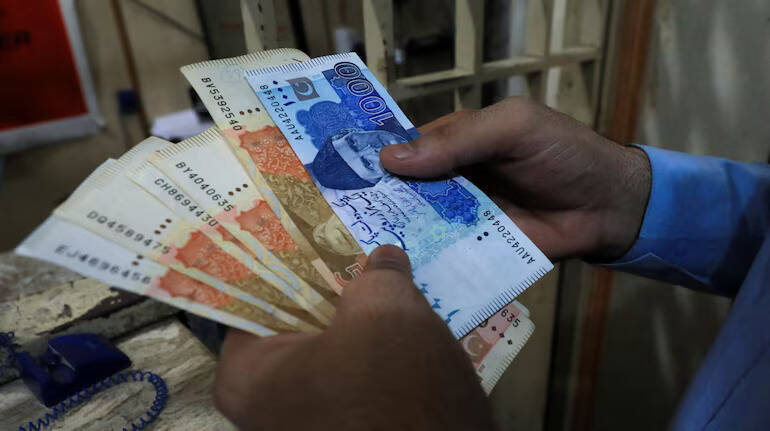
One of the main reasons why Pakistan’s economy is in such a precarious state is its massive debt burden. The country owes a staggering $10.6 billion to the IMF alone, and this amount is expected to increase in the coming months. This debt is a significant obstacle to Pakistan’s economic recovery, and it will be difficult for the country to pay off this amount without external assistance.
Despite the challenges, Pakistan has managed to secure some significant defence deals in recent months. The country has been able to convert its Operation Sindoor-linked propaganda into defence deals worth billions, which is a notable achievement. However, these deals are unlikely to single-handedly save Pakistan from economic ruin. The country’s economic problems are deep-seated and require a more comprehensive solution than just defence deals.
The IMF has been a crucial player in Pakistan’s economic affairs, providing the country with essential loans to keep its economy afloat. However, the IMF has also been critical of Pakistan’s economic management, citing the country’s lack of structural reforms and its failure to address its fiscal deficit. The IMF has been pushing Pakistan to implement significant economic reforms, including increasing taxes, reducing subsidies, and improving governance.
In recent months, Pakistan has taken some steps to address its economic challenges. The country has introduced a new budget, which includes measures to increase taxes and reduce subsidies. However, these measures are unlikely to be enough to address the country’s economic problems, and more needs to be done to put Pakistan’s economy on a sustainable path.
The claim by Khawaja Asif that Pakistan would not need the IMF in six months is a bold statement, but it is unlikely to materialize. The country’s economic situation is more complex than Asif’s statement would suggest, and the $10.6 billion wall of debt is a significant obstacle to Pakistan’s economic recovery. While Pakistan has made some progress in securing defence deals, these deals are unlikely to be enough to save the country from economic collapse.
In conclusion, Khawaja Asif’s claim that Pakistan would not need the IMF in six months is a statement that is more political rhetoric than a realistic assessment of the country’s economic situation. The country’s economic problems are deep-seated, and the $10.6 billion wall of debt is a significant obstacle to Pakistan’s economic recovery. While Pakistan has made some progress in securing defence deals, these deals are unlikely to be enough to save the country from economic collapse. The country needs to take more comprehensive measures to address its economic challenges, including implementing significant structural reforms and improving governance.
About the Author