Khawaja Asif’s ‘Pak won’t need IMF in 6 months’ claim runs into a $10.6-bn wall: Report
In a recent statement, Khawaja Asif, a prominent Pakistani politician, claimed that Pakistan will not need the International Monetary Fund (IMF) in six months to save it from economic collapse. However, this claim has been met with skepticism, as Pakistan’s economic woes run deeper than Asif’s optimistic prediction. According to a report by Moneycontrol, Pakistan’s economic struggles are far from over, and the country’s debt obligations to the IMF alone stand at a staggering $10.6 billion.
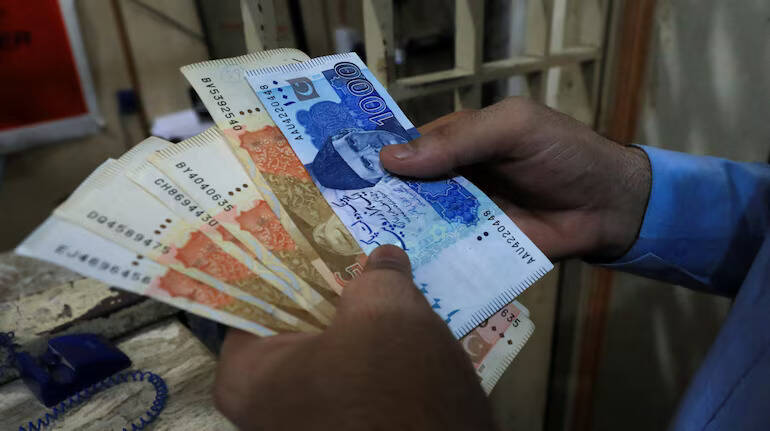
Asif’s statement was likely an attempt to reassure the public and investors that Pakistan’s economic situation is under control. However, the reality on the ground tells a different story. Pakistan’s economy has been struggling for years, with high inflation, a large trade deficit, and a significant reliance on foreign aid. The country’s foreign exchange reserves are dwindling, and its currency, the rupee, has been depreciating rapidly against the US dollar.
Despite these challenges, Pakistan has managed to secure some significant defence deals in recent months. The country has been able to convert its Operation Sindoor-linked propaganda into billions of dollars’ worth of defence contracts. However, while these deals may provide a temporary boost to Pakistan’s economy, they are unlikely to single-handedly save the country from economic ruin.
The main obstacle to Pakistan’s economic recovery is its massive debt burden. The country owes a significant amount of money to various international lenders, including the IMF. In fact, Pakistan’s debt obligations to the IMF alone stand at $10.6 billion, which is a significant hurdle for the country to overcome. This debt burden is likely to continue to weigh on Pakistan’s economy, making it difficult for the country to achieve sustainable growth and stability.
Furthermore, Pakistan’s economic struggles are not just limited to its debt burden. The country also faces significant challenges in terms of its trade deficit, which has been widening in recent years. Pakistan’s imports have been increasing rapidly, while its exports have been struggling to keep pace. This has resulted in a significant trade deficit, which has put pressure on the country’s foreign exchange reserves.
In addition to these challenges, Pakistan also faces significant political and security risks. The country has been plagued by terrorism and instability for years, which has had a negative impact on its economy. The security situation in Pakistan remains precarious, with frequent attacks on civilians and security personnel. This has created a climate of fear and uncertainty, which has discouraged investment and hindered economic growth.
In conclusion, Khawaja Asif’s claim that Pakistan will not need the IMF in six months is unlikely to materialize. The country’s economic struggles are far more complex and deep-seated than Asif’s optimistic prediction. Pakistan’s debt burden, trade deficit, and security risks are all significant challenges that need to be addressed if the country is to achieve sustainable economic growth and stability.
While the defence deals secured by Pakistan are a positive development, they are unlikely to be enough to save the country from economic ruin. The government needs to take a more comprehensive approach to addressing the country’s economic challenges, including implementing policies to reduce the trade deficit, increase exports, and promote investment.
Ultimately, Pakistan’s economic future remains uncertain, and the country’s ability to overcome its challenges will depend on its ability to implement effective policies and reforms. Until then, the country will continue to rely on international lenders like the IMF to stay afloat.
For more information on this story, please visit: https://www.moneycontrol.com/world/pakistan-says-it-won-t-need-imf-in-six-months-how-khawaja-asif-s-runs-into-a-10-6-billion-wall-article-13764265.html/amp
About the Author