Khawaja Asif’s ‘Pak won’t need IMF in 6 months’ claim runs into a $10.6-bn wall: Report
In a recent statement, Pakistan’s Defence Minister Khawaja Asif sparked a wave of optimism among the nation’s citizens when he claimed that the country would no longer require the assistance of the International Monetary Fund (IMF) within the next six months. This assertion was made in an attempt to alleviate concerns about Pakistan’s economic stability and its ability to recover from the brink of collapse. However, a closer examination of the country’s financial obligations reveals that Asif’s claim may be overly ambitious, to say the least.
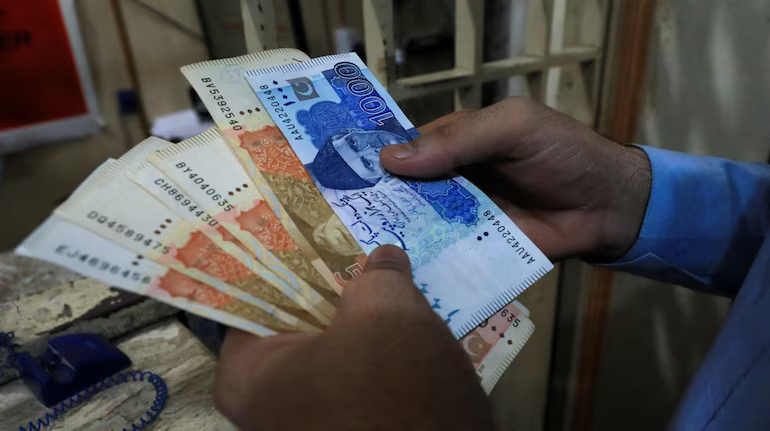
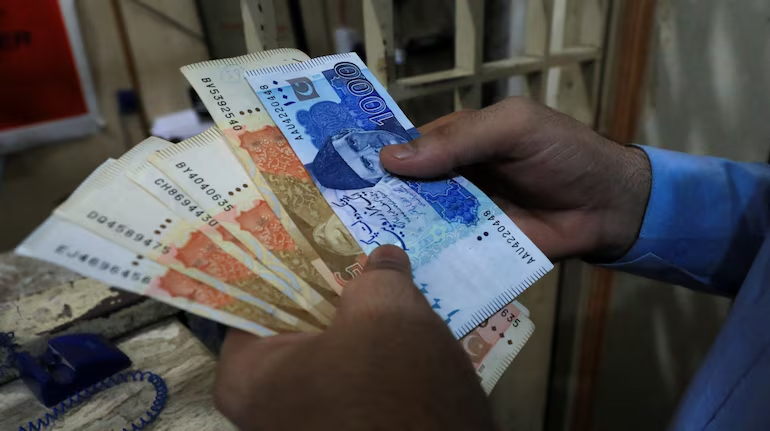
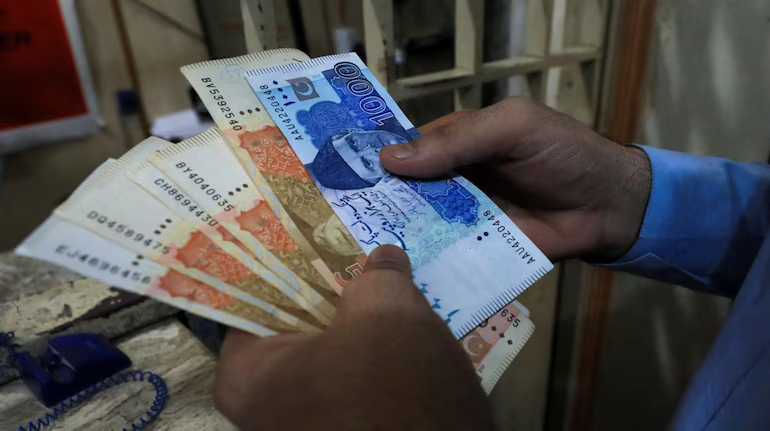
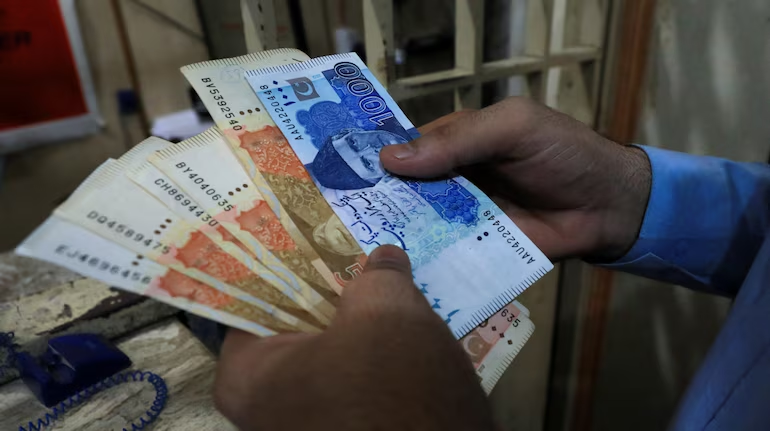
According to a report by Moneycontrol, Pakistan’s debt to the IMF alone stands at a staggering $10.6 billion. This massive liability poses a significant obstacle to the country’s ability to become self-sufficient and wean itself off the financial support provided by the IMF. The report highlights the daunting challenge that Pakistan faces in its quest for economic recovery, making Asif’s claim seem more like a pipe dream than a realistic goal.
Despite the country’s best efforts to secure defence deals worth billions, these agreements are unlikely to single-handedly rescue Pakistan from the clutches of economic ruin. The Operation Sindoor-linked propaganda, which was successfully converted into lucrative defence deals, may have generated a substantial amount of revenue for the country, but it is unlikely to be enough to offset the massive debt that Pakistan owes to the IMF.
The IMF has been a crucial lifeline for Pakistan, providing the country with essential financial support to prevent a complete economic meltdown. However, the country’s reliance on the IMF has also been a subject of controversy, with many criticizing the government’s inability to implement effective economic reforms and reduce its dependence on external assistance.
Asif’s claim that Pakistan won’t need the IMF in six months has raised eyebrows among economists and financial experts, who argue that the country’s economic woes run far deeper than a simple six-month timeline. The report by Moneycontrol suggests that Pakistan’s economic recovery will require a more comprehensive and sustained effort, involving significant reforms and a long-term commitment to fiscal discipline.
The $10.6 billion wall that Asif’s claim has run into is a sobering reminder of the enormity of the challenge that Pakistan faces. The country’s economic stability is precarious, to say the least, and the government’s ability to navigate these treacherous waters will be crucial in determining the nation’s future.
In conclusion, while Khawaja Asif’s claim that Pakistan won’t need the IMF in six months may have generated a sense of optimism among the nation’s citizens, it is essential to approach this assertion with a healthy dose of skepticism. The country’s massive debt to the IMF, coupled with its deeper economic woes, suggests that Asif’s claim is more of a wishful thinking than a realistic goal. As Pakistan continues to grapple with its economic challenges, it is crucial that the government adopts a more nuanced and realistic approach to addressing the nation’s financial woes.
The road to economic recovery will be long and arduous, requiring significant reforms, fiscal discipline, and a commitment to transparency and accountability. While defence deals and propaganda campaigns may generate short-term gains, they are unlikely to provide a lasting solution to Pakistan’s economic problems. As the nation struggles to find its footing, it is essential that the government prioritizes the implementation of effective economic reforms and works towards reducing its dependence on external assistance.
Only time will tell if Pakistan will be able to overcome its economic challenges and become self-sufficient. However, one thing is certain – the country’s journey towards economic recovery will be fraught with obstacles, and Asif’s claim of not needing the IMF in six months will likely remain an elusive dream.
About the Author