Khawaja Asif’s ‘Pak won’t need IMF in 6 months’ claim runs into a $10.6-bn wall: Report
Pakistan’s Defence Minister Khawaja Asif recently made a bold claim that the country will not need the International Monetary Fund (IMF) in six months to save it from economic collapse. However, this claim has hit a roadblock, quite literally, in the form of a $10.6 billion debt owed to the IMF. According to a report by Moneycontrol, Asif’s assertion has run into a wall worth $10.6 billion, which is the amount Pakistan owes to the IMF alone.
The claim made by Asif was seen as a confident statement, but it seems to have been made without considering the harsh reality of Pakistan’s economic situation. The country has been struggling to stay afloat, with its economy facing numerous challenges, including a large trade deficit, low foreign exchange reserves, and a heavy debt burden. The IMF has been a crucial lifeline for Pakistan, providing financial assistance to help the country meet its external obligations.
Despite Asif’s claim, Pakistan has been able to convert its Operation Sindoor-linked propaganda into defence deals worth billions. However, these deals will not be enough to single-handedly save Pakistan from economic ruin. The country’s economic woes run deep, and the $10.6 billion debt owed to the IMF is just one aspect of the problem. Pakistan’s total external debt is much higher, and the country will need to find a way to service this debt to avoid default.
The IMF has been working with Pakistan to implement economic reforms and help the country get back on track. However, the process has been slow, and the country still faces significant challenges. The $10.6 billion debt owed to the IMF is a significant burden, and Pakistan will need to find a way to pay it back. The country has been trying to negotiate a new loan program with the IMF, but the talks have been stalled due to disagreements over the terms of the agreement.
Asif’s claim that Pakistan will not need the IMF in six months is seen as overly optimistic, given the country’s economic situation. The report by Moneycontrol highlights the significant challenges facing Pakistan’s economy and the need for a more realistic approach to addressing these challenges. The country needs to take a comprehensive approach to reforming its economy, including implementing structural reforms, increasing revenue, and reducing expenditure.
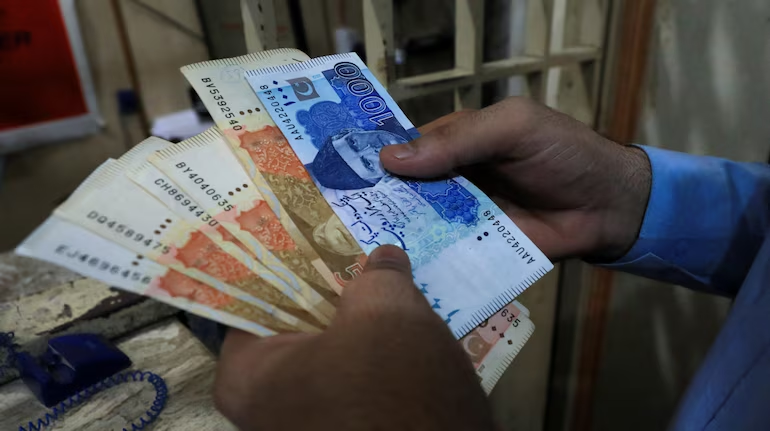
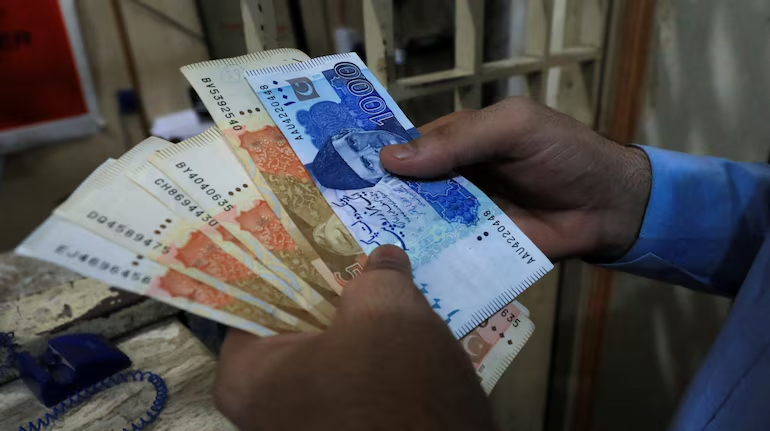
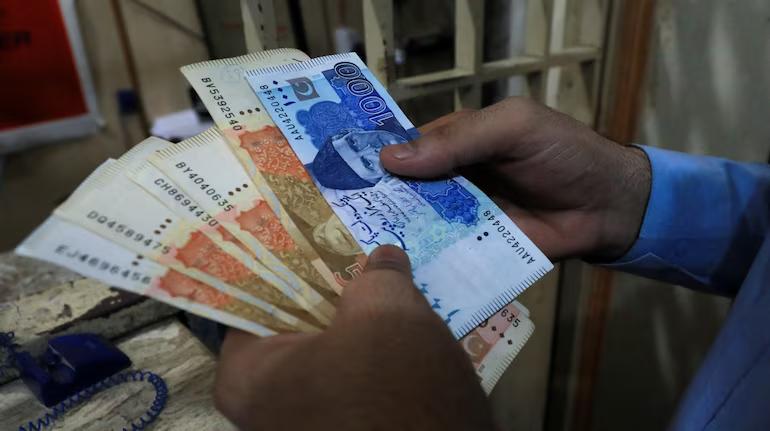
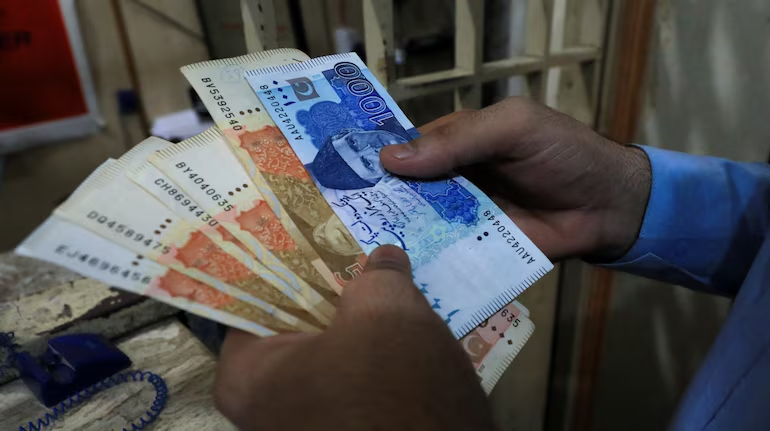
The $10.6 billion debt owed to the IMF is just one aspect of Pakistan’s economic challenges. The country also faces a significant trade deficit, which has been putting pressure on its foreign exchange reserves. The country’s exports have been declining, while imports have been increasing, leading to a widening trade deficit. This has put pressure on the Pakistani rupee, which has been depreciating against the US dollar.
In addition to the trade deficit, Pakistan also faces significant challenges in terms of its fiscal deficit. The country’s fiscal deficit has been increasing, driven by a combination of factors, including low revenue collection and high expenditure. The government has been struggling to increase revenue, while expenditure has been rising due to a number of factors, including the cost of servicing the country’s debt.
The economic challenges facing Pakistan are significant, and the country needs to take a comprehensive approach to addressing them. Asif’s claim that Pakistan will not need the IMF in six months is seen as overly optimistic, given the country’s economic situation. The report by Moneycontrol highlights the need for a more realistic approach to addressing Pakistan’s economic challenges.
In conclusion, Khawaja Asif’s claim that Pakistan will not need the IMF in six months has run into a wall worth $10.6 billion. The country’s economic challenges are significant, and the $10.6 billion debt owed to the IMF is just one aspect of the problem. Pakistan needs to take a comprehensive approach to reforming its economy, including implementing structural reforms, increasing revenue, and reducing expenditure. The country also needs to find a way to service its debt, including the $10.6 billion owed to the IMF.
The report by Moneycontrol highlights the need for a more realistic approach to addressing Pakistan’s economic challenges. The country cannot afford to rely on overly optimistic claims or propaganda to address its economic problems. Instead, Pakistan needs to take a comprehensive and realistic approach to reforming its economy and addressing its economic challenges.
About the Author