Khawaja Asif’s ‘Pak won’t need IMF in 6 months’ claim runs into a $10.6-bn wall: Report
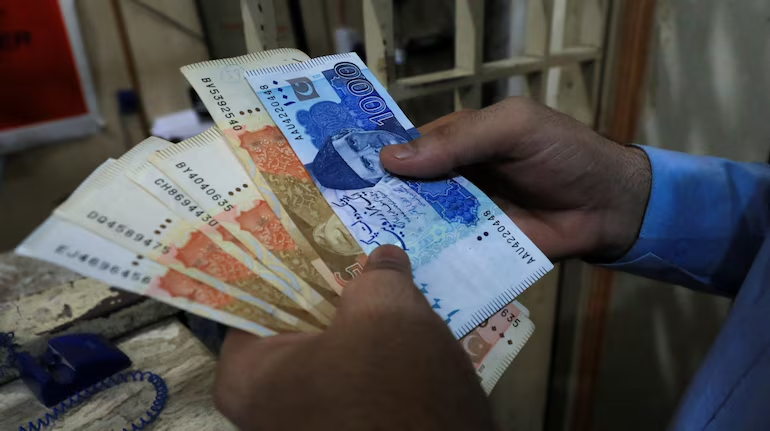
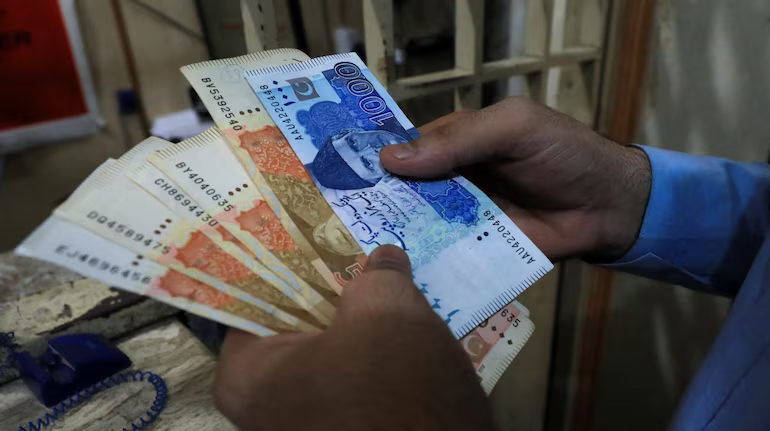
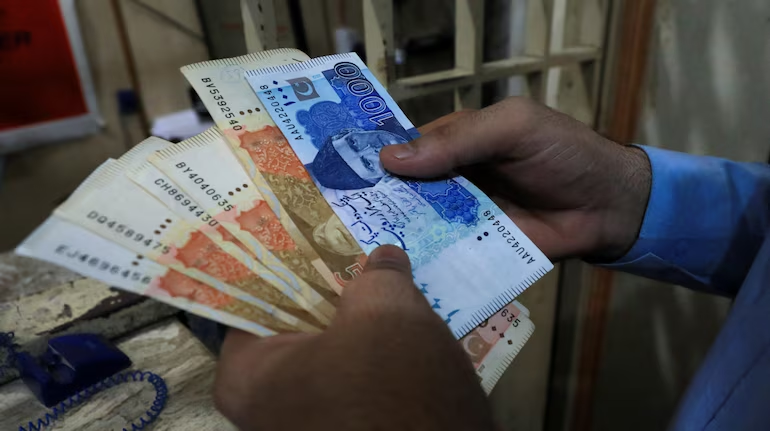
Khawaja Asif, a senior Pakistani politician, recently made a bold claim that Pakistan will not require the assistance of the International Monetary Fund (IMF) in six months to prevent economic collapse. However, this assertion has hit a significant roadblock, with the country facing a staggering debt of $10.6 billion owed to the IMF alone. As reported by Moneycontrol, this massive financial obligation poses a significant challenge to Pakistan’s economic stability, and it remains to be seen whether the country can overcome this hurdle without the IMF’s support.
Pakistan has been struggling with economic difficulties for some time now, with a dwindling foreign exchange reserve and a rising trade deficit. The country has been relying heavily on external assistance, including loans from the IMF, to keep its economy afloat. However, the government has been trying to reduce its dependence on the IMF and has been exploring alternative options to boost its economy.
One such initiative is the conversion of Operation Sindoor-linked propaganda into defence deals worth billions. Operation Sindoor is a purported military operation aimed at promoting Pakistan’s defence capabilities, and the government has been successful in securing significant defence deals with various countries. While these deals are expected to generate substantial revenue for Pakistan, they may not be enough to single-handedly save the country from economic ruin.
The primary reason for this is the massive debt that Pakistan owes to the IMF. With a total debt of $10.6 billion, the country is facing significant pressure to meet its financial obligations. The IMF has been providing financial assistance to Pakistan to help the country stabilize its economy, but the government’s claim that it will not need the IMF’s support in six months seems overly optimistic.
To put this into perspective, Pakistan’s total foreign debt stands at around $113 billion, with the IMF being one of the largest creditors. The country has been struggling to meet its debt servicing obligations, and the situation is expected to worsen in the coming months. With a significant portion of its budget allocated towards debt servicing, Pakistan is facing a severe fiscal challenge.
Furthermore, the country’s economic growth has been sluggish, with the GDP growth rate expected to remain around 2-3% in the current fiscal year. This slow growth, combined with a rising inflation rate, is expected to further exacerbate the country’s economic difficulties.
In this context, Khawaja Asif’s claim that Pakistan will not need the IMF’s support in six months seems unrealistic. While the government has been trying to explore alternative options to boost its economy, the sheer magnitude of the country’s debt obligations makes it unlikely that Pakistan can overcome its economic challenges without external assistance.
The IMF has been working closely with Pakistan to help the country stabilize its economy, and it is likely that the country will require continued support from the IMF in the coming months. The government’s efforts to reduce its dependence on the IMF are commendable, but they may not be enough to overcome the significant economic challenges that Pakistan is facing.
In conclusion, Khawaja Asif’s claim that Pakistan will not need the IMF’s support in six months has run into a significant roadblock, with the country facing a staggering debt of $10.6 billion owed to the IMF alone. While the government has been successful in securing defence deals worth billions, these may not be enough to single-handedly save Pakistan from economic ruin. The country’s economic challenges are significant, and it is likely that Pakistan will require continued support from the IMF in the coming months.
About the Author