Khawaja Asif’s ‘Pak won’t need IMF in 6 months’ claim runs into a $10.6-bn wall: Report
In a recent statement, Khawaja Asif, a prominent Pakistani politician, claimed that Pakistan will not need the International Monetary Fund (IMF) in six months to save it from economic collapse. However, this claim has run into a significant wall worth $10.6 billion, according to a report by Moneycontrol. The report highlights the stark reality of Pakistan’s economic situation, which is far from being stable.
Pakistan has been struggling with its economy for several years, and the country’s dependence on the IMF has been a recurring theme. The IMF has provided financial assistance to Pakistan on several occasions, but the country’s economic woes persist. Khawaja Asif’s claim that Pakistan will not need the IMF in six months is seen as overly optimistic, given the country’s current economic situation.
One of the key factors that is expected to contribute to Pakistan’s economic stability is its defence deals with other countries. Pakistan has managed to convert its Operation Sindoor-linked propaganda into defence deals worth billions. However, these deals alone will not be able to save Pakistan from economic ruin. The country owes a significant amount of money to the IMF, and this debt is a major obstacle to its economic stability.
According to the report, Pakistan owes $10.6 billion to the IMF alone. This is a significant amount of money, and it is unlikely that Pakistan will be able to pay it back in the near future. The country’s economy is struggling, and it will require a significant amount of time and effort to stabilize it. Khawaja Asif’s claim that Pakistan will not need the IMF in six months is therefore seen as unrealistic.
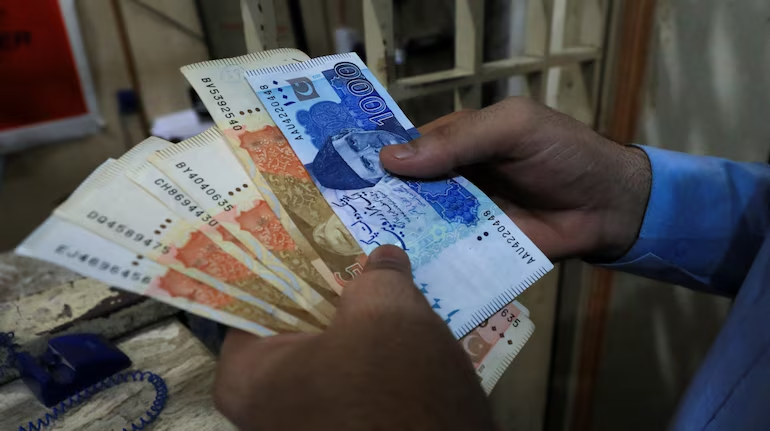
The report also highlights the challenges that Pakistan faces in its efforts to stabilize its economy. The country’s trade deficit is significant, and its foreign exchange reserves are dwindling. The Pakistani rupee has also been under pressure, and the country’s inflation rate is high. These factors all contribute to a difficult economic environment, and it will require a significant amount of effort to stabilize the economy.
In addition to its economic challenges, Pakistan also faces significant geopolitical challenges. The country’s relations with its neighbors are strained, and it is involved in several regional conflicts. These conflicts are a drain on Pakistan’s resources, and they contribute to its economic instability.
In conclusion, Khawaja Asif’s claim that Pakistan will not need the IMF in six months is seen as overly optimistic. The country’s economic situation is far from stable, and it will require a significant amount of time and effort to stabilize it. The report by Moneycontrol highlights the challenges that Pakistan faces, and it is clear that the country will need to take significant steps to address its economic woes.
The $10.6 billion that Pakistan owes to the IMF is a significant obstacle to its economic stability, and it will require a significant amount of effort to pay back this debt. The country’s defence deals with other countries are a positive development, but they alone will not be enough to save Pakistan from economic ruin. The country will need to take a comprehensive approach to addressing its economic challenges, and it will require the support of its international partners to do so.
As the report by Moneycontrol makes clear, Pakistan’s economic situation is complex and challenging. The country will need to take significant steps to address its economic woes, and it will require the support of its international partners to do so. Khawaja Asif’s claim that Pakistan will not need the IMF in six months is seen as overly optimistic, and it is clear that the country will need to take a more realistic approach to addressing its economic challenges.
The Pakistani government will need to take a comprehensive approach to addressing the country’s economic challenges. This will require a significant amount of effort and resources, and it will need to be supported by the country’s international partners. The IMF will likely play a key role in this process, and Pakistan will need to work closely with the organization to develop a plan to stabilize its economy.
In the end, Pakistan’s economic stability will depend on its ability to address its economic challenges in a comprehensive and realistic way. The country will need to take significant steps to reduce its debt, increase its foreign exchange reserves, and promote economic growth. This will require a significant amount of effort and resources, and it will need to be supported by the country’s international partners.
About the Author