Khawaja Asif’s ‘Pak won’t need IMF in 6 months’ claim runs into a $10.6-bn wall: Report
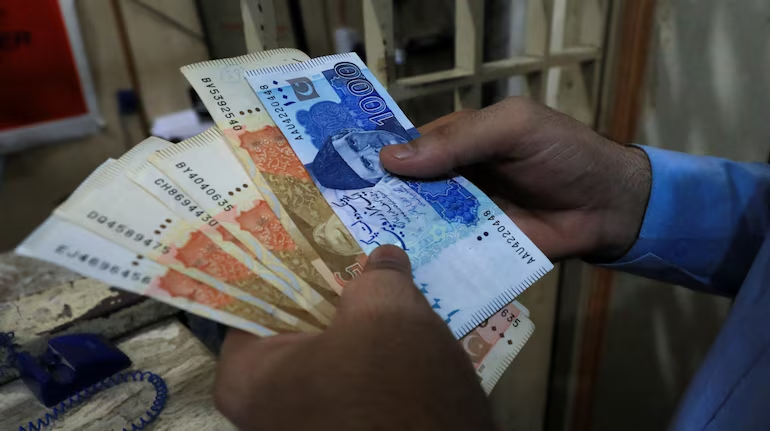
Pakistan’s Defence Minister Khawaja Asif recently made a bold claim that the country would not need the International Monetary Fund (IMF) in six months to save it from economic collapse. However, this claim has run into a significant roadblock, with a whopping $10.6 billion owed to the IMF alone, according to a report by Moneycontrol.
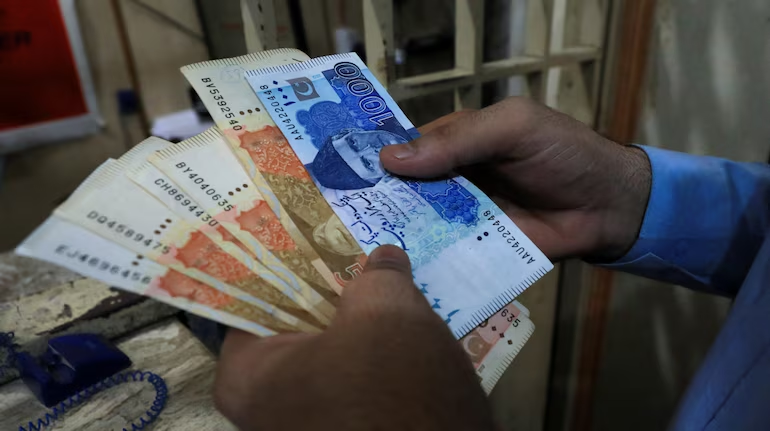
Asif’s statement was met with skepticism by many, given the country’s precarious economic situation. Pakistan has been struggling to stay afloat, with a dwindling foreign exchange reserve and a massive trade deficit. The country’s economy has been on life support, with the IMF providing a $6.5 billion bailout package in 2019 to help Pakistan avoid default.
Despite the challenges, Pakistan has managed to secure some significant defence deals in recent times. The country has been able to convert its Operation Sindoor-linked propaganda into defence deals worth billions, which is a notable achievement. However, these deals alone will not be enough to save Pakistan from economic ruin.
The main reason for this is the massive amount of debt that Pakistan owes to the IMF. The country’s debt to the IMF stands at $10.6 billion, which is a significant burden on its economy. This debt, combined with the country’s other financial obligations, makes it highly unlikely that Pakistan will be able to do without the IMF’s support in the near future.
Asif’s claim that Pakistan won’t need the IMF in six months is therefore seen as overly optimistic by many. The country’s economic situation is complex, and there are many factors at play that make it difficult to predict when, or if, Pakistan will be able to stand on its own feet without the IMF’s support.
One of the main challenges facing Pakistan is its large trade deficit. The country imports much more than it exports, which puts a significant strain on its foreign exchange reserves. This, combined with the country’s low tax-to-GDP ratio, makes it difficult for Pakistan to generate enough revenue to meet its financial obligations.
Another challenge facing Pakistan is its high debt-to-GDP ratio. The country’s debt stands at over 70% of its GDP, which is a significant burden on its economy. This high debt level makes it difficult for Pakistan to invest in other areas, such as education, healthcare, and infrastructure, which are essential for the country’s long-term growth and development.
Despite these challenges, Pakistan has made some progress in recent times. The country has implemented some economic reforms, such as increasing taxes and reducing subsidies, which have helped to stabilize its economy. However, more needs to be done to address the country’s deep-seated economic problems.
In conclusion, Khawaja Asif’s claim that Pakistan won’t need the IMF in six months is unlikely to materialize. The country’s economic situation is complex, and there are many factors at play that make it difficult to predict when, or if, Pakistan will be able to stand on its own feet without the IMF’s support. The country’s massive debt to the IMF, combined with its large trade deficit and high debt-to-GDP ratio, make it highly unlikely that Pakistan will be able to do without the IMF’s support in the near future.
While Pakistan has made some progress in recent times, more needs to be done to address the country’s deep-seated economic problems. The country needs to implement more economic reforms, such as increasing taxes and reducing subsidies, to stabilize its economy and reduce its dependence on the IMF. Only then can Pakistan hope to achieve economic stability and growth in the long term.
About the Author