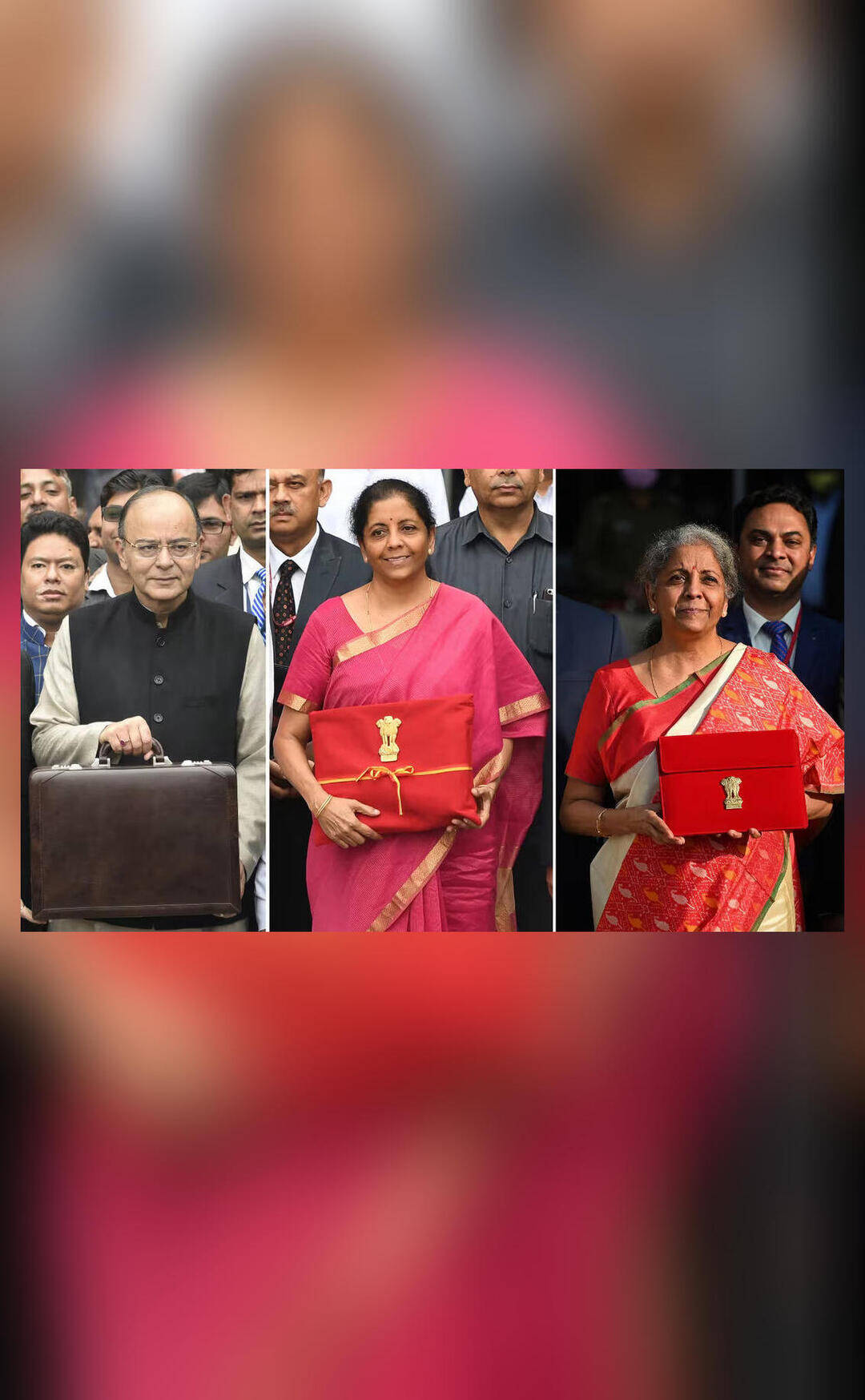
How has Union Budget’s presentation changed over the years, from a briefcase to a tablet?
The Union Budget, a crucial event in the country’s economic calendar, has undergone significant changes in its presentation over the years. The traditional briefcase, which was once synonymous with the Budget, has given way to more modern and eco-friendly alternatives. In this blog post, we will explore the evolution of the Union Budget’s presentation, from the change in date and time to the switch from a briefcase to a tablet.
Historically, the Union Budget was presented on the last day of February, typically around 5:00 pm. However, in 1999, the presentation time was changed to 11:00 am. This change was made to ensure that the Budget speech was completed before the stock markets closed, thereby minimizing the impact of the Budget announcements on the markets. The date of the Budget presentation was also changed in 2017, from the last day of February to February 1. This change was made to enable the Budget to be implemented from the beginning of the financial year, rather than in mid-March.
Another significant change in the presentation of the Union Budget was the switch from a traditional briefcase to a cloth-wrapped ‘bahi khata’ in 2019. Finance Minister Nirmala Sitharaman opted for this traditional Indian ledger to carry the Budget documents, instead of the traditional briefcase. This move was seen as a nod to India’s rich cultural heritage and a departure from the colonial-era tradition of carrying a briefcase.
However, the most significant change in the presentation of the Union Budget came in 2021, when Finance Minister Nirmala Sitharaman presented India’s first paperless Budget. Instead of carrying a briefcase or a bahi khata, Sitharaman used a Made-in-India tablet to present the Budget. This move was seen as a major step towards digitization and a reflection of the government’s commitment to reducing its carbon footprint.
The use of a tablet to present the Budget also marked a significant shift towards a more modern and technologically advanced approach. The tablet contained all the Budget documents, including the Budget speech, and enabled the Finance Minister to access and present the information in a more efficient and organized manner. This move was also seen as a reflection of the government’s efforts to promote the use of digital technology and reduce the use of paper.
In addition to these changes, the Union Budget has also become more inclusive and transparent over the years. The government has made efforts to make the Budget more accessible to the public, through the use of social media and other digital platforms. The Budget documents are now available online, and citizens can access them and provide feedback through various channels.
The changes in the presentation of the Union Budget also reflect the government’s efforts to promote Indian culture and heritage. The use of a bahi khata to carry the Budget documents, for example, was seen as a nod to India’s rich cultural heritage and a departure from the colonial-era tradition of carrying a briefcase. Similarly, the use of a Made-in-India tablet to present the Budget was seen as a reflection of the government’s commitment to promoting Indian industry and technology.
In conclusion, the presentation of the Union Budget has undergone significant changes over the years, from the change in date and time to the switch from a briefcase to a tablet. These changes reflect the government’s efforts to modernize and digitize the Budget-making process, while also promoting Indian culture and heritage. As the country continues to evolve and grow, it will be interesting to see how the Union Budget presentation continues to change and adapt to the needs of the times.
The last 10 Budgets presented in the Modi regime have also seen significant changes, with a focus on promoting economic growth, reducing poverty, and improving the overall quality of life for citizens. The government has made efforts to increase investment in infrastructure, promote entrepreneurship, and improve the ease of doing business. The Budgets have also focused on promoting social welfare schemes, such as the Pradhan Mantri Jan Dhan Yojana, the Pradhan Mantri Ujjwala Yojana, and the Ayushman Bharat scheme.
Overall, the Union Budget has become an important tool for promoting economic growth and development, and its presentation has become more modern, inclusive, and transparent over the years. As the country continues to grow and evolve, it will be interesting to see how the Union Budget presentation continues to change and adapt to the needs of the times.
About the Author