Govt announces maximum fares that airlines can charge amid IndiGo chaos
The Civil Aviation Ministry has taken a significant step to regulate the airline industry by imposing temporary fare ceilings across routes. This move comes in the wake of mass flight cancellations by IndiGo, which has led to a surge in airfares. The Ministry has set a maximum fare limit for airlines to prevent them from taking advantage of the situation and charging exorbitant prices from passengers.
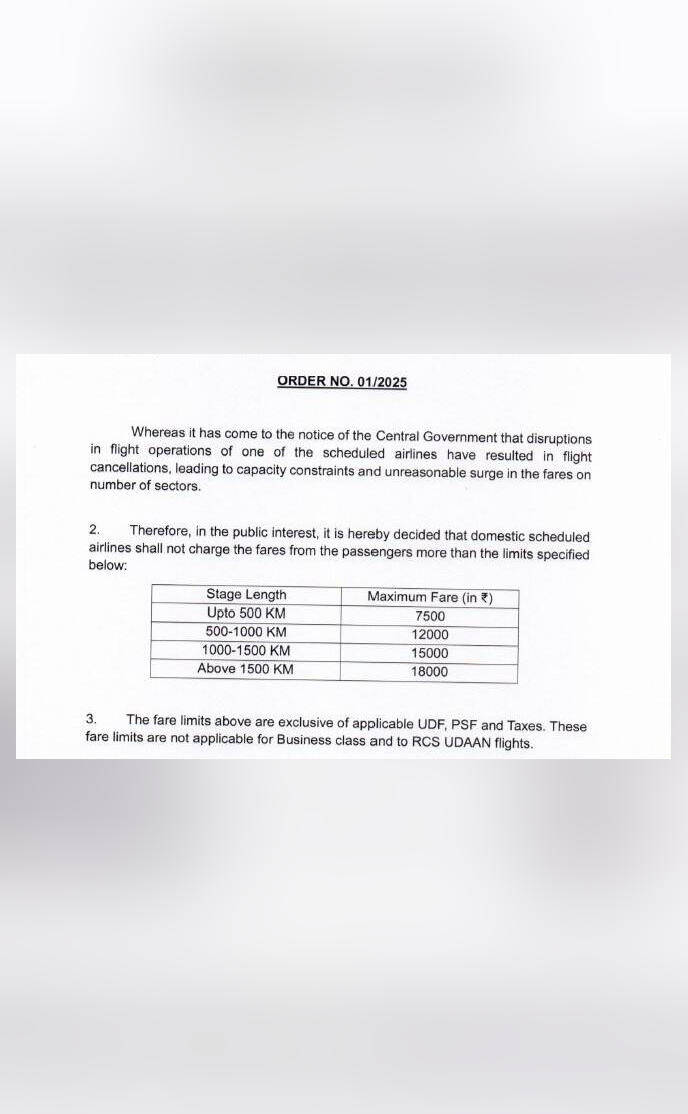
According to the new regulations, for flights up to 500km distance, airlines can charge a maximum fare of ₹7,500. This means that passengers traveling on short-haul flights will not have to pay more than ₹7,500, regardless of the airline or the time of booking. For flights with a distance between 500km and 1,000km, a maximum fare of ₹12,000 can be charged. This will provide relief to passengers traveling on medium-haul flights, who were earlier being charged hefty amounts due to the surge in demand.
For flights above 1,500km, the maximum fare that can be charged is ₹18,000. This will benefit passengers traveling on long-haul flights, who were being charged extremely high prices due to the limited availability of seats. The new fare ceilings will be applicable to all airlines operating in the country, including IndiGo, which has been at the center of the controversy.
The decision to impose fare ceilings was taken after the Ministry received numerous complaints from passengers about the high airfares being charged by airlines. The Ministry realized that the airlines were taking advantage of the situation and charging exorbitant prices, which was causing hardship to passengers. The new regulations will ensure that airlines do not charge more than the maximum fare limit, and passengers will get a fair deal.
The move is expected to bring relief to passengers who were planning to travel by air in the coming days. With the fare ceilings in place, passengers will be able to plan their travel without worrying about the high costs. The Ministry has also warned airlines that any attempt to circumvent the regulations will be strictly dealt with.
The decision to impose fare ceilings is not a new one. In the past, the Ministry has taken similar steps to regulate airfares during times of high demand. However, this is the first time that the Ministry has imposed fare ceilings across all routes, in response to a specific crisis. The move is seen as a significant step towards protecting the interests of passengers and promoting fair competition in the airline industry.
The airline industry has been facing a tough time in recent months, with several airlines cancelling flights due to technical issues and other problems. IndiGo, which is one of the largest airlines in the country, has been at the center of the controversy, with thousands of passengers affected by its flight cancellations. The airline has apologized for the inconvenience caused and has promised to take steps to prevent such incidents in the future.
The imposition of fare ceilings is expected to have a significant impact on the airline industry. Airlines will have to revise their fare structures and ensure that they are not charging more than the maximum fare limit. This may lead to a reduction in revenue for airlines, but it will also help to build trust with passengers and promote fair competition in the industry.
In conclusion, the decision to impose fare ceilings by the Civil Aviation Ministry is a welcome move. It will provide relief to passengers who were being charged exorbitant prices by airlines and promote fair competition in the industry. The move is expected to have a significant impact on the airline industry, and airlines will have to adapt to the new regulations. With the fare ceilings in place, passengers can now plan their travel without worrying about the high costs.
News source: https://x.com/NDTVProfitIndia/status/1997255961241919681
About the Author