Govt announces maximum fares that airlines can charge amid IndiGo chaos
The Indian government has taken a significant step to regulate the aviation industry, particularly in the wake of the recent chaos caused by mass flight cancellations by IndiGo. The Civil Aviation Ministry has imposed temporary fare ceilings across various routes to curb surge pricing, providing much-needed relief to passengers. This move is expected to have a positive impact on the industry, ensuring that airlines do not take advantage of passengers during times of high demand.
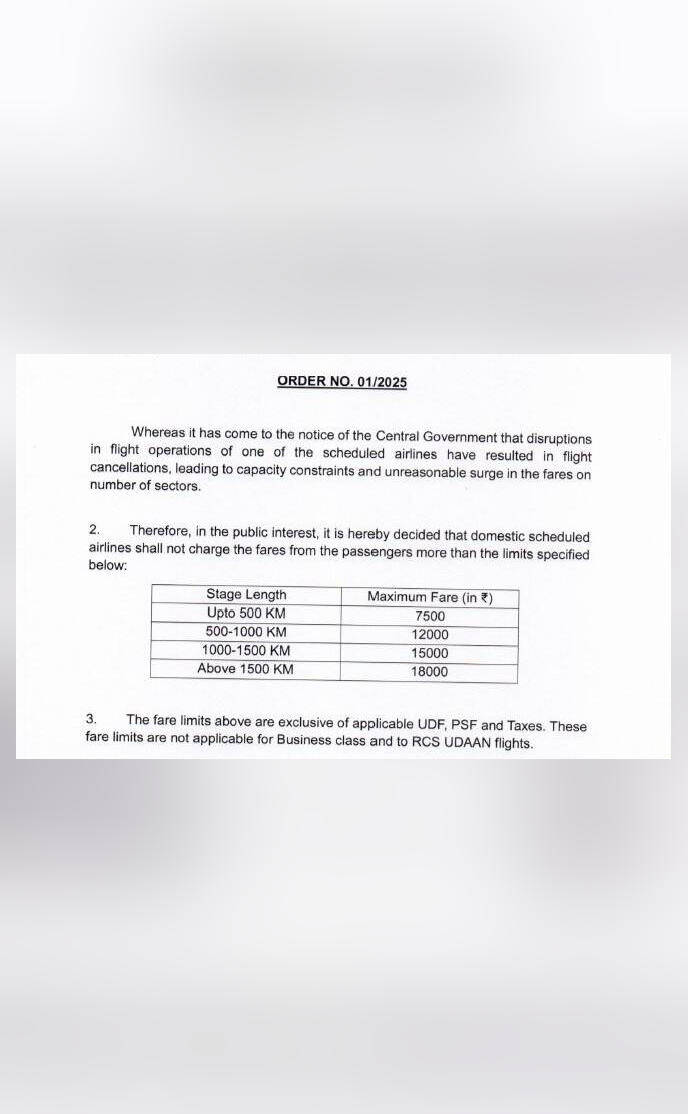
According to the new regulations, airlines can charge a maximum fare of ₹7,500 for flights with a distance of up to 500km. For flights with a distance between 500km and 1,000km, a maximum fare of ₹12,000 can be charged. Meanwhile, for flights covering a distance above 1,500km, the maximum fare that can be charged is ₹18,000. These fare ceilings are expected to remain in place for the time being, until the aviation industry stabilizes and the demand-supply gap is bridged.
The decision to impose fare ceilings was taken after IndiGo, one of the largest airlines in the country, cancelled several flights due to technical issues and crew shortages. This led to a significant surge in airfares, with many passengers being forced to pay exorbitant prices for last-minute bookings. The government’s intervention is aimed at protecting the interests of passengers and preventing airlines from engaging in unfair pricing practices.
The imposition of fare ceilings is a welcome move, as it will provide relief to passengers who have been bearing the brunt of surge pricing. Many passengers have been forced to pay high fares due to the lack of availability of seats, and this has led to a significant increase in travel costs. With the new fare ceilings in place, passengers can expect to pay more reasonable prices for their air travel, even during peak travel seasons.
The government’s decision is also expected to have a positive impact on the overall aviation industry. By regulating airfares, the government is sending a strong message to airlines that they need to prioritize the interests of passengers. This is likely to lead to increased competition among airlines, as they will be forced to offer competitive pricing to attract passengers. Ultimately, this will benefit passengers, as they will have access to a wider range of options and more affordable air travel.
It is worth noting that the imposition of fare ceilings is not a new concept in the Indian aviation industry. In the past, the government has intervened to regulate airfares, particularly during times of high demand. However, the current move is significant, as it comes at a time when the industry is facing significant challenges, including crew shortages and technical issues.
The government’s decision to impose fare ceilings has been welcomed by passenger associations and consumer groups. These organizations have long been advocating for greater regulation of the aviation industry, particularly when it comes to airfares. With the new fare ceilings in place, passengers can expect to pay more reasonable prices for their air travel, and this is likely to lead to increased satisfaction and loyalty.
In conclusion, the government’s decision to impose fare ceilings is a significant step in the right direction. By regulating airfares, the government is protecting the interests of passengers and preventing airlines from engaging in unfair pricing practices. The new fare ceilings are expected to provide relief to passengers, particularly those who have been affected by the recent chaos caused by IndiGo. As the aviation industry continues to evolve, it is likely that we will see further regulation and intervention from the government, aimed at promoting fair competition and protecting the interests of passengers.
News Source: https://x.com/NDTVProfitIndia/status/1997255961241919681
About the Author