Govt announces maximum fares that airlines can charge amid IndiGo chaos
The Indian aviation industry has been in a state of turmoil over the past few days, with thousands of flights being cancelled by IndiGo, one of the country’s largest airlines. The cancellations, which were attributed to a technical glitch, left countless passengers stranded and frustrated, with many taking to social media to express their outrage. In an effort to mitigate the situation and prevent airlines from taking advantage of the chaos, the Civil Aviation Ministry has stepped in to impose temporary fare ceilings across routes.
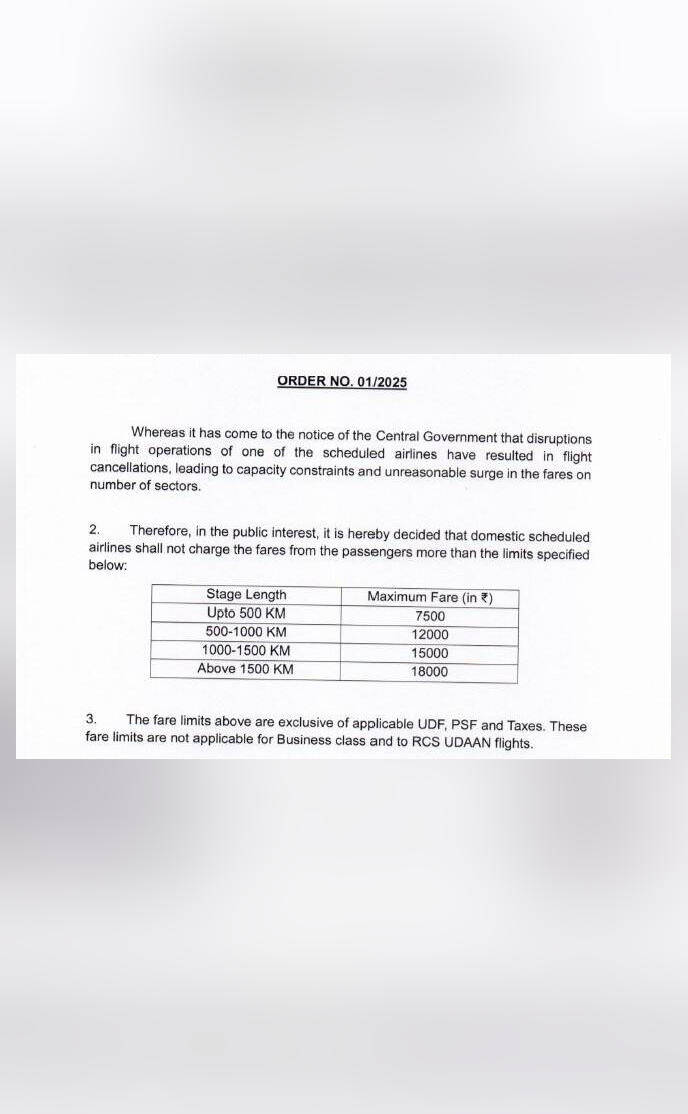
According to the new guidelines, airlines will be restricted from charging exorbitant fares, which have become a common phenomenon during times of high demand. For flights up to 500km distance, airlines can charge a maximum fare of ₹7,500. This move is expected to bring relief to passengers who have been forced to pay through the nose for last-minute bookings. Similarly, for flights with a distance between 500km and 1,000km, a maximum fare of ₹12,000 can be charged, while for flights above 1,500km, the maximum fare that can be charged is ₹18,000.
The decision to impose fare ceilings is a welcome move, as it will prevent airlines from engaging in surge pricing, which has become a norm during peak travel seasons. Surge pricing, which involves hiking fares in response to high demand, has been a contentious issue in the Indian aviation industry, with many passengers feeling that it is unfair and exploitative. By capping fares, the government is sending a clear message that it will not tolerate such practices, and that the interests of passengers will be protected.
The move is also expected to promote healthy competition among airlines, as they will be forced to focus on providing better services and improving their overall passenger experience, rather than relying on price gouging to maximize profits. This, in turn, will benefit passengers, who will have access to more affordable and reliable air travel options.
It is worth noting that the fare ceilings are temporary, and will be in place until the situation returns to normal. However, the move is a significant step in the right direction, as it acknowledges the need for greater regulation and oversight in the Indian aviation industry. The government has been under pressure to take action against airlines that engage in unfair pricing practices, and the imposition of fare ceilings is a clear indication that it is willing to take tough measures to protect the interests of passengers.
The chaos caused by IndiGo’s mass flight cancellations has highlighted the need for greater accountability and transparency in the aviation industry. The airline’s decision to cancel thousands of flights without adequate notice has been widely criticized, and has raised questions about the lack of effective regulation and oversight in the sector. The government’s move to impose fare ceilings is a step in the right direction, but more needs to be done to address the underlying issues that have led to this situation.
In conclusion, the government’s decision to impose fare ceilings on airlines is a welcome move that will bring relief to passengers who have been affected by the chaos in the aviation industry. The move is a clear indication that the government is committed to protecting the interests of passengers and promoting healthy competition among airlines. As the situation returns to normal, it is hoped that the aviation industry will emerge stronger and more resilient, with a greater focus on providing better services and improving the overall passenger experience.
For more information on this development, you can visit: https://x.com/NDTVProfitIndia/status/1997255961241919681
News Source: https://x.com/NDTVProfitIndia/status/1997255961241919681
About the Author