Govt announces maximum fares that airlines can charge amid IndiGo chaos
The Civil Aviation Ministry has taken a significant step to regulate airfare prices in the country, particularly in the wake of the recent chaos caused by mass flight cancellations by IndiGo. The ministry has imposed temporary fare ceilings across various routes to curb the practice of surge pricing by airlines. This move is expected to provide relief to passengers who have been facing exorbitant airfare prices, especially during peak travel seasons.
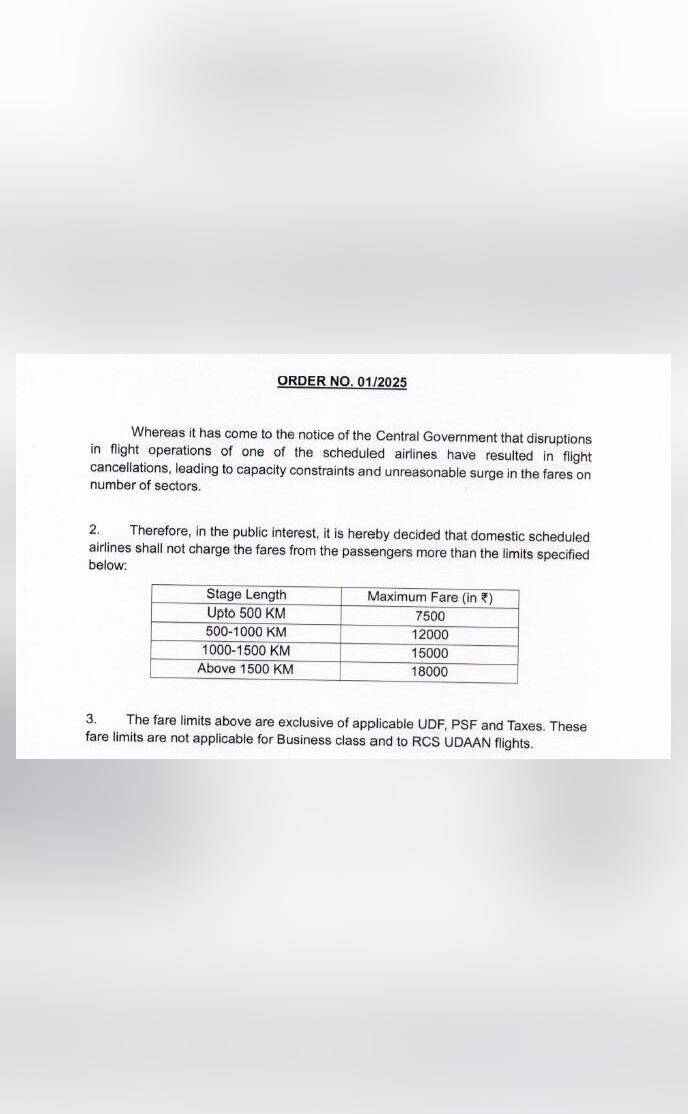
According to the new regulations, airlines will not be allowed to charge more than a certain maximum fare for flights of different distances. For instance, for flights that cover a distance of up to 500 kilometers, airlines can charge a maximum fare of ₹7,500. This fare cap is expected to benefit passengers traveling on shorter routes, where airfare prices tend to fluctuate significantly.
For flights that cover a distance between 500 kilometers and 1,000 kilometers, the maximum fare that airlines can charge is ₹12,000. This fare range is expected to cover a significant number of domestic routes, where air travel is a popular mode of transportation. By capping the maximum fare at ₹12,000, the government aims to prevent airlines from taking advantage of passengers who are forced to travel at short notice or during peak seasons.
For longer flights that cover a distance of over 1,500 kilometers, the maximum fare that airlines can charge is ₹18,000. This fare cap is expected to benefit passengers traveling on international routes or on domestic routes that cover longer distances. While the fare cap may not be as low as some passengers might have hoped for, it is still a significant step towards regulating airfare prices and preventing airlines from engaging in predatory pricing practices.
The decision to impose fare ceilings on airlines has been welcomed by passenger rights groups, who have long been advocating for greater regulation of the aviation industry. The move is also expected to promote greater transparency and accountability in airfare pricing, which has been a major concern for passengers in recent years.
The recent chaos caused by IndiGo’s mass flight cancellations has highlighted the need for greater regulation of the aviation industry. The airline’s decision to cancel hundreds of flights at short notice left thousands of passengers stranded, with many being forced to pay exorbitant airfare prices to book alternative flights. The government’s decision to impose fare ceilings on airlines is a direct response to this crisis, and is expected to prevent similar situations from arising in the future.
While the fare ceilings imposed by the government are temporary, they are expected to have a significant impact on the aviation industry. Airlines will be forced to re-evaluate their pricing strategies and ensure that they are complying with the new regulations. Passengers, on the other hand, can expect to benefit from more stable and predictable airfare prices, which will make it easier for them to plan their travel.
In conclusion, the government’s decision to impose fare ceilings on airlines is a significant step towards regulating airfare prices and promoting greater transparency and accountability in the aviation industry. While the fare caps may not be as low as some passengers might have hoped for, they are still a significant improvement over the current system, where airlines are free to charge whatever they like. As the aviation industry continues to evolve and grow, it is likely that we will see further regulation and oversight, which will ultimately benefit passengers and promote a more competitive and sustainable industry.
For more information on this topic, you can visit: https://x.com/NDTVProfitIndia/status/1997255961241919681
News Source: https://x.com/NDTVProfitIndia/status/1997255961241919681
About the Author