Govt announces maximum fares that airlines can charge amid IndiGo chaos
The Civil Aviation Ministry has stepped in to regulate the surge in airfares following the recent mass flight cancellations by IndiGo, one of India’s largest airlines. In an effort to curb the exorbitant pricing, the Ministry has imposed temporary fare ceilings across various routes. This move is expected to bring relief to passengers who have been facing hefty airfares due to the sudden scarcity of flights.
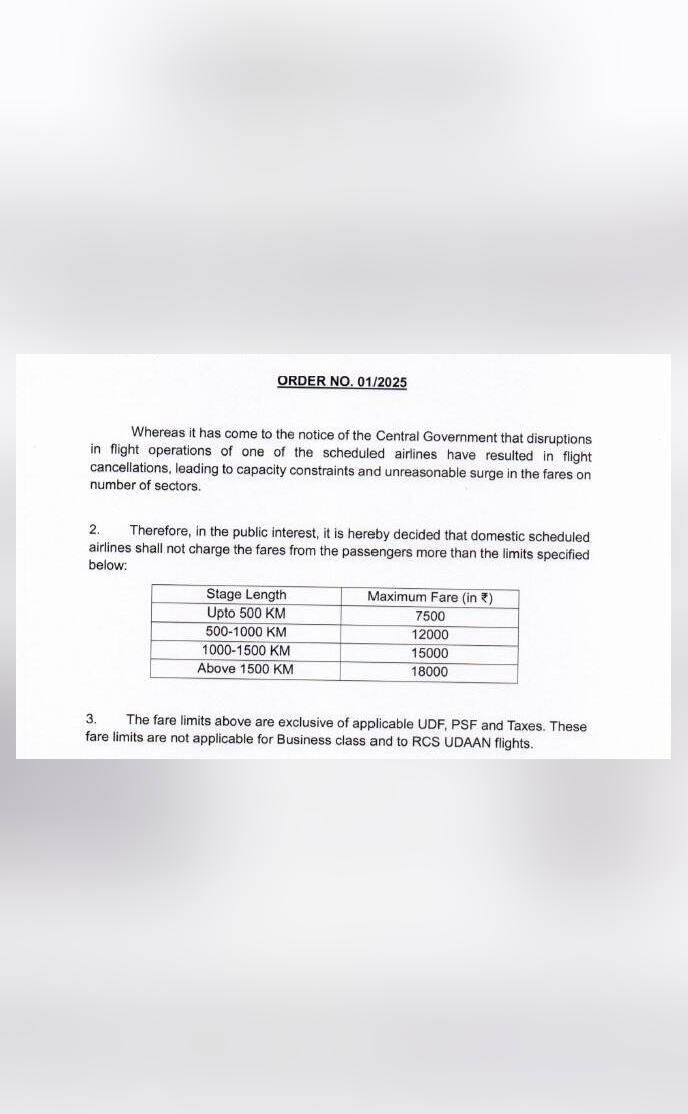
As per the new regulations, airlines will not be allowed to charge more than a certain maximum fare for specific distance ranges. For flights covering distances up to 500 kilometers, the maximum fare has been capped at ₹7,500. This means that passengers traveling on shorter routes will not have to pay more than this amount, regardless of the airline or the time of booking.
For flights with distances between 500 kilometers and 1,000 kilometers, the maximum fare has been set at ₹12,000. This range covers many of the popular domestic routes, and the fare cap is expected to benefit a large number of passengers. The Ministry’s decision to impose a fare ceiling on these routes will help prevent airlines from taking advantage of the situation and charging exorbitant prices.
For longer flights, covering distances above 1,500 kilometers, the maximum fare has been capped at ₹18,000. This will provide relief to passengers traveling on longer routes, who were previously facing much higher fares due to the limited availability of flights.
The decision to impose fare ceilings comes after IndiGo, which operates a significant number of flights in the country, cancelled several of its flights, leading to a surge in airfares. The airline cited technical issues as the reason for the cancellations, which left thousands of passengers stranded. The situation was further exacerbated by the peak travel season, which saw a large number of people traveling for vacations and other purposes.
The Ministry’s move to regulate airfares is a welcome step, as it will help prevent airlines from exploiting the situation and charging unfair prices. The fare ceilings will also provide relief to passengers who were forced to pay high prices due to the limited availability of flights.
However, it remains to be seen how effective the fare ceilings will be in regulating airfares. Airlines may try to find ways to circumvent the regulations, such as by charging extra for services like food, baggage, and seat selection. Additionally, the fare ceilings may not be sufficient to cover the costs of operating flights, which could lead to losses for the airlines.
The Civil Aviation Ministry has also stated that it will monitor the situation closely and take further action if necessary. The Ministry may consider extending the fare ceilings or imposing other regulations to ensure that airlines do not take advantage of passengers.
In recent years, the Indian aviation sector has experienced significant growth, with the number of air travelers increasing rapidly. However, this growth has also led to concerns about safety, infrastructure, and pricing. The government has been working to address these concerns, and the imposition of fare ceilings is a step in the right direction.
The move to regulate airfares is also expected to promote competition in the aviation sector. With fare ceilings in place, airlines will be forced to compete on other factors, such as service quality, punctuality, and comfort. This could lead to improved services and better overall experience for passengers.
In conclusion, the Civil Aviation Ministry’s decision to impose fare ceilings is a welcome step in regulating airfares and preventing airlines from exploiting passengers. The move is expected to provide relief to passengers who have been facing high airfares due to the recent flight cancellations. However, it remains to be seen how effective the fare ceilings will be in the long run, and whether airlines will find ways to circumvent the regulations.
News Source: https://x.com/NDTVProfitIndia/status/1997255961241919681
About the Author