Govt announces maximum fares that airlines can charge amid IndiGo chaos
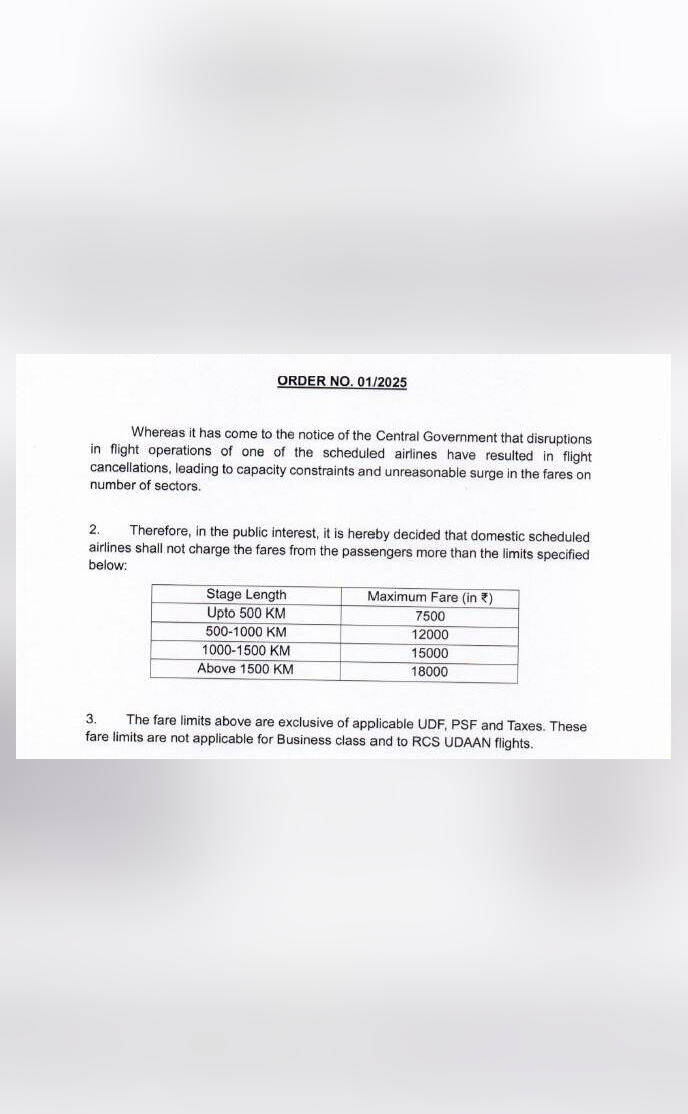
The Indian government has taken a significant step to regulate the aviation industry, particularly in the wake of the recent chaos caused by mass flight cancellations by IndiGo. The Civil Aviation Ministry has imposed temporary fare ceilings across routes to curb surge pricing, which has been a major concern for passengers. According to the new guidelines, airlines will not be allowed to charge exorbitant fares, and the maximum fares will be capped at different levels depending on the distance of the flight.
For flights up to 500km distance, airlines can charge a maximum fare of ₹7,500. This move is expected to bring relief to passengers who have been facing high fares on short-haul flights. The fare cap will ensure that airlines do not take advantage of the situation and charge unreasonable prices. The distance-based fare capping is a well-thought-out move, as it takes into account the varying costs associated with operating flights of different distances.
For flights with a distance between 500km and 1,000km, a maximum fare of ₹12,000 can be charged. This range covers many popular domestic routes, and the fare cap will help to keep prices in check. The government’s decision to impose a fare ceiling on these routes will prevent airlines from engaging in price gouging, which can be detrimental to passengers.
For flights above 1,500km, the maximum fare that can be charged is ₹18,000. This fare cap will apply to long-haul flights, which often connect major cities across the country. The government’s move to regulate fares on these routes will ensure that passengers are not forced to pay exorbitant prices, even during peak travel seasons.
The decision to impose fare ceilings comes after IndiGo, one of the largest airlines in India, cancelled several flights due to operational issues. The cancellations led to a surge in demand for flights on other airlines, resulting in high fares. The government’s intervention is aimed at protecting the interests of passengers and ensuring that they are not exploited by airlines.
The fare capping is a temporary measure, and it will be reviewed after 15 days. The government will monitor the situation and assess whether the fare ceilings need to be extended or modified. The move is expected to bring stability to the aviation industry, which has been facing challenges in recent times.
The imposition of fare ceilings is a significant development, as it marks a shift in the government’s approach to regulating the aviation industry. In the past, the government has been hesitant to intervene in the pricing of air tickets, preferring to let market forces dictate the fares. However, the recent crisis has highlighted the need for regulatory intervention to protect the interests of passengers.
The fare capping is also expected to have a positive impact on the tourism industry, which is a significant contributor to India’s economy. High airfares can be a deterrent for tourists, and the government’s move to regulate fares will make air travel more affordable and attractive. The fare ceilings will also encourage more people to travel by air, which will have a positive impact on the overall economy.
In conclusion, the government’s decision to impose fare ceilings on airlines is a welcome move. The fare capping will help to regulate the aviation industry, prevent price gouging, and protect the interests of passengers. The temporary fare ceilings will be reviewed after 15 days, and the government will assess whether they need to be extended or modified. The move is expected to bring stability to the industry and make air travel more affordable for passengers.
For more information on this development, you can visit: https://x.com/NDTVProfitIndia/status/1997255961241919681
News Source: https://x.com/NDTVProfitIndia/status/1997255961241919681
About the Author